Blog Content

16
Aug
2026
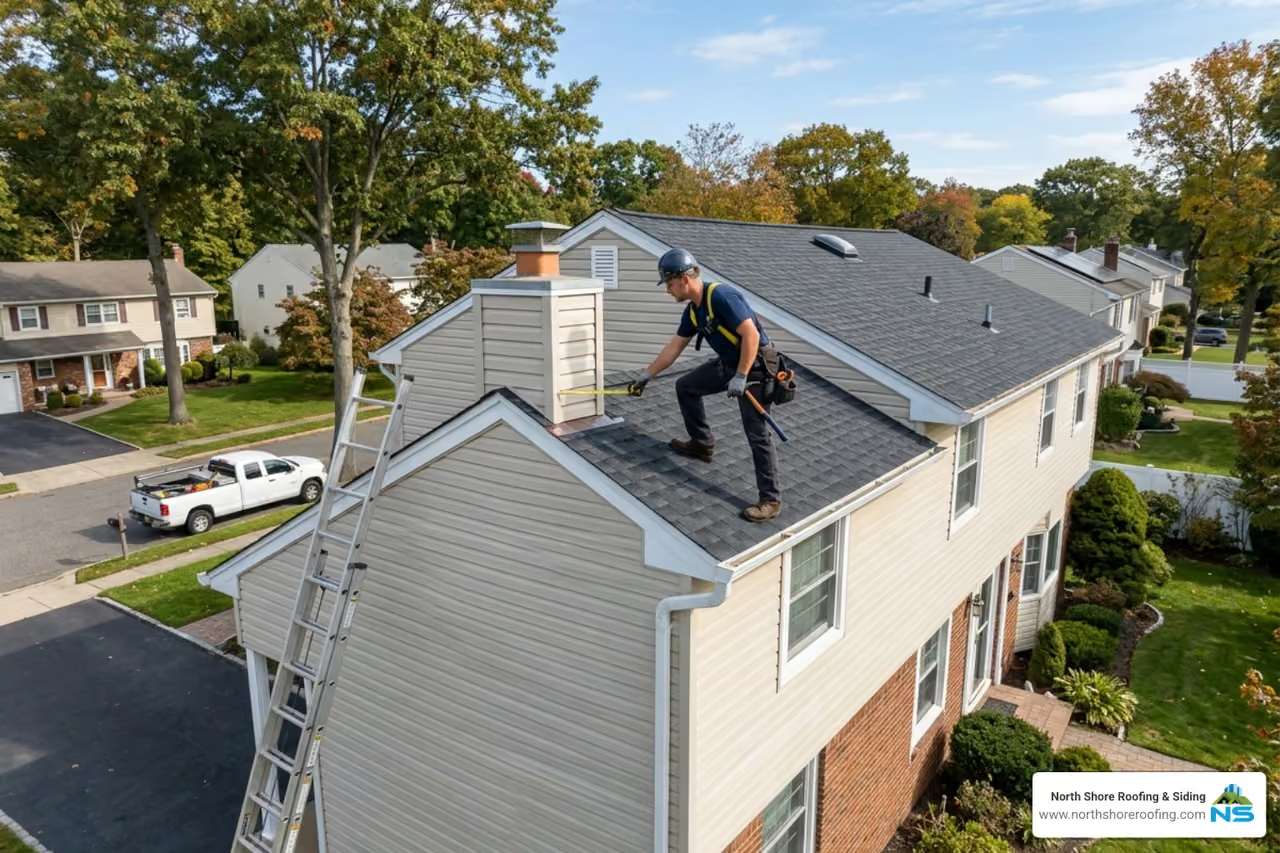
Finding a trustworthy residential roofing contractor on Long Island is one of the most important decisions you'll make as a homeowner — and one of the easiest to get wrong.
Quick answer: How to choose a residential roofing contractor on Long Island
Long Island's roofing market is genuinely different from the rest of the country. Nassau and Suffolk Counties each require separate contractor licenses. Towns from Queens to Bayside to Port Washington have their own permit requirements. Nor'easters, salt air off the Sound, and ice dams in winter put real stress on roofs here that contractors in other regions simply don't deal with.
That means a roofing contractor who does great work in another state — or even another county — isn't automatically qualified to work on your home in Manhasset or Flushing.
The good news: once you know what to look for, vetting a contractor doesn't have to be overwhelming. This guide walks you through exactly how to do it — from licenses and certifications to red flags, materials, costs, and what to expect on installation day.
Easy residential roofing contractor long island word list:
When you live in coastal New York, your roof is your home’s primary shield against some of the most unforgiving weather in the Northeast. From the historic coastal properties of Port Washington to the classic suburban homes of Bayside and Flushing, our unique geography demands specialized roofing expertise.
Long Island and Queens sit right in the path of intense Atlantic weather systems. This exposes residential properties to a combination of environmental stressors:
Because of these highly localized challenges, hiring a generic contractor who doesn't understand the regional microclimates is a recipe for premature roof failure. To see where local homeowners are finding qualified professionals, you can browse Yelp's Top Nassau County Roofers or explore our detailed map of Where We Install Roofs Long Island Queens to see our work in action.
Before you discuss shingle colors or architectural styles, you must address the legalities. Working with an unlicensed or underinsured contractor on Long Island is a massive financial risk. If an uninsured worker falls on your property in Locust Valley or Manhasset, you could be held liable for their medical expenses and lost wages.
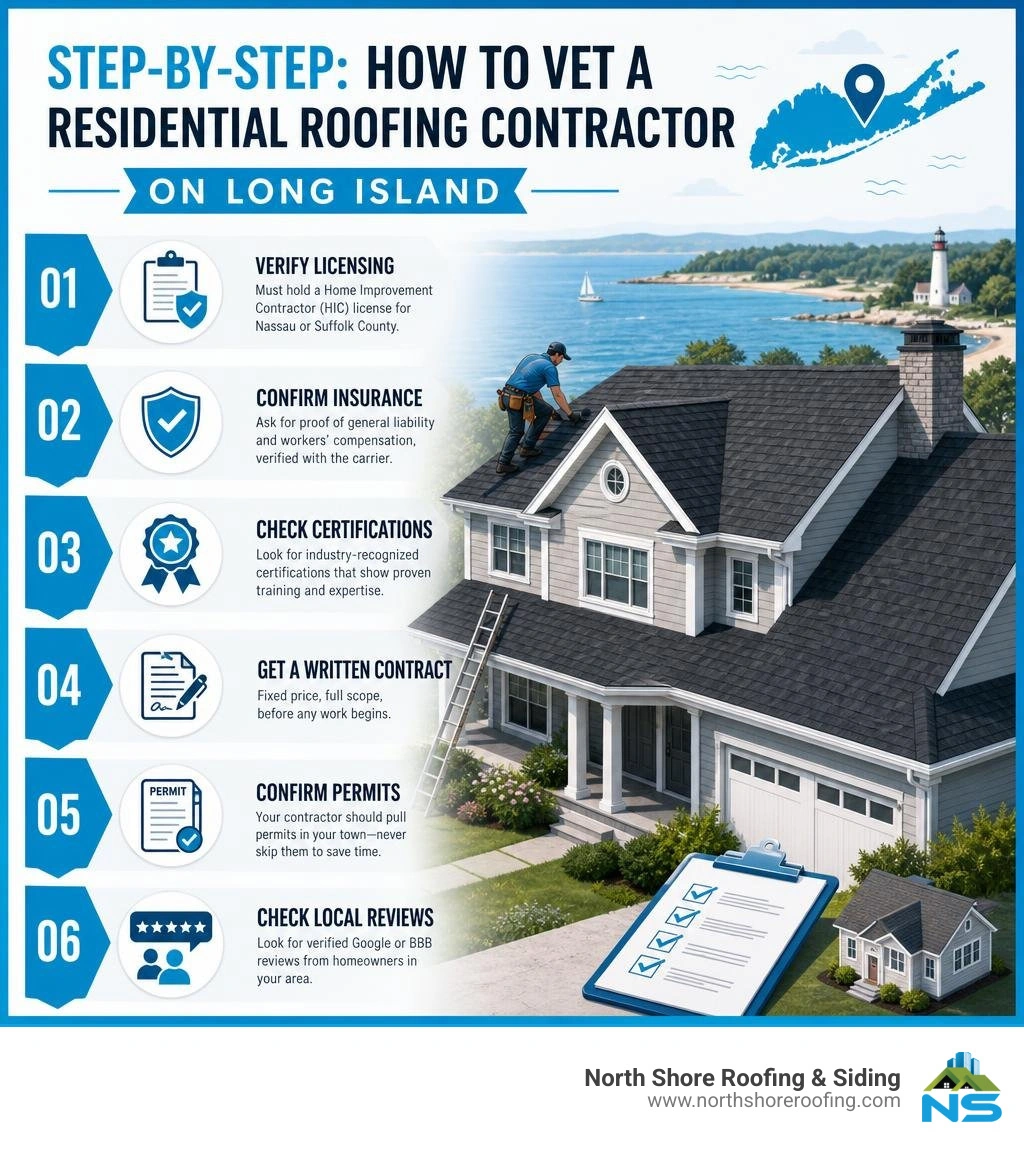
When vetting a residential roofing contractor on Long Island, you must verify three essential pieces of paperwork:
In New York, licensing is managed at the county and municipal level rather than a single statewide license.
This insurance covers property damage. If a crew accidentally drops a bundle of shingles through your skylight in Flushing or damages your neighbor's property in Bayside, general liability insurance covers the repairs. Always request a Certificate of Insurance (COI) sent directly from the contractor's insurance carrier to your email.
This is non-negotiable. Workers' compensation protects you from being sued if a roofer is injured on your roof. Some cut-rate contractors attempt to bypass this cost by using independent subcontractors and claiming they do not need coverage. Never work with a company that cannot provide direct, active proof of workers' compensation for everyone stepping onto your property.
To cross-reference local credentials and see what other homeowners in the neighboring boroughs are checking, you can view Yelp's Best Queens Roofing Services or read our guide on hiring qualified Roofers in Nassau County NY.
Many homeowners assume that all roofing companies have access to the same material warranties. In reality, the best warranties are reserved exclusively for certified contractors who have proven their technical skill directly to the manufacturers.
The top certifications in the residential roofing industry include:
When you hire a certified residential roofing contractor on Long Island, you gain access to extended system warranties that are completely unavailable to uncertified installers. For example, a GAF Master Elite contractor can offer the GAF Golden Pledge Warranty. This industry-leading protection covers both materials and workmanship for up to 25 years, fully backed by the manufacturer. Even if the original installer goes out of business, the manufacturer will send a certified crew to fix any installation errors at no cost to you.
To learn more about how these credentials protect your investment, read our detailed breakdown of certified Roofing Companies Long Island.
Vetting a contractor is as much about identifying who not to hire as it is about finding the right partner. Watch out for these common warning signs during your consultation phase:
For verified local business directories and real customer feedback in Queens, check out Yelp's Flushing Roofing Directory.
Selecting the right material for your home requires balancing aesthetic preferences, budget constraints, and the harsh coastal elements.
While basic three-tab shingles are the cheapest option, we rarely recommend them for Long Island homes. Architectural shingles (also known as dimensional shingles) are significantly thicker, offer a beautiful multi-dimensional look, and carry wind ratings up to 130 mph compared to the meager 60 mph rating of standard three-tab shingles.
If your home is located on a wooded lot in Locust Valley or Manhasset, the mature tree canopy creates shade and moisture. Within 5 to 8 years, standard shingles will develop ugly black streaks caused by Gloeocapsa magma (blue-green algae). To prevent this, ensure your contractor installs shingles formulated with copper granules, which naturally resist algae growth and keep your roof looking pristine.
If you are trying to decide which system is right for your home, take a look at our comprehensive guide on Residential Roofing Services NYC.
A professional roof replacement is a major construction project, but a highly organized crew can complete the vast majority of residential homes in a single day. Here is what the typical timeline looks like from contract signing to final cleanup:
Once you sign your contract and your town permit is approved, the project is scheduled. Materials are typically delivered to your driveway in Manhasset, Port Washington, or Bayside the morning of the installation to prevent theft or lawn damage.
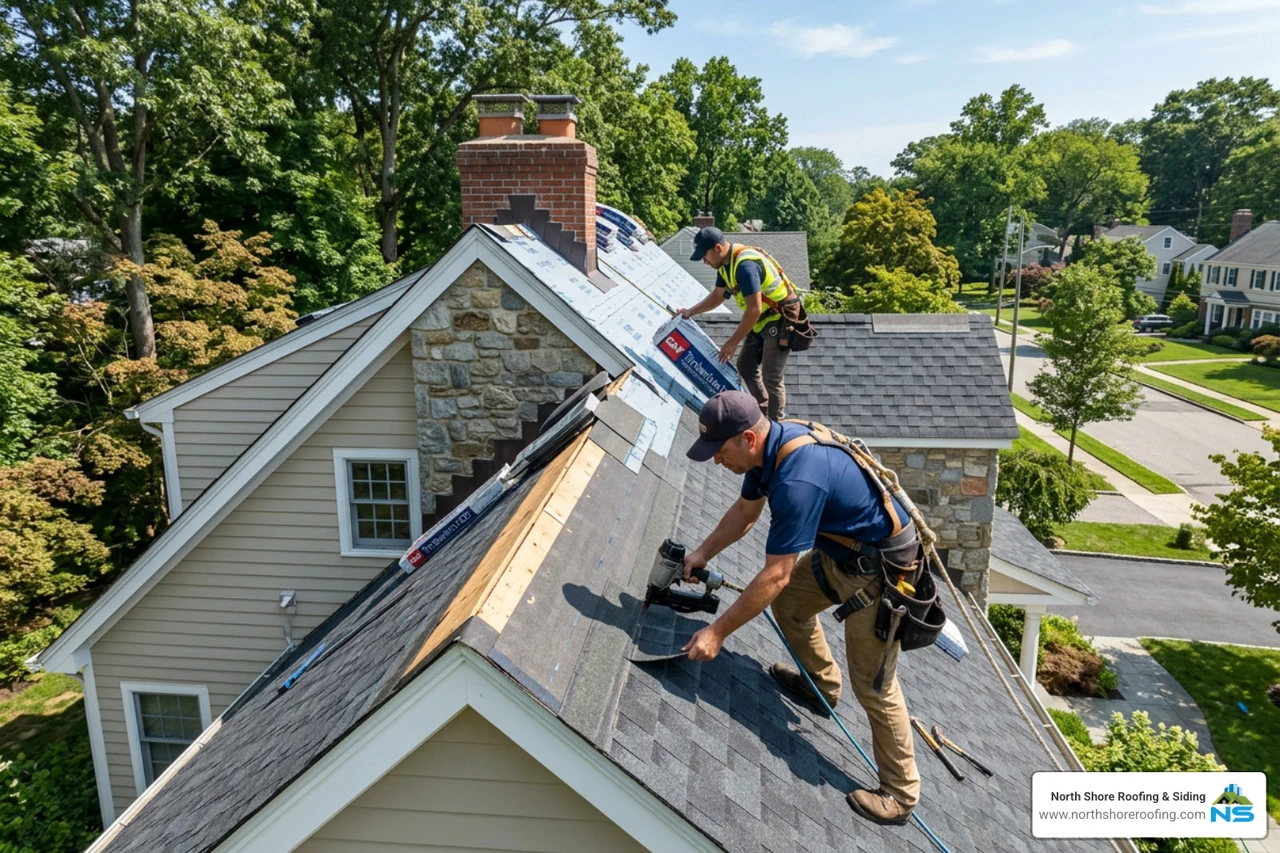
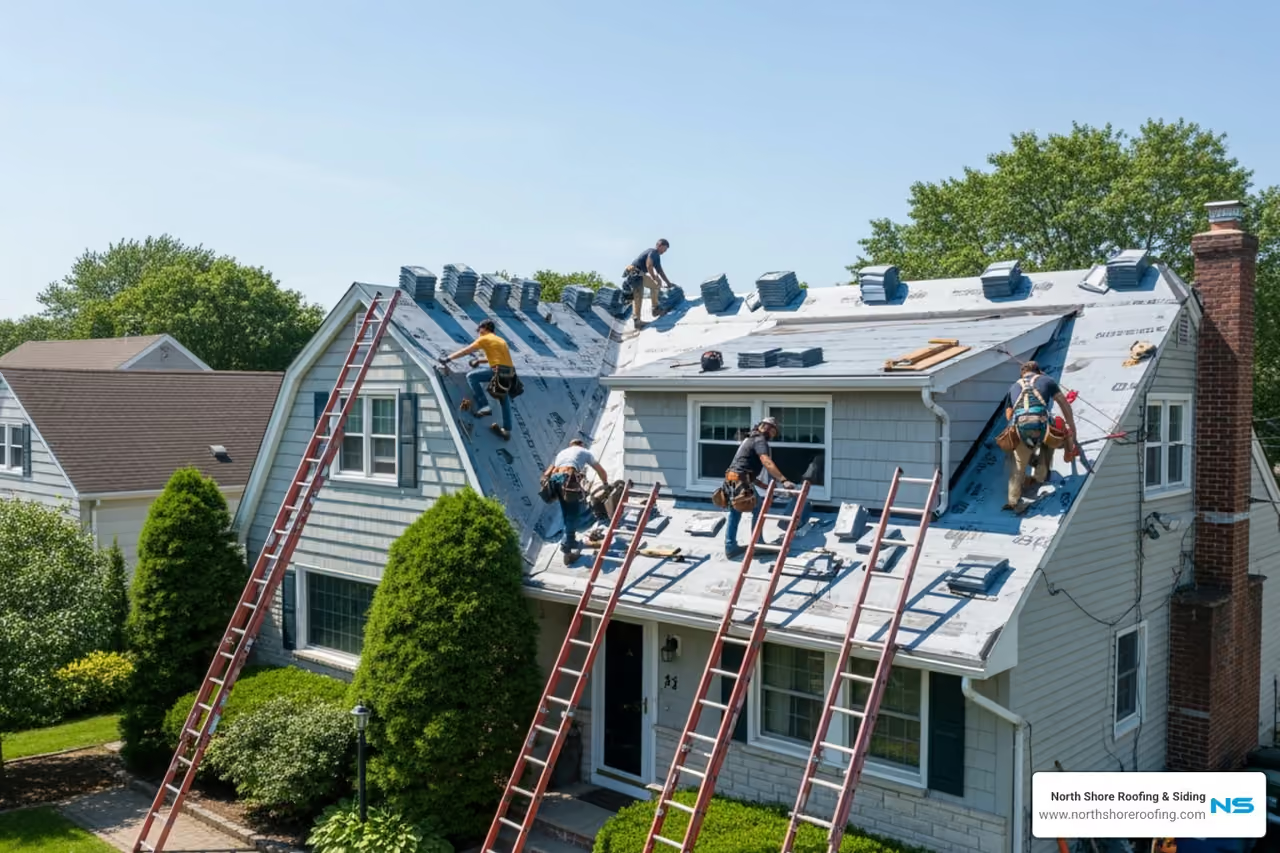
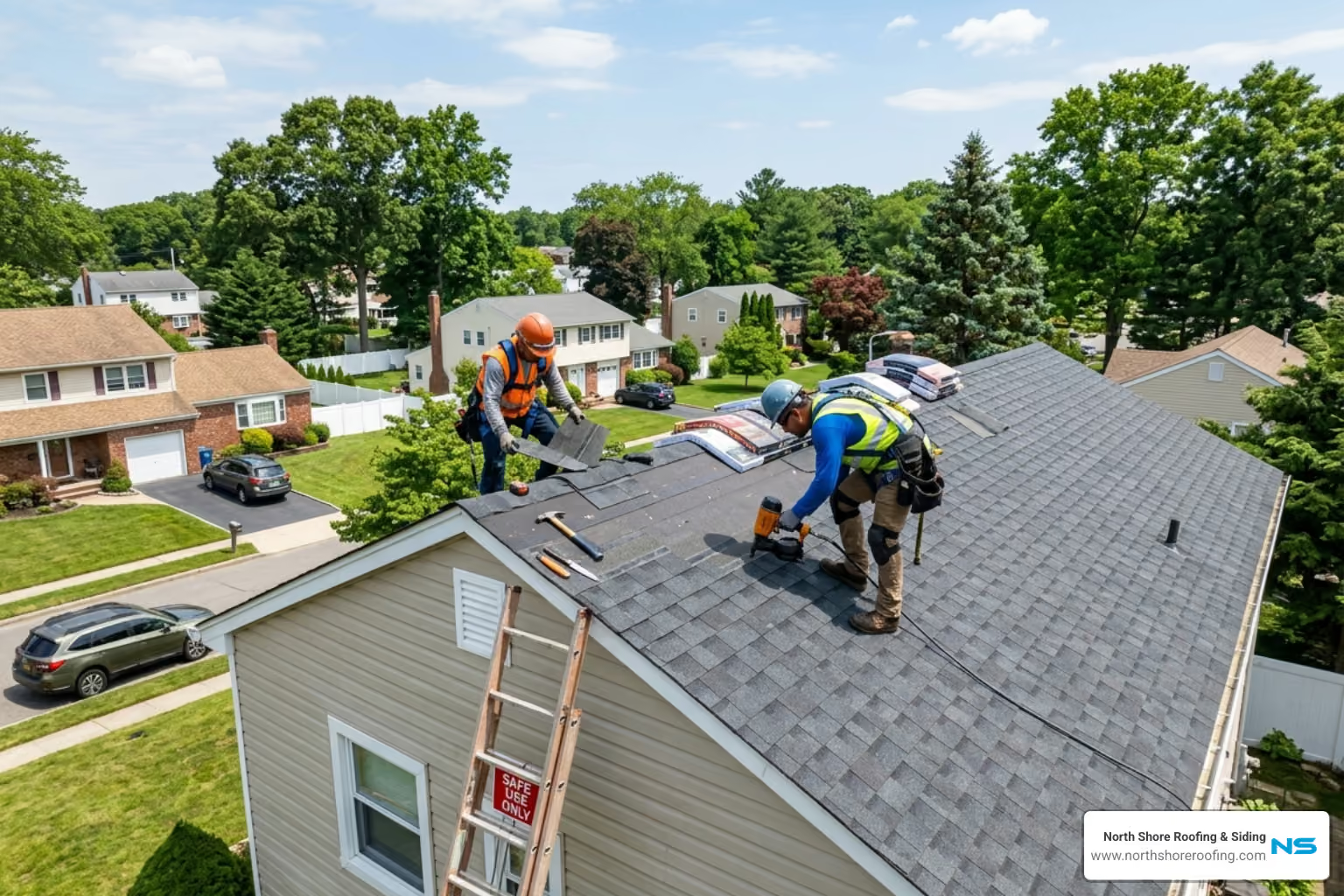
A typical single-family home can be completed in one day. The crew follows a structured, professional installation process:
Once the roof is complete, the crew performs a thorough cleanup. They sweep your yard, driveway, and walkways with heavy-duty magnetic nail sweepers to collect every stray nail. A final walkthrough is conducted with you to ensure complete satisfaction.
To see how we manage these logistics for our neighbors out east, read our guide on choosing Roofing Contractors Suffolk Cty NY.
Navigating the roof replacement process naturally brings up plenty of questions. Here are the answers to the most common inquiries we receive from homeowners across Long Island and Queens as of June 2026.
Yes, permits are mandatory for full residential roof replacements in virtually every town across Nassau and Suffolk Counties. Building departments enforce specific wind-load standards and code compliance.
Some unlicensed or cutting-corner contractors will pressure you to skip the permit process to "save time and money." This is a massive red flag. If you install a roof without a permit, you could face steep fines from your town, encounter major issues when trying to sell your home, or find that your homeowner's insurance policy refuses to cover future storm damage. A reputable local contractor will handle the entire permit filing process with your local building department for you.
For more information on local municipal requirements, check out our Manhasset Roofing and Siding Services resource page.
The cost of a new roof on Long Island is generally 15% to 25% higher than the national average. This premium is driven by several local factors: county-specific licensing fees, strict wind-resistant installation requirements, and local transfer station disposal fees that are 2-3x the national average (typically ranging from $95 to $120 per ton).
As of June 2026, here are the typical cost ranges you can expect for a standard residential roof replacement:
Several variables can shift your final price within or beyond these ranges:
To explore material costs and options further, read our guide on Residential Roofing.
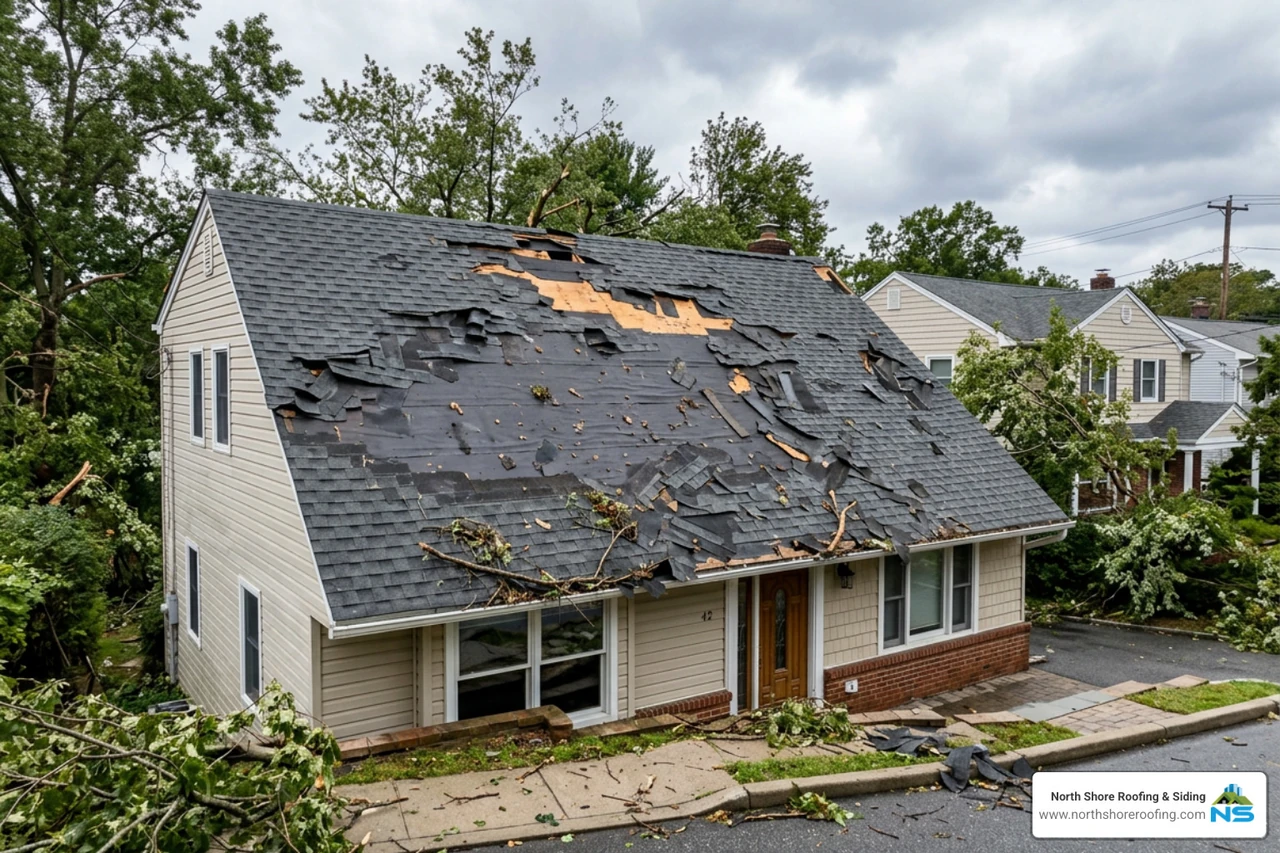
When a severe nor'easter or summer storm hits Port Washington, Bayside, or Flushing, immediate action is required to prevent water from destroying your home's interior.
A professional local contractor handles emergency situations through a structured, two-step process:
To learn more about preparing your home for seasonal weather and managing storm repairs, check out our resource on Long Island Roofing Siding Install.
Your roof is one of the most significant investments you will ever make in your home. By taking the time to verify county-specific HIC licenses, confirm comprehensive insurance coverage, and select a manufacturer-certified contractor, you can protect your property and enjoy complete peace of mind for decades to come.
At North Shore Roofing & Siding, we bring decades of local expertise, a fully licensed and certified team, and proven industry-leading brands to every project. Whether you live in Port Washington, Bayside, Flushing, Locust Valley, or Manhasset, we pride ourselves on honest pricing, clear communication, and craftsmanship that consistently exceeds expectations.
Ready to get a real, transparent number for your roof without the high-pressure sales pitches? Schedule a Free Roofing and Siding Estimate with our team today, and let us help you protect what matters most.
Copyright 2022 North Shore Roofing & Siding | All Rights Reserved | Sitemap | Website by Plumb Development a Digital Marketing Agency