Blog Content

18
Aug
2026
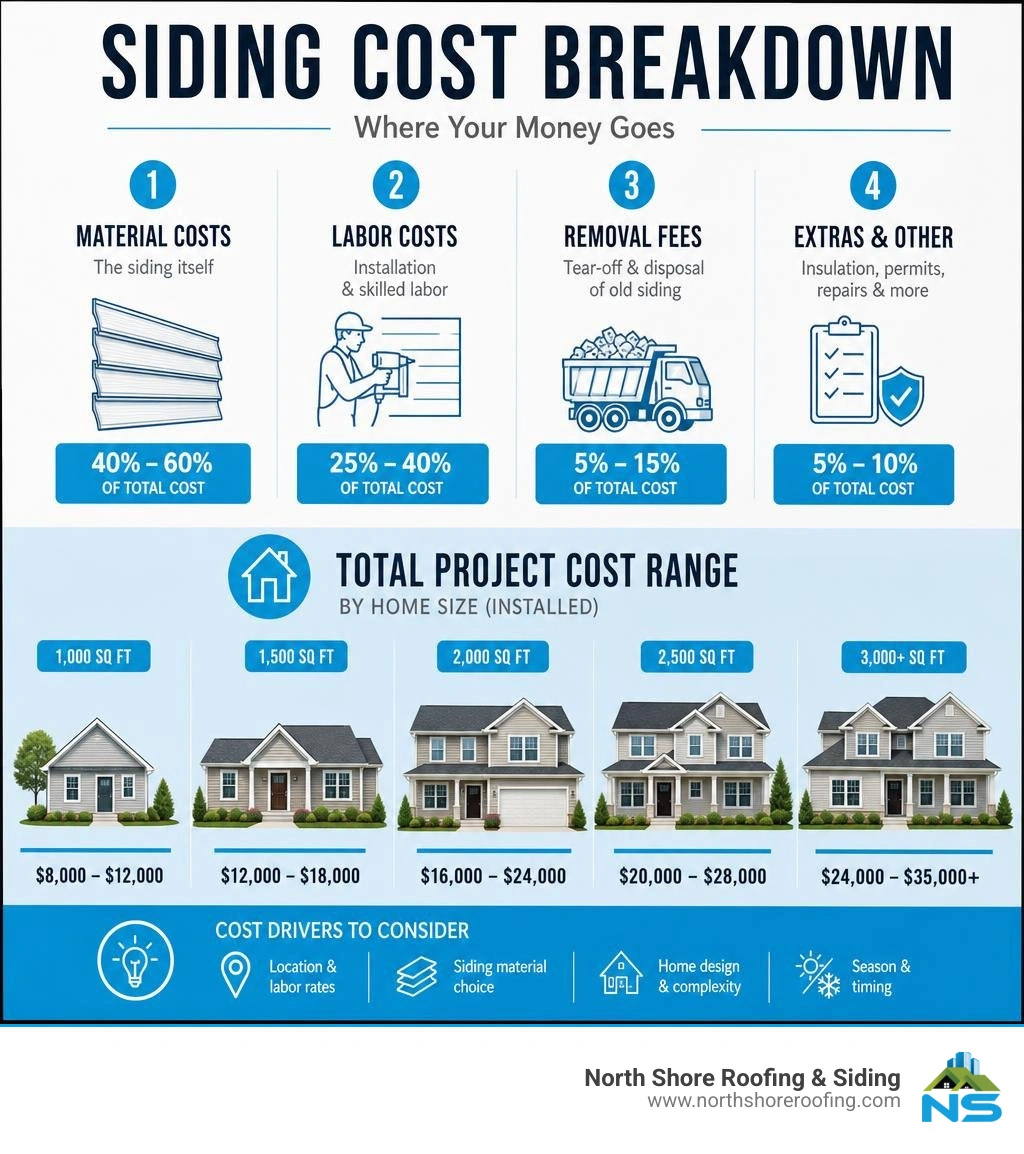
The average cost for siding replacement in 2026 ranges from $8,000 to $28,000 for most homes, depending on material, home size, and where you live. Here's a quick snapshot to answer the most common question right away:
On Long Island and in Queens, expect to pay 20–30% above national averages due to higher local labor rates and regional cost of living.
So you just got a siding quote — and your first reaction was sticker shock.
You're not alone. Homeowners across Long Island, from Port Washington to Bayside to Manhasset, regularly get estimates that seem far higher than what they expected. And without knowing what drives those numbers, it's nearly impossible to tell a fair quote from an inflated one.
The truth is, siding costs are made up of many moving parts — materials, labor, old siding removal, permits, insulation, and more. Each one adds up. Each one varies by home.
This guide breaks it all down clearly, so you know exactly what you're paying for and why.
Average cost for siding further reading:
When you begin researching the average cost for siding, you will quickly find that there is no "one-size-fits-all" price tag. In 2026, the national median cost to reside a home typically lands between $10,000 and $50,000, with most homeowners spending somewhere in the $14,000 to $25,000 range. However, local market conditions play an incredibly large role in what you will actually see on your final estimate.
If you are living in the Northeast, particularly in areas like Long Island and Queens, regional factors shift these numbers upward. Labor rates in the New York metropolitan area run roughly 25% to 30% higher than the national average. When you look at historical Siding Replacement Cost Trends, you'll see that material prices have risen steadily due to PVC resin costs and supply chain shifts, making professional planning more critical than ever.
For example, a home in Port Washington with roughly 2,000 square feet of wall area might require a budget of $14,000 to $35,000 for a complete siding project. This is because siding installation in coastal New York requires extra attention to weatherproofing, high-wind nailing patterns, and premium moisture barriers.
Because we specialize in both high-end roofing and exterior systems, we always look at the house as a complete protective envelope. If your roof’s drip edge, flashing, or gutters are failing, even the most expensive siding in the world won't protect your home from water damage. That is why understanding the regional baseline cost is just the beginning; you must also look at how your choice of material shapes the overall investment.
The material you choose is the single biggest factor in determining your overall project cost. Different materials require vastly different manufacturing processes, shipping weights, and specialized installation tools.
Below is a detailed comparison of the most common siding options available in 2026:
In neighborhoods like Flushing, Bayside, and Locust Valley, we see a wide mix of these materials. Historic properties often require the classic look of natural cedar or high-end fiber cement to match local architectural standards, while modern mid-century homes benefit from the low-maintenance appeal of standard or premium vinyl.
Vinyl remains the most popular siding choice across the United States, and for good reason. Standard vinyl siding costs roughly $4 to $8 per square foot installed in 2026. If you choose an economy or builder-grade vinyl (around 0.040 inches thick), the material is highly affordable but prone to cracking and warping under extreme temperature changes.
For primary residences in areas like Manhasset, we always recommend upgrading to a premium residential grade (0.046 inches or thicker) or insulated vinyl. Insulated vinyl siding features a contoured foam backing that adds an R-value of 2.0 to 5.5 to your walls, which can lower your heating and cooling bills by 5% to 10%. It also increases the siding's impact resistance against limbs and hail.
To explore your options for a durable, professionally installed vinyl system, take a look at our Vinyl Siding Installation Service NY page. We ensure that every panel is hung with the proper expansion gaps so your home looks beautiful through hot Queens summers and freezing Long Island winters alike.
If you are looking for a material that offers superior longevity and a highly upscale appearance, fiber cement (often referred to by the brand name James Hardie) and natural wood are the leading options. Fiber cement costs between $7 and $14 per square foot installed. It is made from a blend of cement, sand, and cellulose fibers, giving it a Class A fire rating. It is completely impervious to wood-boring insects, rot, and moisture damage.
On the other hand, natural cedar siding is the gold standard for traditional coastal elegance in Port Washington, Flushing, and Bayside. Natural wood runs between $8 and $14 per square foot installed. While it requires periodic staining or painting every 3 to 5 years to prevent rot and UV graying, its natural beauty and insulation properties are hard to match.
For homeowners who want that authentic, warm look without the heavy maintenance of pine or spruce, cedar is the ultimate choice. You can learn more about how we handle these high-end wood systems on our Cedar Siding Installation Service NY page.
If you have ever compared quotes with a neighbor and wondered why your estimate was higher for a similar-sized home, the answer lies in the architectural details. No two homes are built exactly the same, and contractors must price projects based on the physical challenges of the structure.
When we inspect a home in Locust Valley, Manhasset, or anywhere else on Long Island, we look at several key variables:
It is important to clarify that wall square footage is what determines your siding cost, not the interior living space square footage. A 2,000-square-foot ranch home has a completely different exterior surface area than a 2,000-square-foot two-story colonial.
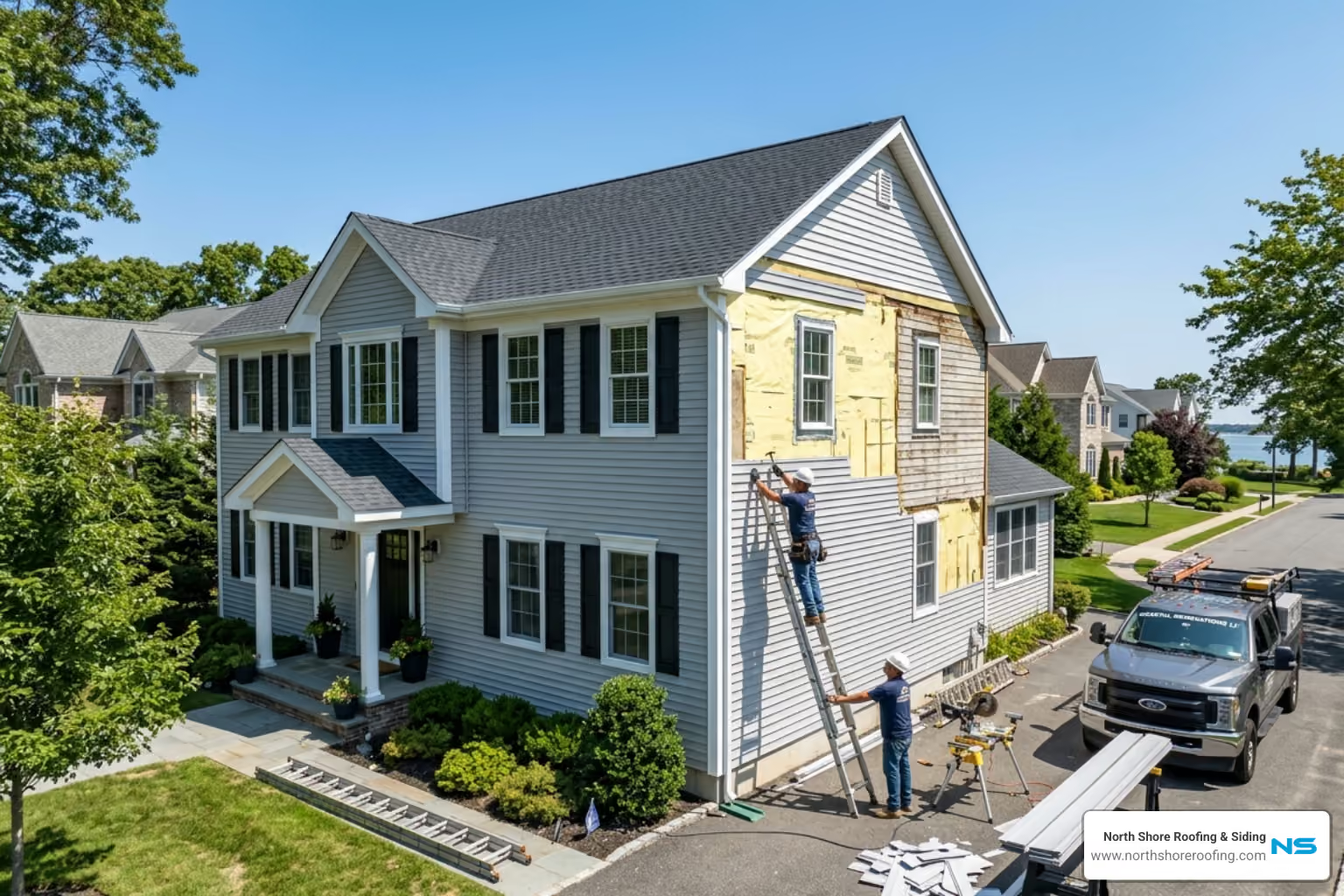
Multi-story homes in Queens, Port Washington, and Flushing naturally cost more to reside. A two-story home typically costs 15% to 25% more in labor, while a three-story home can add 25% to 40% to the installation fee. This is because crews must set up extensive scaffolding, work at a slower pace for safety, and spend more time transporting heavy materials like fiber cement up and down ladders.
Where you live and when you schedule your project will directly impact the average cost for siding. According to the Average Siding Cost by State in 2026, states with higher costs of living and strict licensing standards naturally have higher labor rates.
Seasonal demand also causes pricing fluctuations. Late spring and summer are the busiest months for home exterior contractors. During this peak season, labor rates can rise, and scheduling backlogs can stretch for months.
If you live in Bayside, Locust Valley, or Manhasset, scheduling your siding replacement for the late fall or early winter can sometimes save you 10% to 15% on labor costs. Contractors are looking to keep their crews busy during the colder months and are often more flexible with their pricing.
While replacing your siding is a significant upfront investment, it is also one of the smartest home improvement projects you can undertake in terms of equity. According to national remodeling data, a standard siding replacement project typically recoups 60% to 80% of its cost at resale. Fiber cement upgrades often yield an even higher return of up to 86%, as buyers highly value low-maintenance, fire-resistant exteriors.
Beyond resale value, new siding protects your home's framing from costly structural damage. Water that seeps behind old, cracked siding can slowly rot your studs, ruin your indoor drywall, and encourage mold growth. If you are curious about the specific cost comparisons and how different panel styles affect your budget, check out our resources on the House Siding Replacement Cost NY page and read through our detailed Siding Panel Replacement Cost Guide.
If your siding damage is localized—such as a few cracked vinyl panels from a lawnmower or a small patch of wood rot on one wall—a professional repair is highly cost-effective. However, if the damage covers more than 25% of your home, or if the siding is over 20 years old and fading, a full replacement is recommended.
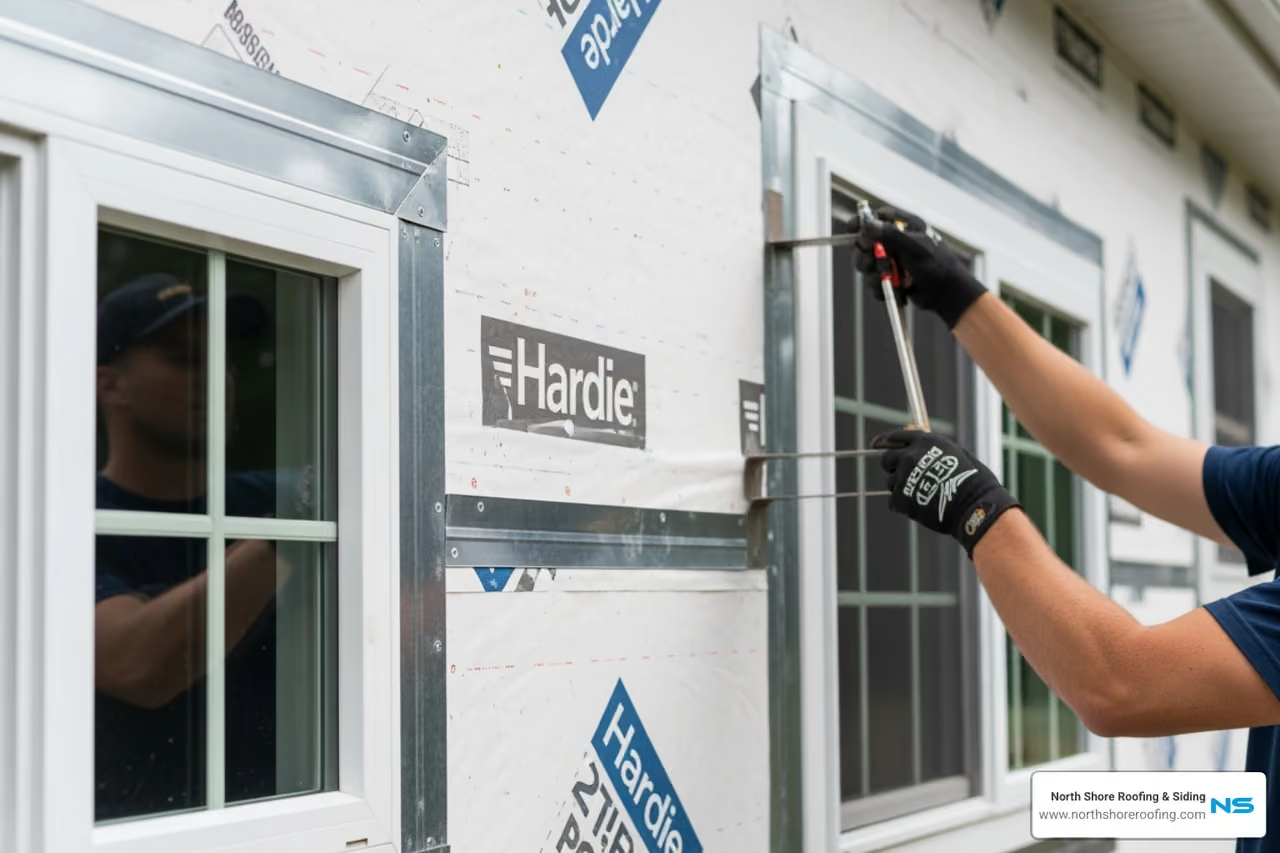
Patching old siding often leaves you with mismatched colors due to years of sun exposure on the original panels. Furthermore, old siding often hides hidden moisture issues. A full replacement allows us to strip the walls down, inspect the sheathing, install a modern house wrap, and ensure your home is fully sealed. You can read more about making this decision on our Long Island Siding Replacement page.
Always check your estimate to ensure it includes:
Siding is your home’s primary shield against the elements, and while the upfront cost can feel significant, it is an investment in your property's structural integrity, energy efficiency, and curb appeal. At North Shore Roofing & Siding, we bring local expertise, honest pricing, and a certified team to every project across Long Island and Queens.
Whether you are looking to upgrade to premium insulated vinyl or need a complete exterior overhaul, we are here to exceed your expectations. To get a clear, transparent, and itemized estimate for your home, visit our Siding Installation Services NYC page and schedule your consultation today!

Copyright 2022 North Shore Roofing & Siding | All Rights Reserved | Sitemap | Website by Plumb Development a Digital Marketing Agency