Blog Content

9
Sep
2026
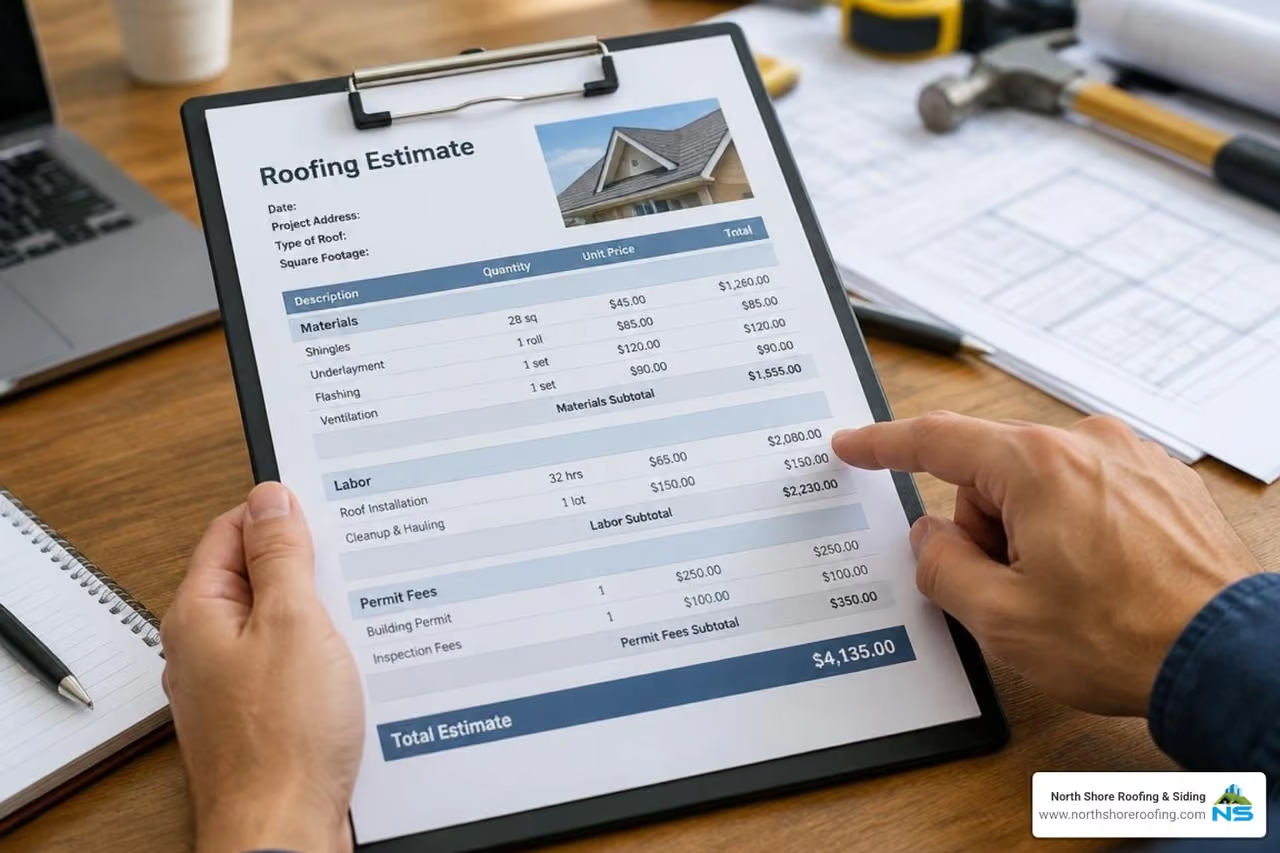
To find reliable roofers on Long Island, start by verifying local licenses and insurance, researching community reputation and verified customer ratings, comparing itemized estimates and manufacturer warranties, evaluating experience with coastal weather and roofing materials, and confirming emergency repair capabilities and service guarantees. This structured approach helps homeowners in Long Island, Queens, Port Washington, Flushing, Bayside, Locust Valley, and Manhasset choose a contractor who can protect their home through heavy precipitation, freezing winters, and intense coastal winds. Whether you reside in a historic property in Locust Valley, a waterfront home in Port Washington, or a classic suburban neighborhood in Manhasset, you need professionals who bring true local expertise to every project. Vetting contractors across Nassau and Suffolk County requires a structured approach to project planning, credential verification, and transparent communication.
The most critical first step in hiring a roofing contractor is verifying their legal standing and credentials. Roofing is hazardous work that directly impacts structural integrity, meaning licensing and insurance are non-negotiable.
In our region, regulations vary by jurisdiction. For example, residential contractors operating in Nassau County must maintain an active home improvement license issued by the Nassau County Office of Consumer Affairs. The same strict standard applies further east, where Suffolk County mandates its own consumer affairs licensing. If you are hiring roofers in Nassau County NY or seeking certified roofing contractors Suffolk County NY, always ask to see their current license number and cross-reference it with local county databases.
A fully compliant company will provide:
A license proves legality, but community reputation proves quality. Finding genuine feedback from neighbors across Long Island and Queens is easier than ever.
Start by checking verified third-party consumer review platforms and organizations like the Better Business Bureau to observe how contractors interact with clients, maintain ratings, and resolve challenges.
Look for consistency across several areas:
Never settle for a generic one-page estimate that lists a single price without itemized details. A professional proposal should clearly outline every component of your roofing system.
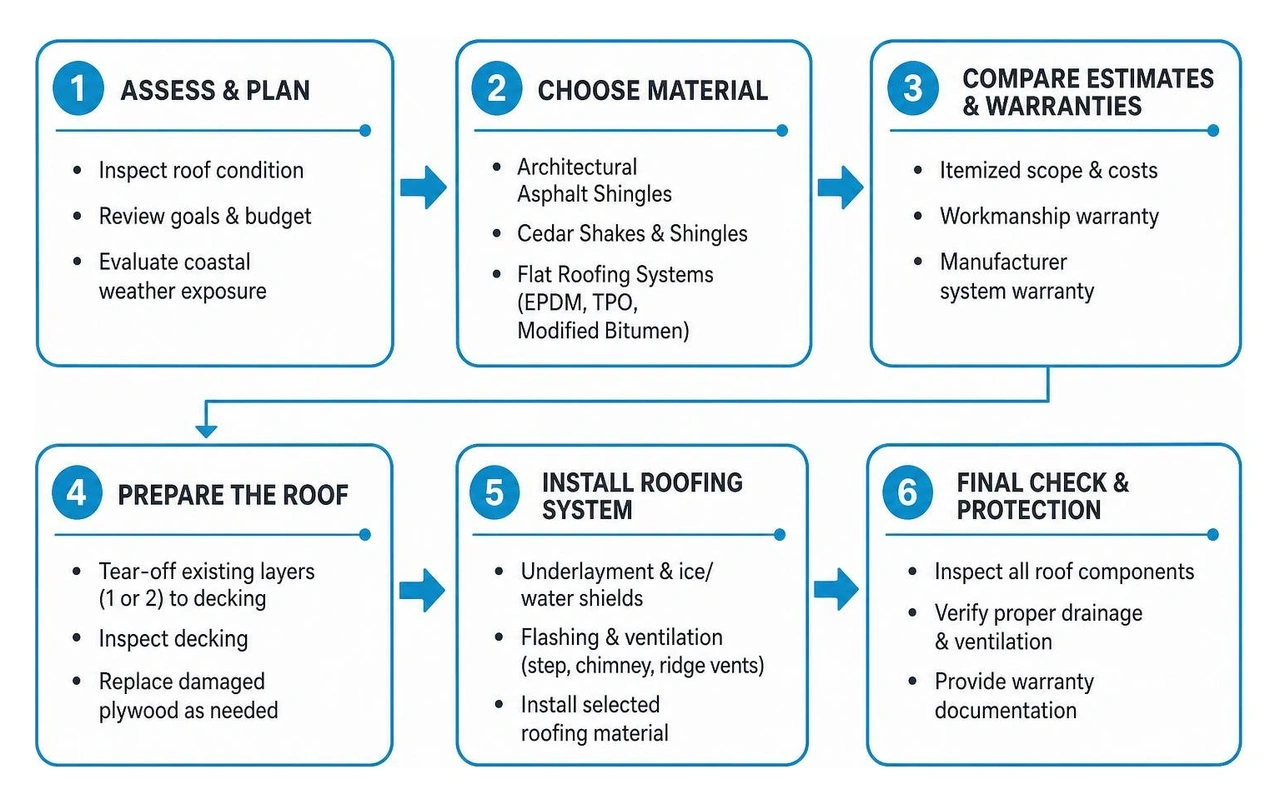
When planning a full roof replacement Long Island homeowners should compare proposals side-by-side using these core criteria:
Top manufacturers (such as GAF, CertainTeed, and Owens Corning) offer extended multi-decade non-prorated system warranties only when certified, factory-trained installers perform the work.
Long Island's unique geography exposes residential roofs to damp Atlantic air, heavy salt spray along the Sound, intense humidity, and severe seasonal storms.
Whether your home is located along the shoreline in Port Washington, on an estate in Locust Valley, or in urban neighborhoods like Flushing and Bayside, your roofing materials must be engineered to endure severe coastal weather.
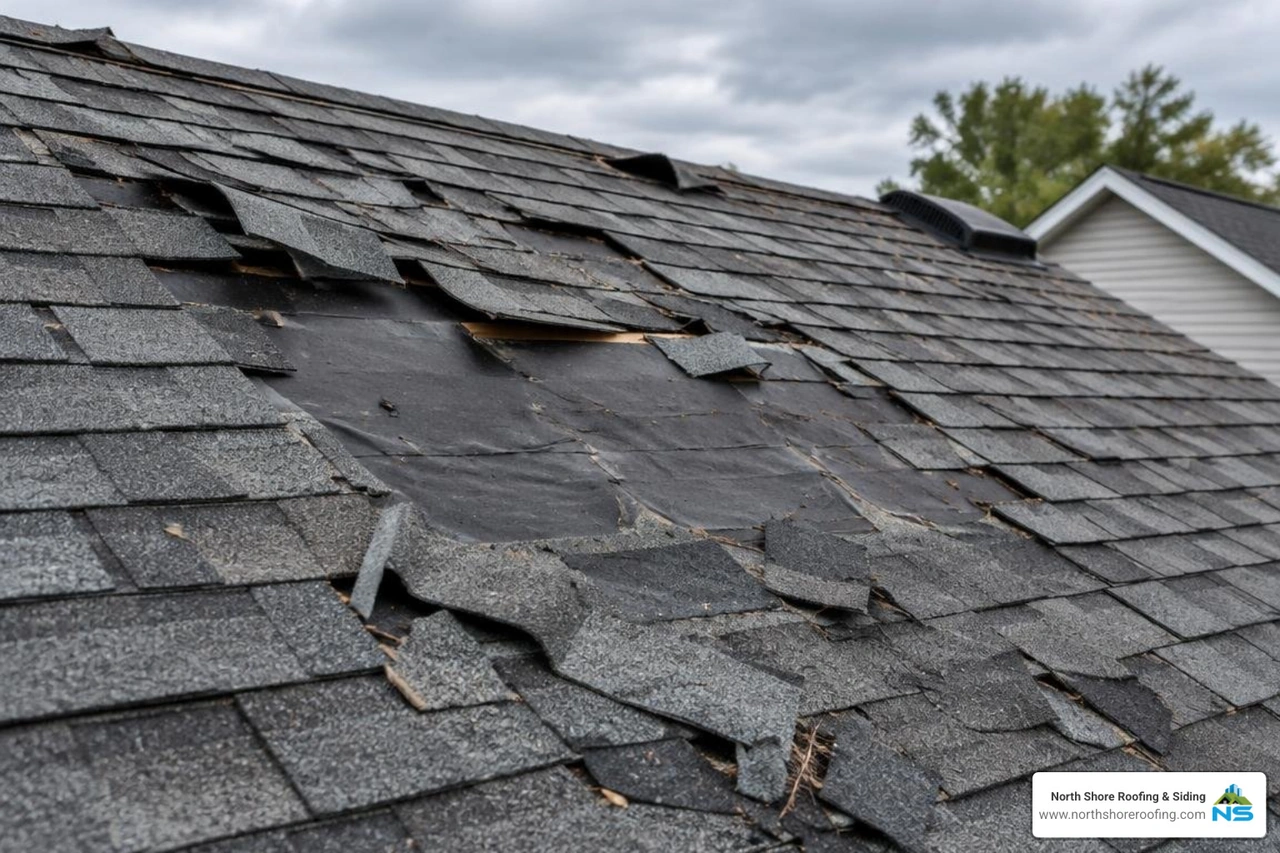
Severe weather does not wait for convenient business hours. A Nor'easter or summer squall can dislodge shingles, tear flashing, or send tree branches through roof decking in the middle of the night.
When water penetrates your roof deck, every hour counts. Reliable contractors maintain rapid-response teams capable of executing an emergency roof repair Long Island homeowners can count on.
A dependable emergency protocol includes:
Before signing any agreement, schedule a consultation and interview your prospective contractor. Use this checklist to evaluate professionalism:
For a deeper look into the entire hiring and evaluation process, review our complete roofing company guide Long Island resource.
Hiring an unvetted contractor can lead to costly structural failures, safety hazards, and voided manufacturer warranties.
Be on the lookout for these common red flags:
Improper installation leads to water pooling around chimney saddles, loose valley flashing, rotted roof decking, and mold growth inside attic spaces. Furthermore, installing shingles without adhering strictly to manufacturer nailing patterns immediately voids your material warranty, leaving you unprotected when early failure occurs.
Following major storms across Long Island and Queens, transient contractors frequently travel from neighborhood to neighborhood offering "free roofs" via insurance claims. These out-of-state operators often use high-pressure tactics to lock homeowners into binding contracts, perform hurried installations using low-grade materials, and disappear before warranty issues surface. Always partner with established, local craftsmen based right here in our community.
Roof replacement pricing depends on the square footage of the roof, pitch (steepness), architectural complexity, selected material grades, and accessibility. Costs also account for the removal of existing layers, disposal fees, and local municipal permit charges. A professional on-site inspection provides an accurate, transparent, and binding quote tailored to your home's exact dimensions.
You can verify licensing directly by contacting the Nassau County Office of Consumer Affairs or the Suffolk County Department of Labor, Licensing & Consumer Affairs via their official online portals or phone registries. In Queens (including Flushing and Bayside), verify credentials through the New York City Department of Consumer and Worker Protection (DCWP).
For an average single-family home in communities like Manhasset, Port Washington, or Hempstead, a full asphalt shingle tear-off and replacement is typically completed in 1 to 2 days, weather permitting. Complex roof lines, specialty materials like slate or cedar, or extensive decking repairs may extend the timeline slightly.
Your home represents one of your most significant investments, and its roof is its most vital protection. By verifying licensing, reviewing customer experiences, insisting on detailed written estimates, and selecting contractors who understand regional coastal weather, you can protect your property for decades to come.
At North Shore Roofing & Siding, we take immense pride in delivering honest pricing, certified craftsmanship, and dependable service throughout Long Island, Queens, and our surrounding North Shore communities. When you need a partner who treats your home with the care it deserves, explore our expert residential roofing services on Long Island and schedule your personalized consultation today.
Copyright 2022 North Shore Roofing & Siding | All Rights Reserved | Sitemap | Website by Plumb Development a Digital Marketing Agency