Blog Content

29
May
2026
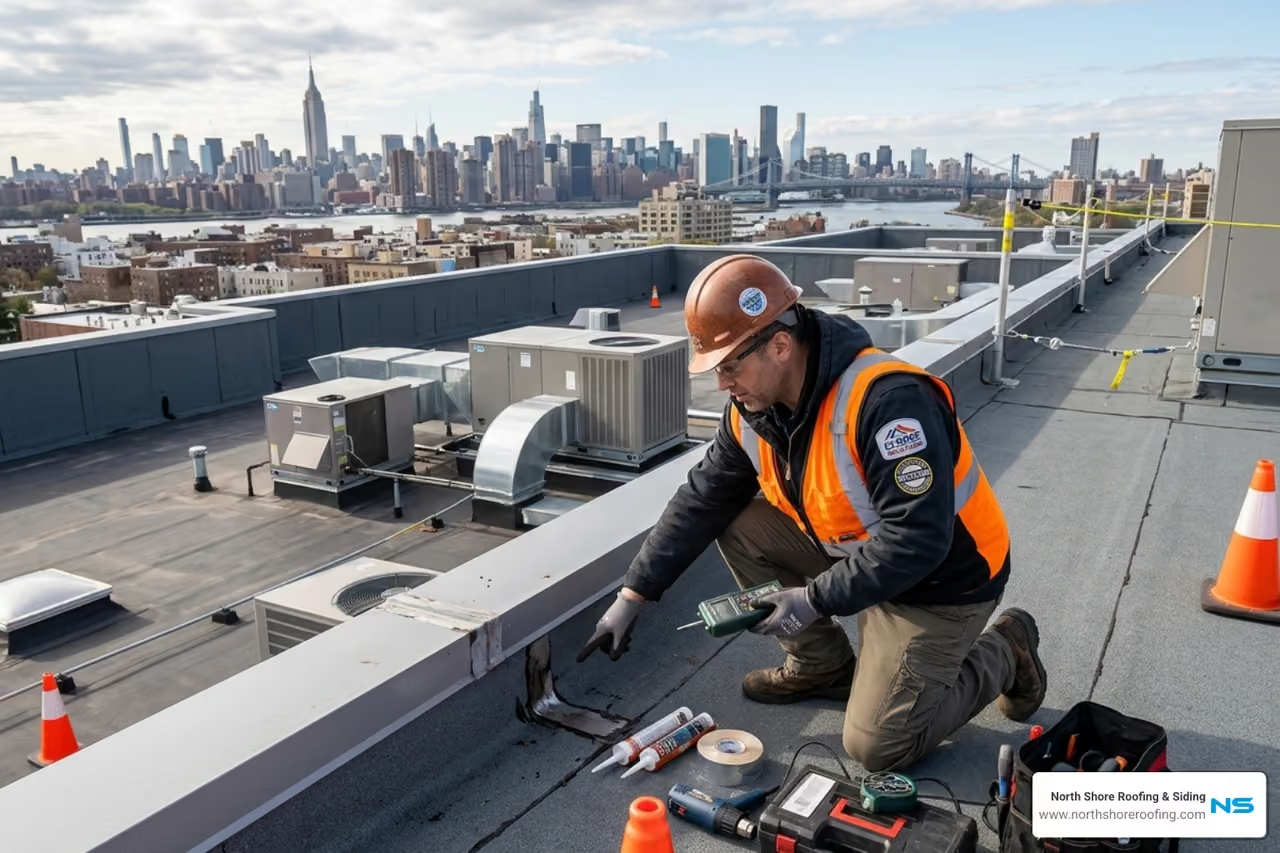
Commercial roof leak repair near me is something no business owner wants to search for — but when water is getting in, you need fast, reliable answers.
Here's what to do right now if your Long Island or Queens commercial roof is leaking:
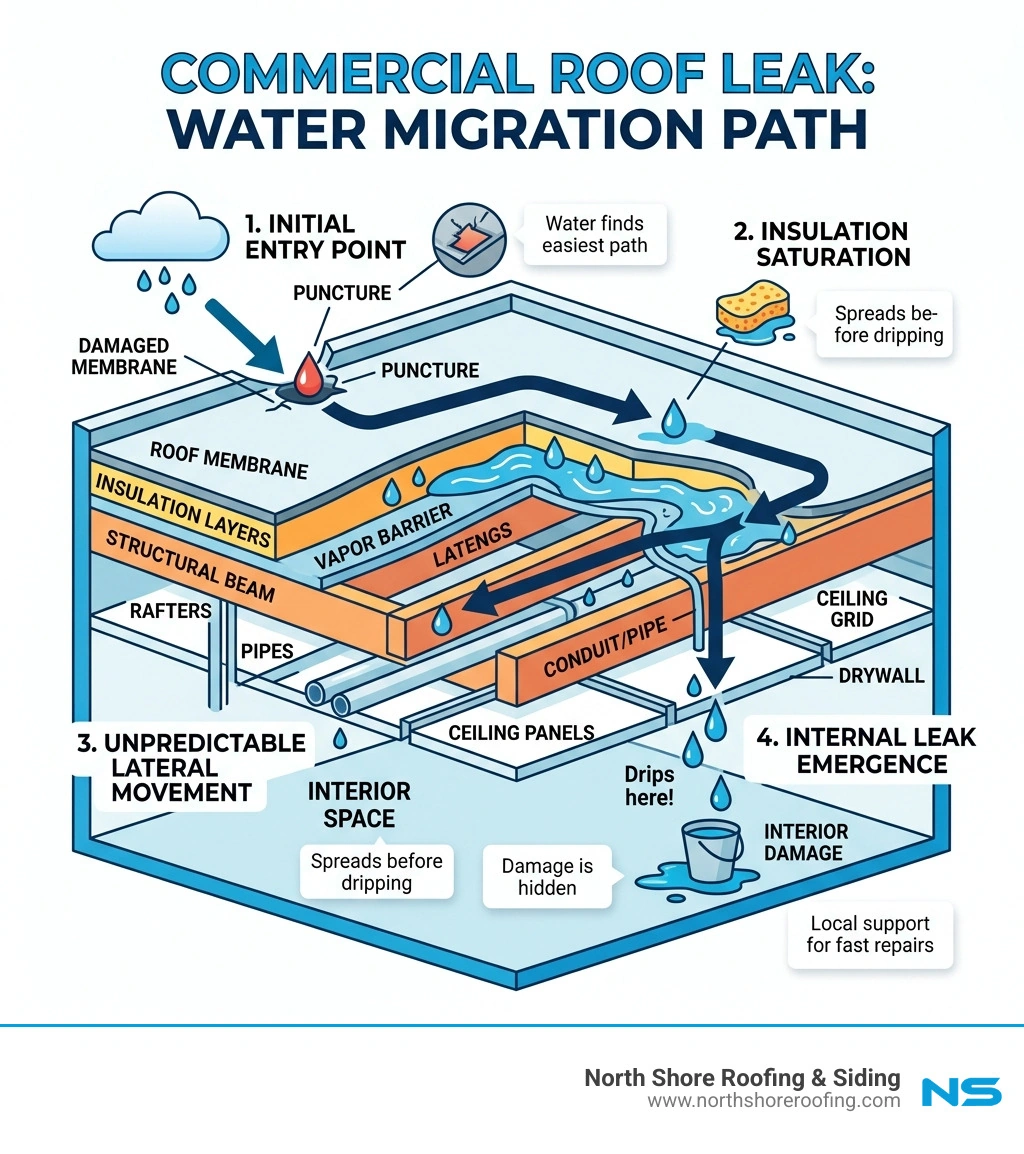
Water from a roof leak rarely drips directly below the entry point. It travels along rafters, pipes, and wires — sometimes 20 to 30 feet — before you ever notice it inside.
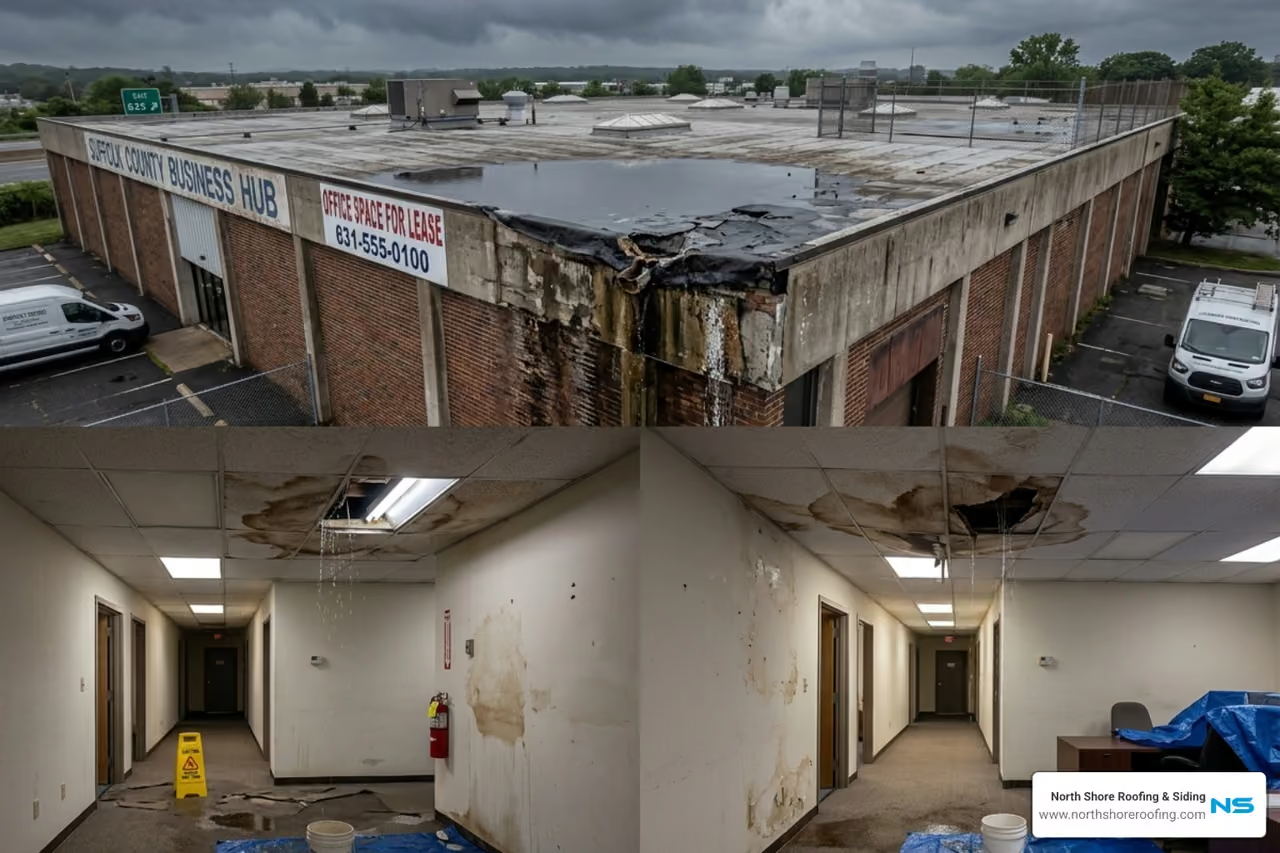
That's what makes commercial roof leaks so deceptive. By the time you see a stain on your ceiling, the damage may already be spreading through your insulation, drywall, and structural components.
For businesses across Long Island and Queens — from Port Washington to Flushing, Bayside, Locust Valley, and Manhasset — a leaking commercial roof is not just a maintenance issue. It's a threat to operations, inventory, and the building itself. Acting fast is the single most important thing you can do.
This guide walks you through exactly how to find trusted local repair experts, what the repair process looks like, and how to protect your property long-term.
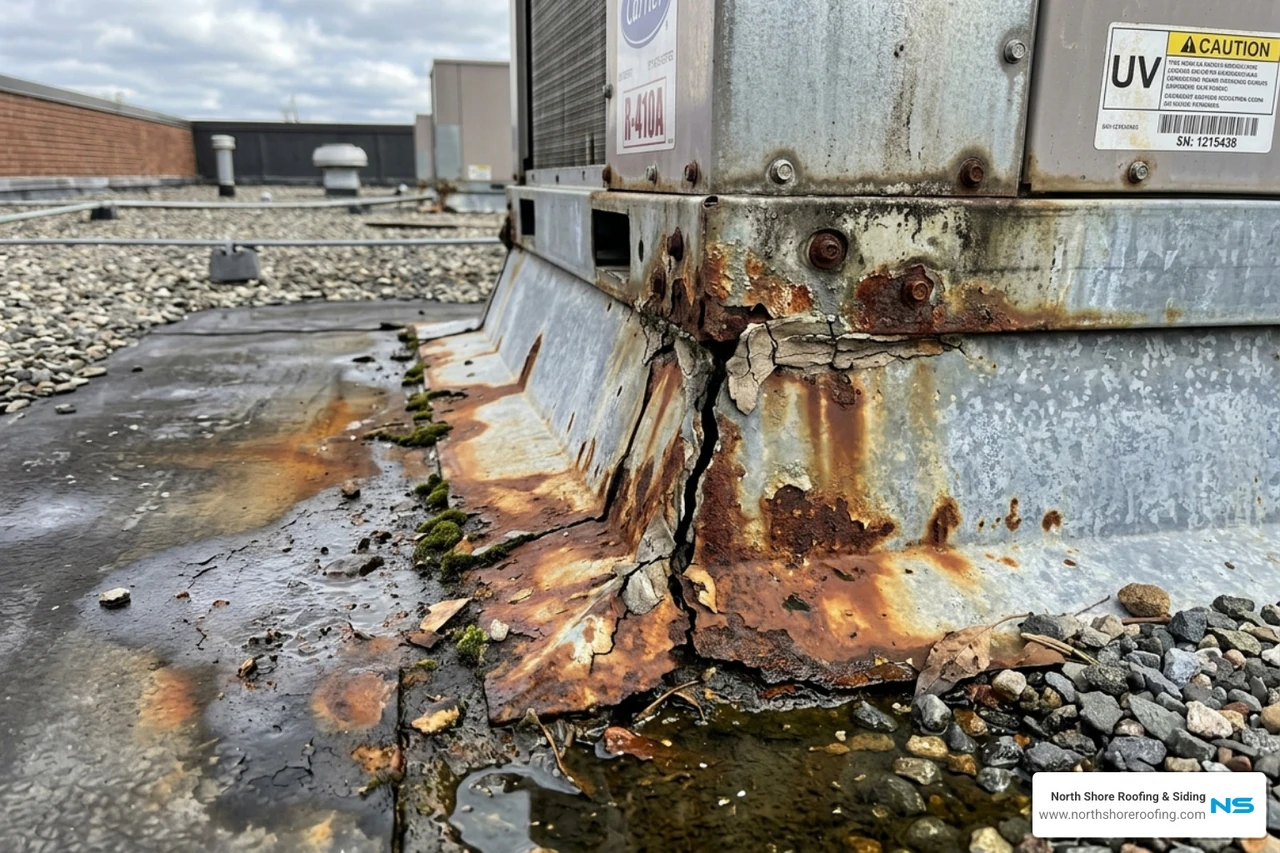
Understanding the "why" behind your roof failure is the first step toward effective commercial flat roofing installation NY or repair. In our experience servicing Long Island and Queens, commercial roofs face a unique set of stressors. Whether your facility is in Port Washington, Flushing, or Manhasset, the following issues are the most common culprits. According to the National Roofing Contractors Association (NRCA), proactive maintenance is essential for maximizing the lifespan of these systems:
Don't wait for a waterfall in your lobby. Businesses in Bayside and Locust Valley should keep an eye out for these subtle warning signs:
To pinpoint the exact source, we use advanced technology like infrared scans and moisture mapping. These tools allow us to see temperature differences that indicate trapped water, ensuring we fix the source, not just the symptom.

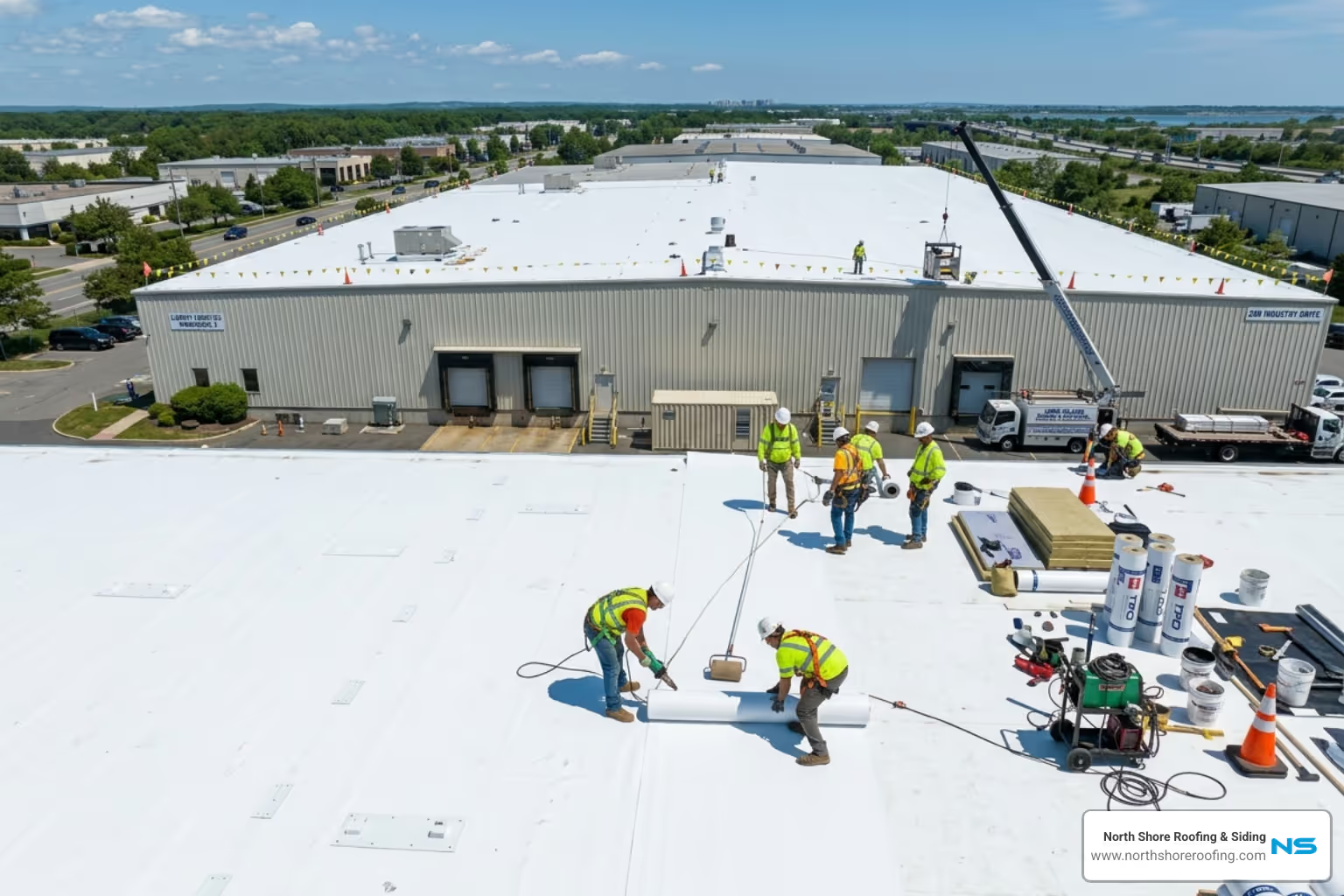
When you search for commercial roof leak repair near me, you aren't just looking for someone with a bucket of tar. You need a systematic approach. Our professional process ensures a long-lasting fix for properties across Long Island and Queens. From Port Washington to Flushing, we follow a rigorous diagnostic path.
First, we perform a comprehensive commercial roofing services NYC inspection. This includes an interior assessment to map water migration paths and an exterior inspection of seams, flashings, and drains. We often use drone technology to get a bird's-eye view of large industrial complexes, identifying drainage patterns that aren't visible from the ground.
Once we've identified the failure points in areas like Bayside and Manhasset, we move into the execution phase:
Different roofs require different "medicine." We specialize in the various systems found throughout Long Island and Queens. Whether you are managing a warehouse in Bayside or a retail space in Locust Valley, understanding your roof type is key.
For a broader look at these systems, check out our commercial roofing overview. Each system has its quirks. For example, EPDM is known for its durability but is prone to shrinkage, which can pull the membrane away from the walls. TPO is incredibly energy-efficient and often meets Energy Star standards for solar reflectance, but can suffer from seam failures if the original installation was rushed.
Flat roofs in Port Washington and Locust Valley face the biggest challenge: gravity (or the lack thereof). Without a significant pitch, even a small obstruction can cause standing water. We address this by:
Is it better to patch or replace? This is a major financial decision for any property owner in Long Island and Queens. As a rule of thumb, we look at the 20% Rule: if more than 20% of the roof is saturated or damaged, a full replacement or commercial roofing tags restoration is usually more cost-effective than endless patching.
Factors we consider for facilities in Flushing and Manhasset:
Our local weather is no joke. Long Island and Queens deal with everything from coastal hurricanes to heavy snow loads. In Port Washington and Bayside, the "freeze-thaw cycle" is a major roof killer. Water gets into a small crack, freezes and expands, and rips the crack open further.
When a storm hits Flushing, Locust Valley, or Manhasset, you need a team that understands the urgency. High winds can lift membrane corners, and heavy snow can cause structural sagging on older industrial buildings.
We provide rapid dispatch for emergencies across Long Island and Queens. Our emergency protocol includes:
Cost is always a concern. Most professional repairs are billed on a time and materials basis. For example, some contractors charge an hourly rate (often around $135/hour for a two-person crew) with a minimum service fee. A typical minor repair—fixing a few punctures and a failed flashing—might range from $800 to $1,500. Larger, more complex leaks requiring extensive diagnostic work can reach several thousand dollars.
Yes! While we prefer dry conditions for permanent fixes, we can perform emergency stabilization in any weather. We use moisture-tolerant primers and rapid-cure sealants that bond even in wet conditions. Once the weather clears, we return to perform a permanent, manufacturer-warranted repair.
We recommend biannual checks—once in the spring and once in the fall. This allows us to clear summer debris before the winter snow and check for winter ice damage before the spring rains. Businesses in Port Washington, Flushing, and Bayside that stay on top of maintenance typically see their roofs last 5 to 10 years longer than those that don't.

A leaking roof is a headache you don't need, but it doesn't have to be a disaster. By acting quickly and choosing a local expert, you can protect your building and your bottom line.
For reliable commercial roof leak repair near me across Long Island and Queens, including Port Washington, Flushing, Bayside, Locust Valley, and Manhasset, trust the team at North Shore Roofing & Siding. We bring local expertise, honest pricing, and a commitment to exceeding your expectations on every project.
Contact us for Commercial Roofing Services in NYC today to schedule your professional inspection or emergency repair. We'll get you back to business, dry and secure.
Copyright 2022 North Shore Roofing & Siding | All Rights Reserved | Sitemap | Website by Plumb Development a Digital Marketing Agency