Blog Content

19
Jun
2026
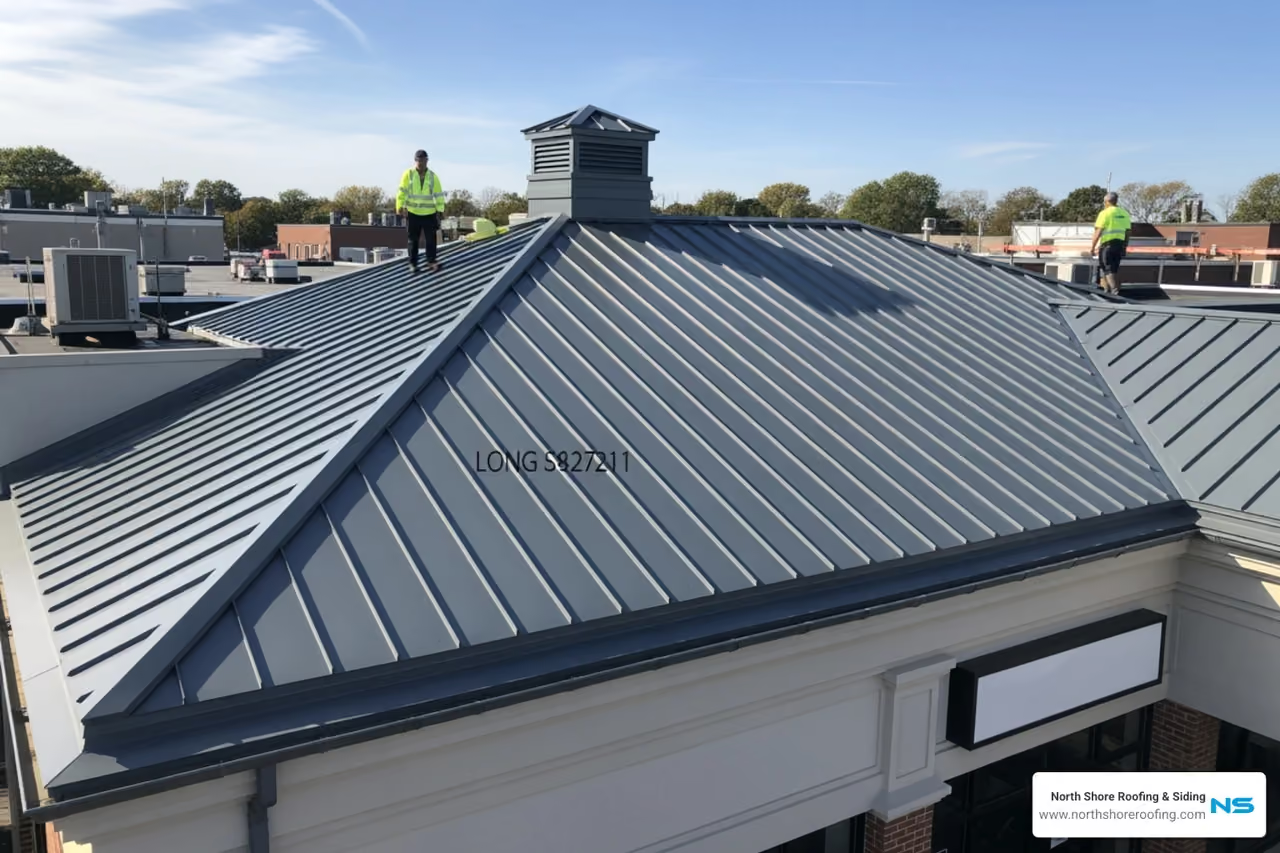
Commercial metal roofing is one of the longest-lasting, most weather-resistant options available for business and building owners today. Here's a quick overview to answer the most common questions upfront:
If you own or manage a commercial property in Long Island, Queens, Port Washington, Flushing, Bayside, Locust Valley, or Manhasset, your roof faces a tough combination of coastal salt air, nor'easter winds, summer heat, and winter snow. Those conditions make your choice of roofing material more important than in most parts of the country. Learn about our commerical metal roofing installation services here.
Metal roofing has been the go-to solution for commercial and industrial buildings across these areas — and for good reason. It outperforms asphalt by a wide margin on lifespan, fire resistance, and storm resilience. And while the upfront cost is higher, the long-term value is hard to beat.
This guide walks you through every major decision point: panel types, materials, slope requirements, fastening systems, local codes, and maintenance — so you can make a confident, informed choice for your building.

Commercial metal roofing terms you need:
In Long Island and Queens, roofs do not get a lot of sympathy from the weather. Salt exposure near the coast, heavy summer UV, wind-driven rain, and winter freeze-thaw cycles all put pressure on commercial roof systems. That is why commercial metal roofing continues to grow in popularity for owners in Port Washington, Flushing, Bayside, Locust Valley, and Manhasset.
Metal roofs are known for long service life, strong fire resistance, and excellent storm performance. Many systems are engineered for wind speeds above 150 mph, and high-performing assemblies often achieve Class 4 hail impact resistance. For local property owners, that can mean fewer storm-related headaches and better long-term value.
They also look sharper than many people expect. Modern metal roofing can fit a warehouse, office, retail center, restaurant, school, or healthcare building without making it look like a farm shed from 1987.
For a broader look at local solutions, see our commercial roofing services in NYC.
The biggest benefits for Long Island and Queens properties include:
Metal roofs also reflect UV rays, which helps reduce heat gain. That matters in dense Queens commercial corridors and sun-exposed Long Island sites alike. In warmer months, reflective finishes and cool-roof colors can contribute to lower cooling costs.
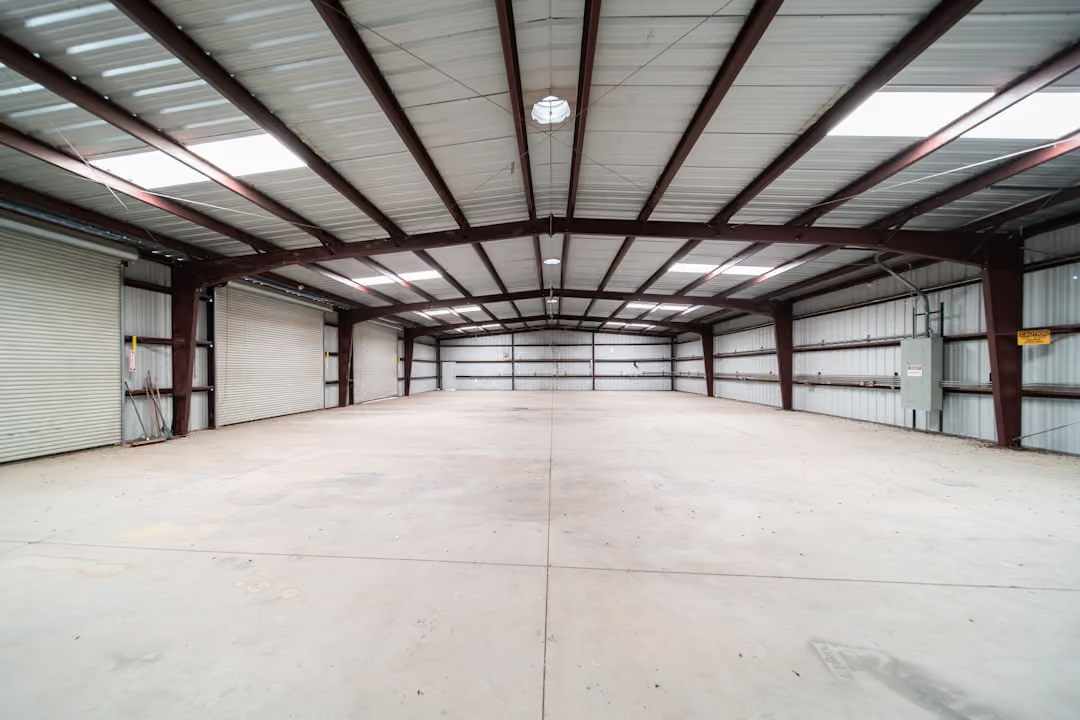
Commercial metal roof systems work especially well on:
Another advantage is design coordination. Metal roofing can often pair well with metal siding and trim packages, creating a consistent exterior for commercial buildings in Long Island and Queens.
Not all metal roofs are built the same. The main categories differ in appearance, fastening style, slope compatibility, and maintenance needs.
The most common system types are:
Broadly, these systems fall into two fastening groups:
That single design choice affects performance, appearance, and maintenance more than many owners realize.
Standing seam is the premium option for many commercial projects in Long Island and Queens. These systems use raised seams and concealed clips or fasteners, which protect attachment points from weather exposure.
Benefits of standing seam include:
That last point matters a lot. Metal moves with temperature swings, and anyone who has spent a year in Queens or Long Island knows we do not exactly have mild seasons. Concealed-clip systems allow panels to "float" more effectively as temperatures change, reducing stress on the roof assembly.
Some standing seam systems can work on relatively low slopes, making them useful for many commercial buildings.
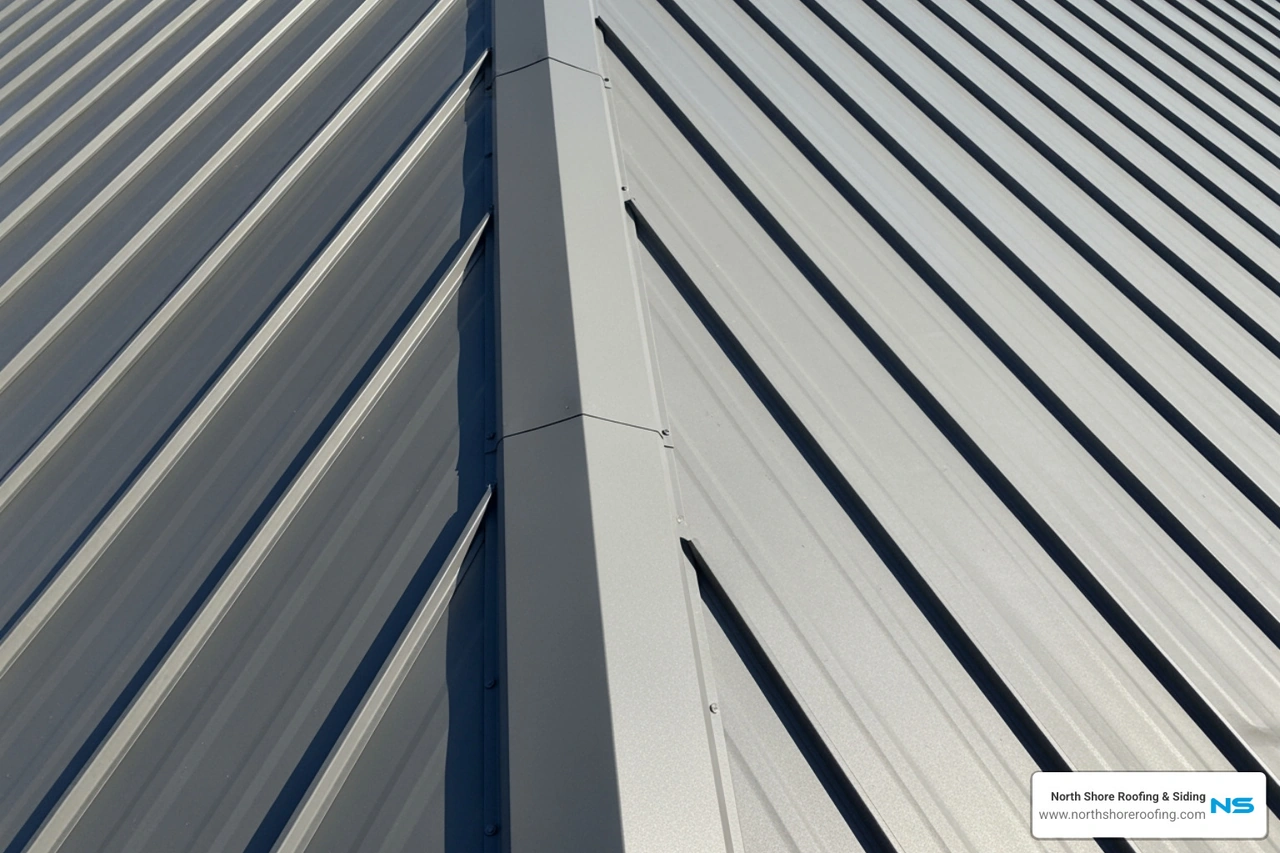
Exposed-fastener systems include corrugated and ribbed metal panels. These are usually more budget-friendly up front and are common on industrial, utility, and straightforward commercial buildings.
Their main advantages are:
Tradeoffs include:
For some buildings in Port Washington, Flushing, or Bayside, exposed-fastener panels are a practical fit. But on higher-visibility properties or roofs with long-term ownership goals, concealed-fastener systems are often worth the upgrade.
Insulated metal panels combine outer metal faces with factory-made foam insulation. These systems can be a strong fit for temperature-controlled facilities, warehouses, food-related buildings, and specialized commercial spaces.
Advantages include:
Some insulated standing seam roof panels can be used on slopes as low as 1/2:12, which makes them useful for certain low-slope commercial applications. If you want to review an example of this type of system, see these insulated standing seam roof panels.
Material choice is just as important as panel style. The most common commercial metal roof materials are steel, aluminum, zinc, and copper.
Other factors also matter, including:
For most commercial projects in Long Island and Queens, the practical comparison is steel versus aluminum.
Steel is popular because it offers:
Common steel options include galvanized steel and Galvalume steel. These coatings help protect against corrosion and improve service life.
Aluminum offers:
That makes aluminum especially attractive for buildings closer to shoreline conditions in Long Island, including areas like Port Washington and Locust Valley.

In simple terms:
For Queens properties, Bayside buildings, and some Long Island sites, we often evaluate distance from the coast, surrounding pollutants, and roof traffic before recommending one over the other.
Zinc and copper are premium metals with very long lifespans and distinctive appearance. Both develop protective patinas over time.
Zinc offers:
Copper offers:
These materials are usually selected for high-end architectural projects, specialty buildings, or signature design elements rather than standard commercial roofs.
Coatings matter too. A high-performance finish such as PVDF can improve fade resistance, corrosion protection, and long-term appearance retention. Reflective colors can also support energy efficiency goals. For related local services, visit our metal roofing installation.
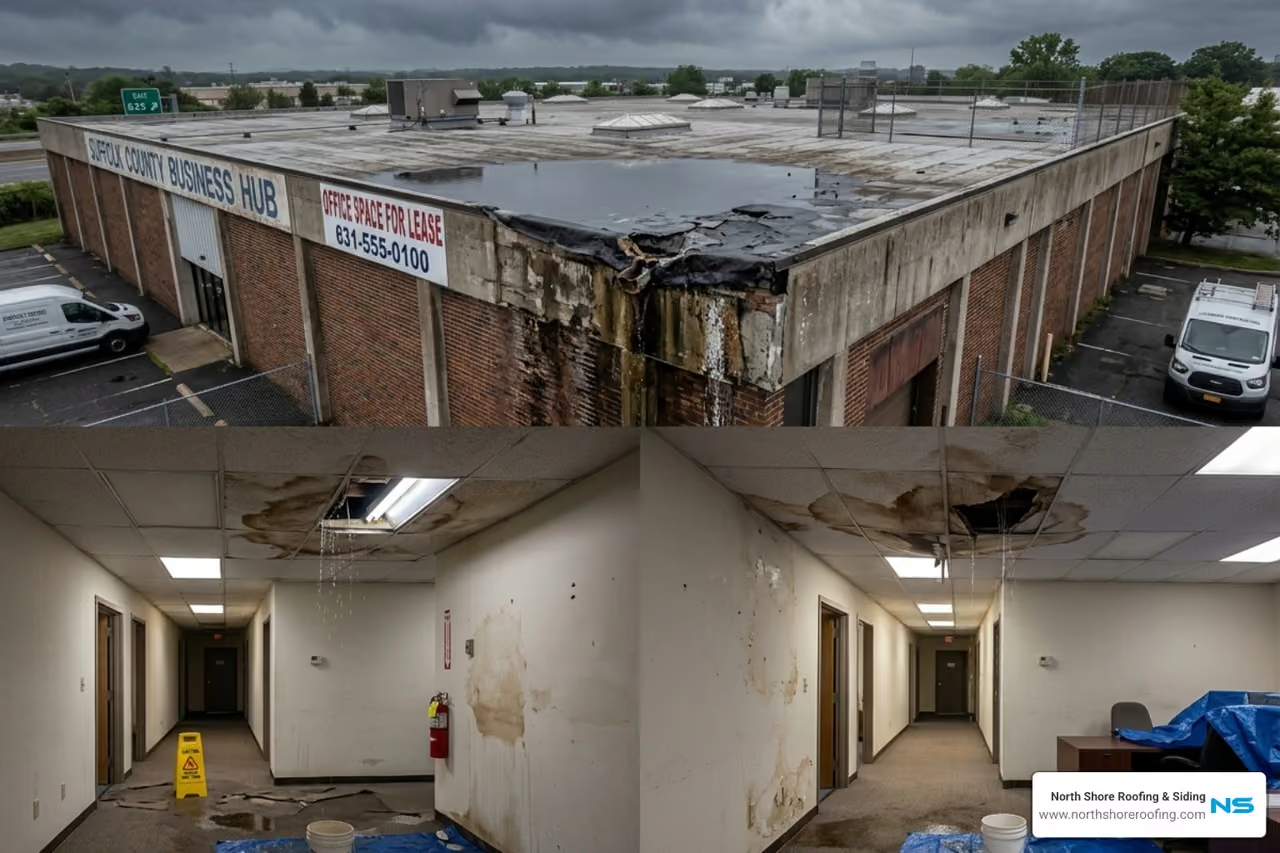
Commercial metal roofing is not always the cheapest roof on day one, but it often looks much better over the full life of the building.
Compared with asphalt-based systems, metal usually lasts far longer. Compared with low-slope membranes such as EPDM, TPO, or BUR, metal may offer better lifespan in the right application, especially on buildings that can benefit from retrofit framing, improved drainage, or sloped panel systems.
Research consistently puts metal roof life expectancy in the 40 to 100+ year range, with many commercial systems reaching around 60 years when installed and maintained correctly. By comparison, asphalt roofing is often capped around 20 years.
That difference changes the math.
Instead of thinking only about upfront price, owners in Long Island and Queens should look at:
A roof that costs less initially can become the expensive one later. Roofing has a way of acting like a bargain until it sends invoices from the future.
Metal roofs reflect solar heat and can reduce cooling demand, with reported savings often in the 10% to 20% range and sometimes up to 25% depending on color, insulation, and building use. Reflective finishes are especially valuable on sun-exposed commercial buildings in Flushing, Manhasset, and across Long Island and Queens.
Other major advantages include:
Metal roofing can also support green building goals and may contribute to LEED-oriented sustainability strategies through recyclability, durability, and energy performance.
For a broader comparison of roof systems, see our commercial roofing overview.
The best commercial metal roof is not just the one with the nicest brochure. It is the one that matches the building.
Key selection factors include:
Long Island and Queens create different but equally important demands.
In Long Island, especially near coastal exposure, we pay close attention to:
In Queens, we also consider:
Local conditions in Port Washington, Flushing, Bayside, Locust Valley, and Manhasset can affect material and coating recommendations. Coastal or semi-coastal exposure may push the decision toward aluminum or higher-grade coated steel. Noise-sensitive occupancies may benefit from better insulation, solid decking, and acoustic planning.
Exposed and concealed fastening systems are not interchangeable from a performance standpoint.
Concealed-fastener systems generally offer:
Exposed-fastener systems generally offer:
Code and insurance issues matter too. Commercial metal roofs may need specific wind uplift testing, fire classifications, and manufacturer-approved assemblies to meet project requirements. In Long Island and Queens, permits and code review should be handled before installation begins, not halfway through after someone has already ordered panels.
We recommend reviewing project scope with an experienced team and referencing our guides on commercial roof installation in NY and commercial flat roofing installation in NY.
Even the best panel system can fail if it is poorly installed. Commercial metal roofing depends heavily on detailing, layout, and attachment accuracy.
The details that matter most include:
On buildings with rooftop units, vents, or heavy service traffic, flashing quality becomes especially important. Many leaks blamed on "the roof" actually begin around penetrations or transitions.
Professional planning also helps protect tenant operations and site safety in busy areas of Queens and Long Island. For more on choosing the right team, see our guide to a commercial roof install contractor.
A good maintenance plan is simple but important. We recommend:
On some aging roofs, restoration or retrofit may be a smarter path than full replacement. Insulated retrofit systems can improve thermal performance and reduce tear-off disruption on the right building. For more technical product details, see these insulated standing seam roofing details.
Usually, no. When installed over a solid deck with underlayment and proper insulation, metal roofs are comparable in sound levels to other roofing systems. The old "drum solo during every rainstorm" idea is mostly a myth left over from poorly detailed structures.
Often, yes. Retrofit systems can sometimes go over an existing roof, which may reduce tear-off cost and keep operations moving with less disruption. The building still needs structural review and code compliance confirmation before that approach is approved.
Cost depends on:
Standing seam and aluminum systems usually cost more upfront than exposed-fastener steel panels, but they often provide better long-term value. For many owners in Long Island, Queens, Port Washington, Flushing, Bayside, Locust Valley, and Manhasset, the better question is not "What is the cheapest roof?" but "What will cost us less over 30 years?"
Choosing the right commercial metal roofing system means balancing appearance, performance, budget, building use, and local exposure. For properties in Long Island and Queens, that decision should always account for salt air, storms, heat, snow, and local code requirements.
At North Shore Roofing & Siding, we help owners in Port Washington, Flushing, Bayside, Locust Valley, Manhasset, Long Island, and Queens evaluate those factors clearly. Our team focuses on honest pricing, proven materials, certified installation, and practical recommendations based on the building in front of us, not a one-size-fits-all sales pitch.
If you are planning a reroof, retrofit, or new commercial project, learn more about our commercial roofing services.
Copyright 2022 North Shore Roofing & Siding | All Rights Reserved | Sitemap | Website by Plumb Development a Digital Marketing Agency