Blog Content

7
Aug
2026
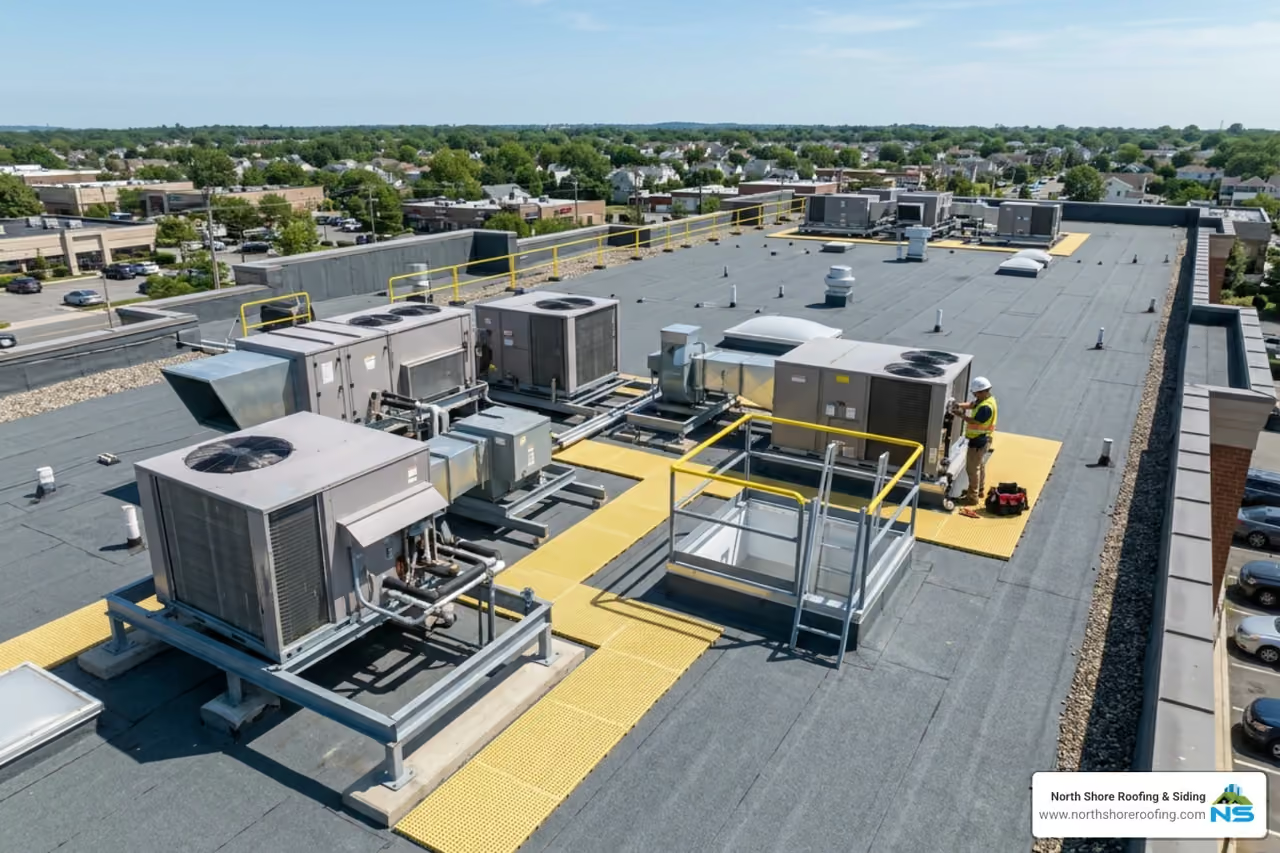
Commercial roofing maintenance is the practice of regularly inspecting, cleaning, and repairing your roof system before small problems become expensive disasters. Here's what every Long Island and Queens business owner needs to know upfront:
Quick Answer: Commercial Roofing Maintenance Essentials
Your commercial roof is quietly working against you right now — and you may not know it.
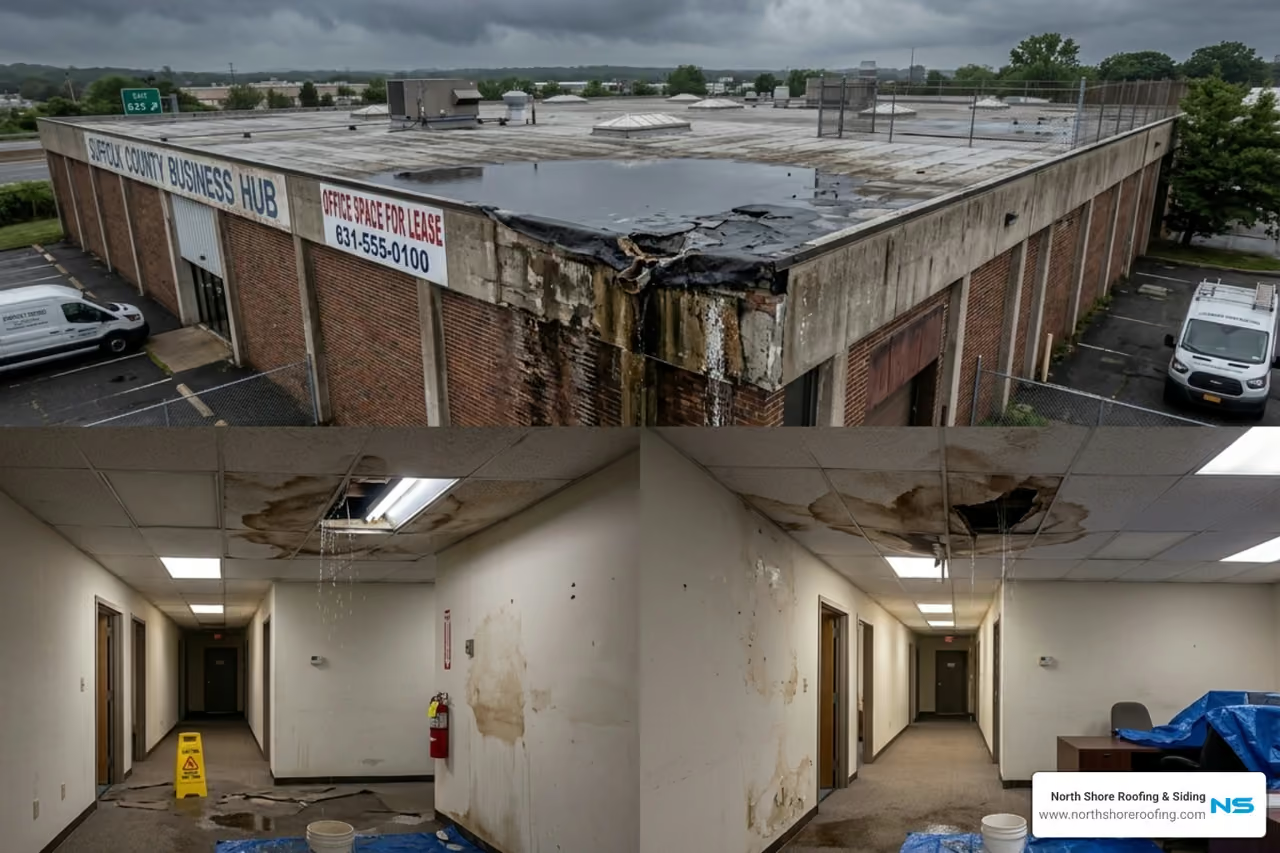
Most roof failures don't start with a dramatic storm or a sudden collapse. They start small. A clogged drain here. A lifted flashing seam there. A tiny membrane crack that lets in just enough water to saturate the insulation underneath. By the time you see a ceiling stain in your Port Washington office or a puddle on your Queens warehouse floor, the damage has already been spreading for months.
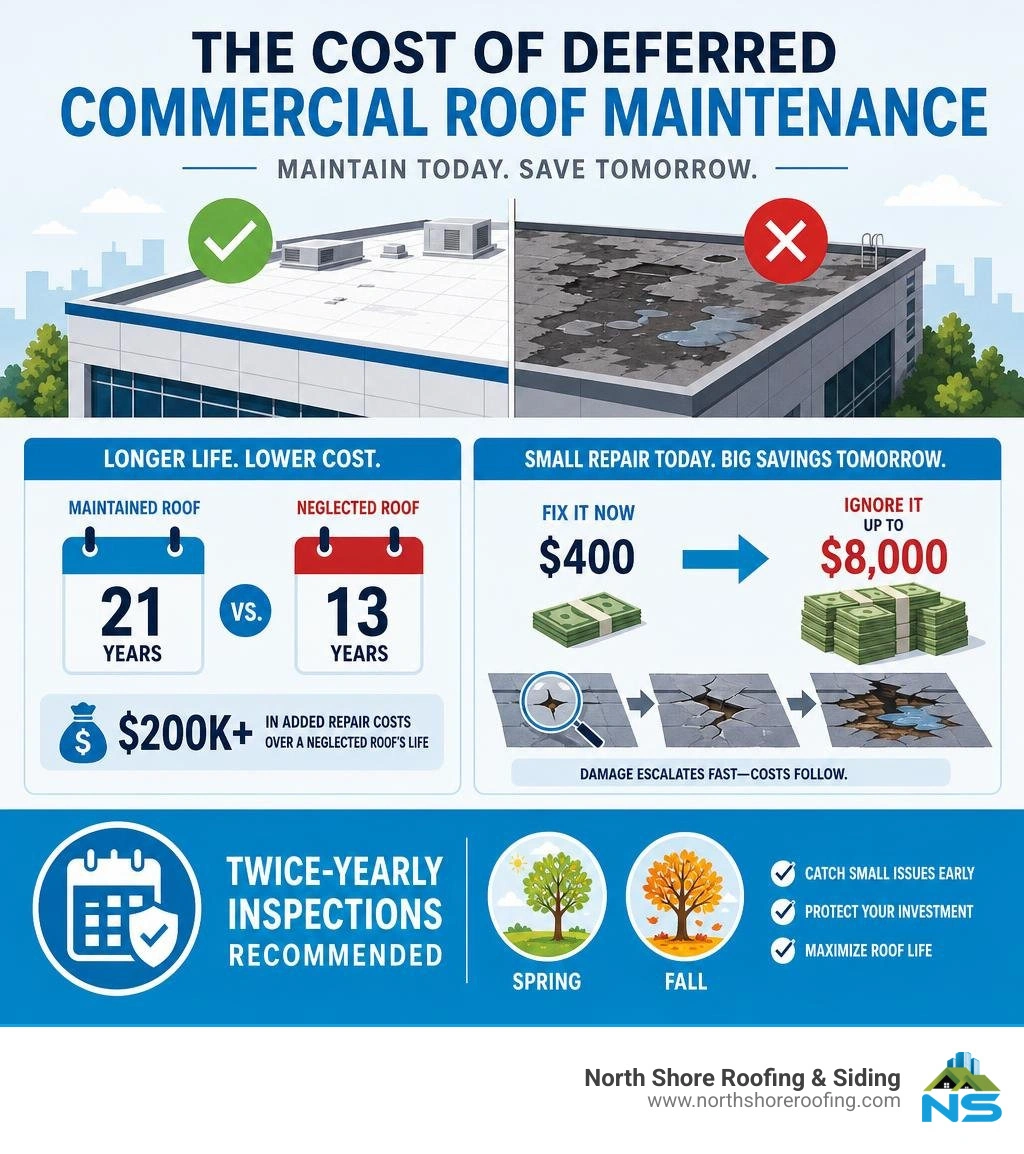
The numbers tell the story clearly. According to the NRCA, a well-maintained commercial roof lasts approximately 21 years. A neglected one lasts around 13 years. That's an eight-year gap — and over the shortened life of a neglected roof, a building owner can rack up $200,000 or more in additional repair costs that proper maintenance would have prevented.
For business owners across Long Island — from Flushing and Bayside to Manhasset and Locust Valley — that's not an abstract statistic. That's real money, real business interruption, and in many cases, a voided warranty.
This guide walks you through why those repairs can't wait, what a solid maintenance program looks like, and how North Shore Roofing & Siding helps local commercial property owners stay ahead of damage before it gets out of hand.
Commercial roofing maintenance terms you need:
When you run a business, there is always a competing list of expenses clamoring for your attention. It is easy to look at a dry ceiling and assume your roof is doing fine. However, deferring commercial roofing maintenance is one of the most expensive gambles a building owner can make.
The industry reality is stark: a well-maintained commercial roof survives about 21 years, while a neglected one must be replaced after just 13 years. This eight-year service gap represents hundreds of thousands of dollars in premature replacement costs. If you own a large-scale commercial property in Flushing, Bayside, or Locust Valley, that premature replacement could mean writing a six-figure check years before you planned to.
Furthermore, a 25-year commercial roof that does not receive adequate, structured upkeep can easily generate $200,000 or more in additional repair costs over its shortened service life. Why? Because water is incredibly patient. Once a seam opens or a flashing fails, moisture seepages begin to rot the roof deck, ruin insulation, and rust structural steel.
Consider this surprising statistic: roofing represents just 4% of the initial construction cost of a building, but it accounts for as much as 75% of building-related litigation costs. Property damage, structural failures, mold claims, and tenant disputes over disrupted operations frequently trace back to a poorly maintained roof. Implementing a proactive preventative maintenance program with an experienced partner like us is the most reliable way to mitigate these liabilities.
Routine maintenance is also your shield against warranty disputes. Many commercial property owners do not realize that their long-term manufacturer warranties require documented proof of regular upkeep. Skipping your scheduled checkups can completely void your coverage, leaving you to pay out of pocket for repairs that would have otherwise been covered. For more detailed insights into the long-term mechanics of roof preservation, check out the Commercial Roof Maintenance Guide (2026) | Commercial Roof Guide or explore our specialized resources on Industrial Roof Maintenance NY.
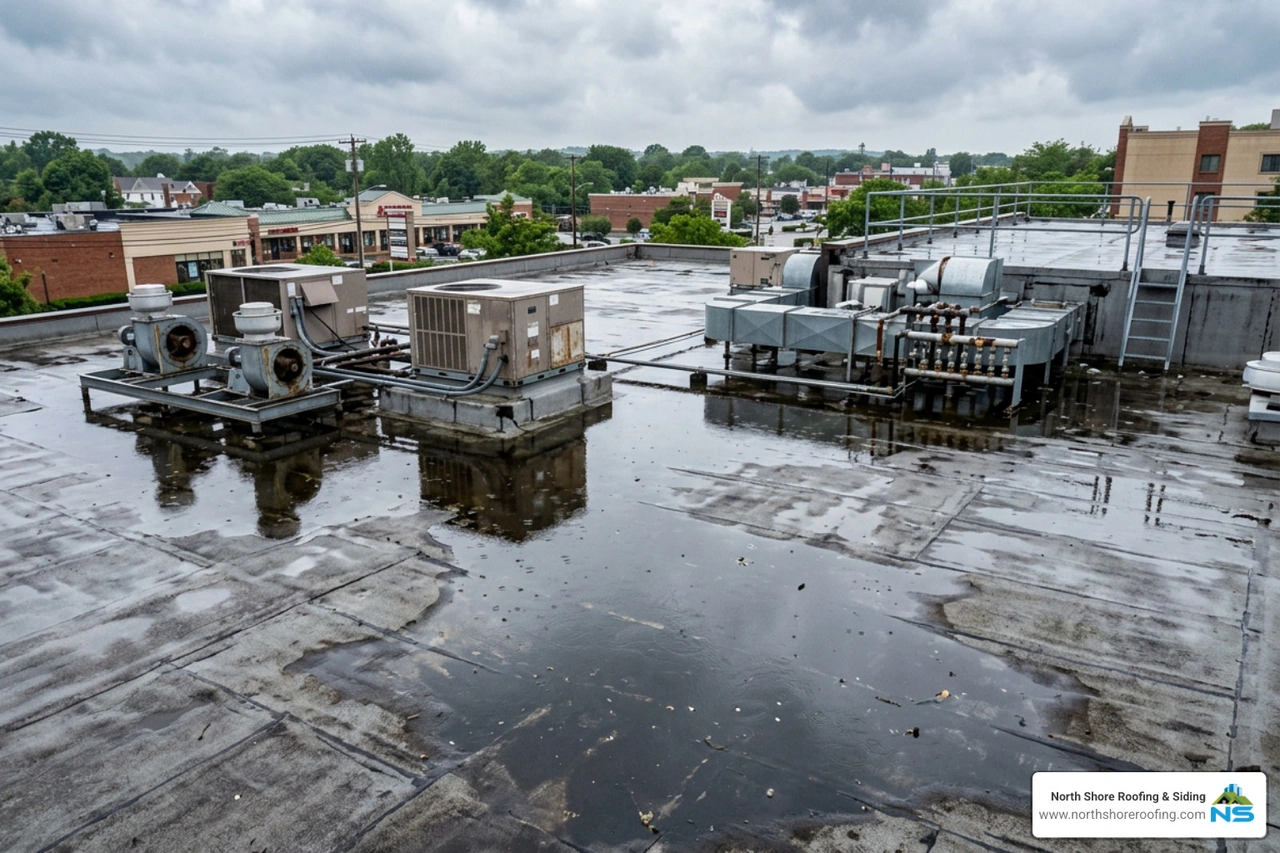
Commercial roofs face a relentless battery of hazards. Understanding the common causes of roof deterioration can help building managers in Port Washington, Flushing, and Bayside spot warning signs before they trigger a catastrophic failure.
To dive deeper into identifying and fixing these specific issues, read our breakdown of Commercial Roof Leak Repair 2026.
When water seeps beneath a commercial roof membrane, it can travel horizontally for dozens of feet before dripping into the building. Finding the actual source of the leak visually can be nearly impossible. That is where non-destructive testing comes in.
Rather than tearing up large sections of your roof to find a leak, our team utilizes advanced diagnostic tools to pinpoint hidden moisture. One of the most effective methods is an infrared moisture survey. Since wet insulation retains heat longer than dry insulation, a thermal scan performed after sunset reveals exactly where moisture is trapped beneath the membrane.
Other high-tech options include nuclear surveys (which read deeper into complex roof assemblies), capacitance testing, and electronic leak detection (ELD), which uses low and high-voltage currents to map breaches in the membrane with pinpoint accuracy.
Using these non-destructive tools in Locust Valley, Manhasset, and across Long Island allows us to catch moisture intrusion months or even years before an interior leak shows up. If you have a metal roof system, maintaining these components is equally vital; learn more about local options by visiting the guide for Best Metal Roof Services in Bayside, NY Near Me .
A successful preventative maintenance program is built on consistency and professional execution. Instead of waiting for a leak to disrupt your business, a structured program establishes a regular schedule of inspections, minor repairs, and cleaning.
The National Roofing Contractors Association (NRCA) strongly recommends having your commercial roof inspected at least twice a year — ideally in the spring to assess post-winter wear, and in the fall to prepare the system for freezing temperatures. Additionally, inspections should always be performed after major weather events, such as heavy snowfalls or severe windstorms, and immediately following any major rooftop construction work by other trades.
Here is how preventative maintenance stacks up against reactive "run-to-failure" management:
To ensure your program aligns with the highest manufacturer standards, you can review the official GAF Scheduled Maintenance Checklist . If you are considering a new flat roof or want to understand how different installations require unique care, take a look at our guide on Commercial Flat Roofing Installation NY to protect your investments in Queens, Port Washington, and Flushing.
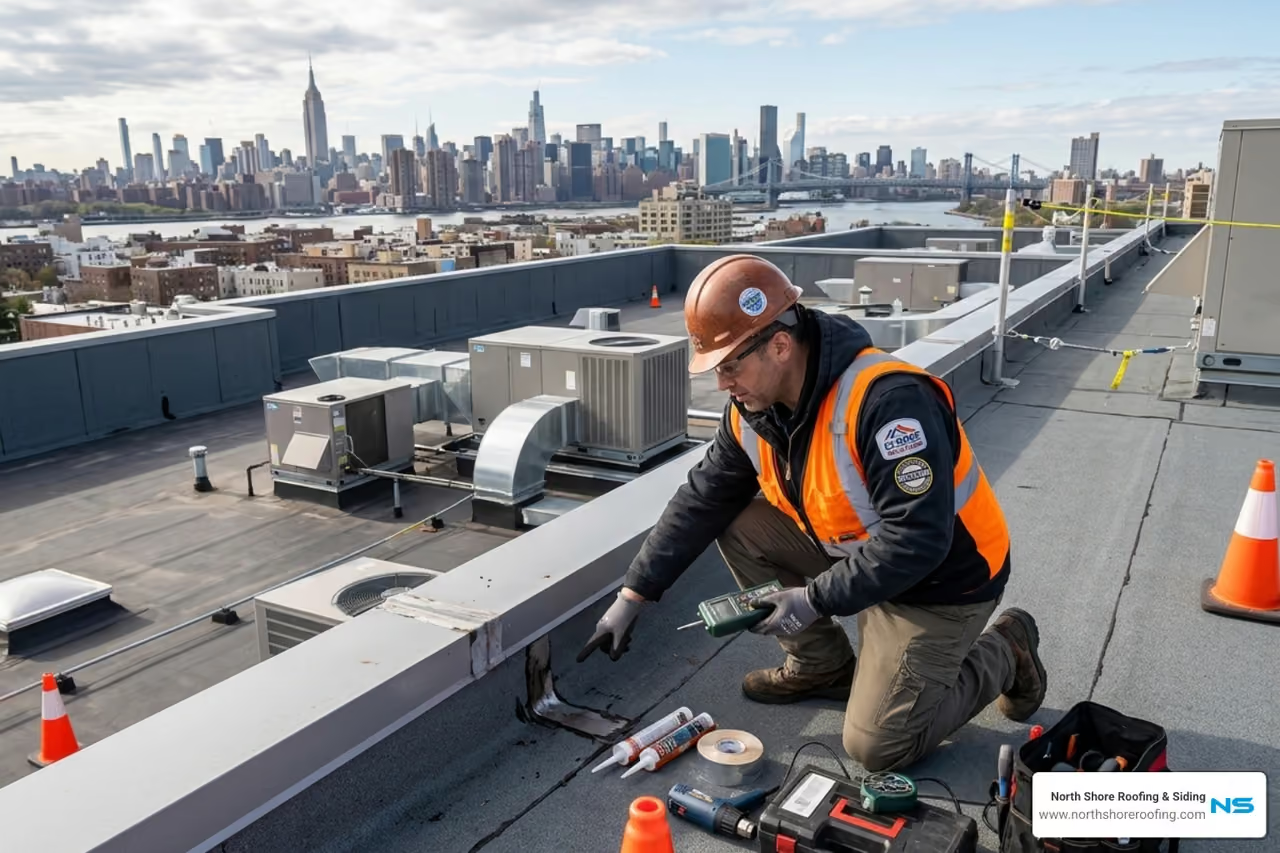
A truly effective roof inspection is not a quick visual scan from the roof hatch. It requires a rigorous, multi-point evaluation. Our technicians utilize a comprehensive checklist that covers every square foot of your roof assembly:
For business owners in Bayside, Locust Valley, and Manhasset, partnering with a GAF-certified professional ensures these checks meet the absolute highest standards. Read more about certified care options at Best Roofers in Port Washington, NY | GAF Roofing Contractors .
Many commercial property owners view roof maintenance as an unpredictable expense. In reality, it is a highly predictable line item that should be integrated into your annual capital planning.
We recommend setting aside a maintenance reserve budget of $0.10 to $0.25 per square foot per year, depending on the age and complexity of your roof. For example, a 20,000-square-foot facility should budget between $2,000 and $5,000 annually. In the early years of a roof's life (years 1–5), you will likely spend on the lower end of this range. As the membrane ages past year 15, keeping a robust reserve ensures you can cover minor seam repairs, flashing updates, or localized coatings without dipping into emergency funds.
This small annual investment is what keeps your manufacturer warranty active. Many major commercial warranties, such as the CentiMark Single Source Warranty and GAF's No Dollar Limit (NDL) guarantees, explicitly require documented preventative maintenance. If a leak occurs and you cannot produce signed, dated inspection reports proving your roof was maintained by qualified professionals, the manufacturer can legally deny your claim.
A proactive program also provides warranty gap protection. While standard manufacturer warranties cover material defects, they often exclude coverage for wind damage, minor punctures caused by other trades, and normal wear-and-tear. Regular maintenance bridges these coverage gaps, catching and resolving minor issues before they can cause major interior damage.
To read more about managing roof leaks and understanding repair costs on Long Island, Queens, and Port Washington, visit our resource on Commercial Roof Leak Repair. You can also see what local businesses are saying about certified roofing solutions by browsing THE BEST 10 ROOFING NEAR FLUSHING, QUEENS, NY - Yelp .
We recommend having your commercial roof inspected and maintained at least twice a year, usually in the spring and fall. However, you should schedule quarterly inspections if your roof experiences heavy foot traffic from HVAC maintenance, supports heavy industrial equipment, or is more than 15 years old. Always schedule an immediate inspection after severe weather events like hail, high winds, or heavy snowstorms in Flushing, Bayside, and Locust Valley.
Several key factors influence the cost of a customized maintenance plan:
Absolutely. If your commercial roof is structurally sound but showing signs of aging, applying a high-quality silicone or acrylic roof coating is an incredibly cost-effective option. A professionally applied coating can add 10 to 15 years of service life to your existing roof. Beyond sealing minor cracks and preventing leaks, reflective white coatings improve your building's energy efficiency by bouncing away harsh UV rays, lowering your summer cooling bills in Port Washington, Flushing, and Bayside. To learn more about certified coating applications, consult the Best Roofers in Queens, NY | GAF Roofing Contractors .
Your commercial roof is a major financial asset that directly protects your inventory, equipment, and employees. Waiting for a visible leak to address roofing issues is a recipe for expensive emergency repairs, business interruption, and voided warranties.
At North Shore Roofing & Siding, we bring decades of local expertise, a fully licensed and certified team, and honest, transparent pricing to every project. Whether your business is located in Locust Valley, Manhasset, Long Island, or Queens, we are here to help you design a proactive maintenance plan that keeps your facility dry, safe, and compliant.
Don't wait for the next major storm to test your roof. Contact us today to Schedule Commercial Roofing Services NYC and let our family-owned team protect your commercial investment for years to come.
Copyright 2022 North Shore Roofing & Siding | All Rights Reserved | Sitemap | Website by Plumb Development a Digital Marketing Agency