Blog Content

5
Jun
2026
Industrial roof maintenance is one of the most important — and most overlooked — responsibilities for facility owners and managers across Long Island and Queens.
Here's a quick overview of what it involves and why it matters:
What is industrial roof maintenance? A scheduled program of inspections, cleaning, minor repairs, and drainage management designed to keep large-scale roofing systems watertight, structurally sound, and code-compliant.
Core tasks include:
Why does it matter?
Industrial facilities in Port Washington, Queens, and across Long Island face serious environmental stress — harsh winters, freeze-thaw cycles, high winds off the water, and heavy rain. A roof that isn't actively maintained doesn't just deteriorate faster. It puts your operations, inventory, and people at risk.
The good news? A consistent maintenance plan is straightforward, cost-effective, and far cheaper than the alternative.
This guide walks you through exactly how to do it right.
Learn more about industrial roof maintenance:
In regions like Queens and Long Island, your roof is the first line of defense against a relentless climate. For a manufacturing facility or warehouse in Flushing or Bayside, a roof isn't just a lid on a box; it’s a complex asset that houses expensive machinery, sensitive inventory, and your hardworking team.
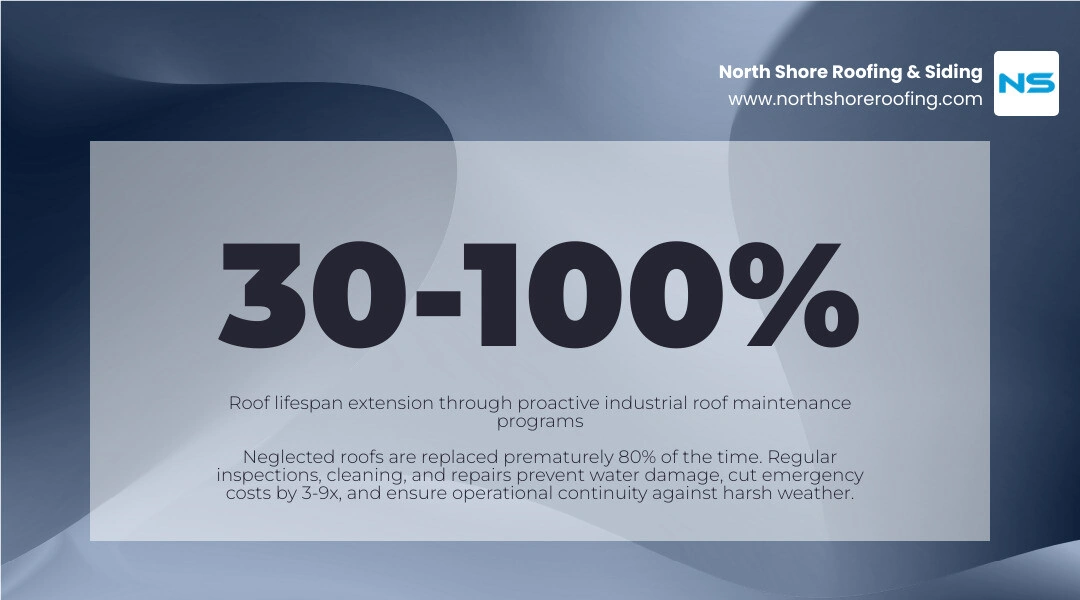
The reality is that many facility managers treat roofs with an "out of sight, out of mind" mentality. However, research shows that more than 80 percent of all roofs are replaced prematurely. When we neglect industrial roof maintenance, we aren't just risking a small leak; we are inviting structural damage and massive financial liability. According to Industrial Roof Maintenance: What It Is and Why It Matters, water damage is responsible for nearly $11 billion in yearly insurance claims in the U.S. By staying ahead of issues, you ensure operational continuity and protect your bottom line.
Let’s talk numbers, because in the industrial world, the ROI of maintenance is undeniable. Implementing a preventative maintenance program can nearly double the lifespan of a 15–20 year roof. For a building owner in Locust Valley or Queens, this translates to massive savings.
Consider the life cycle costs:
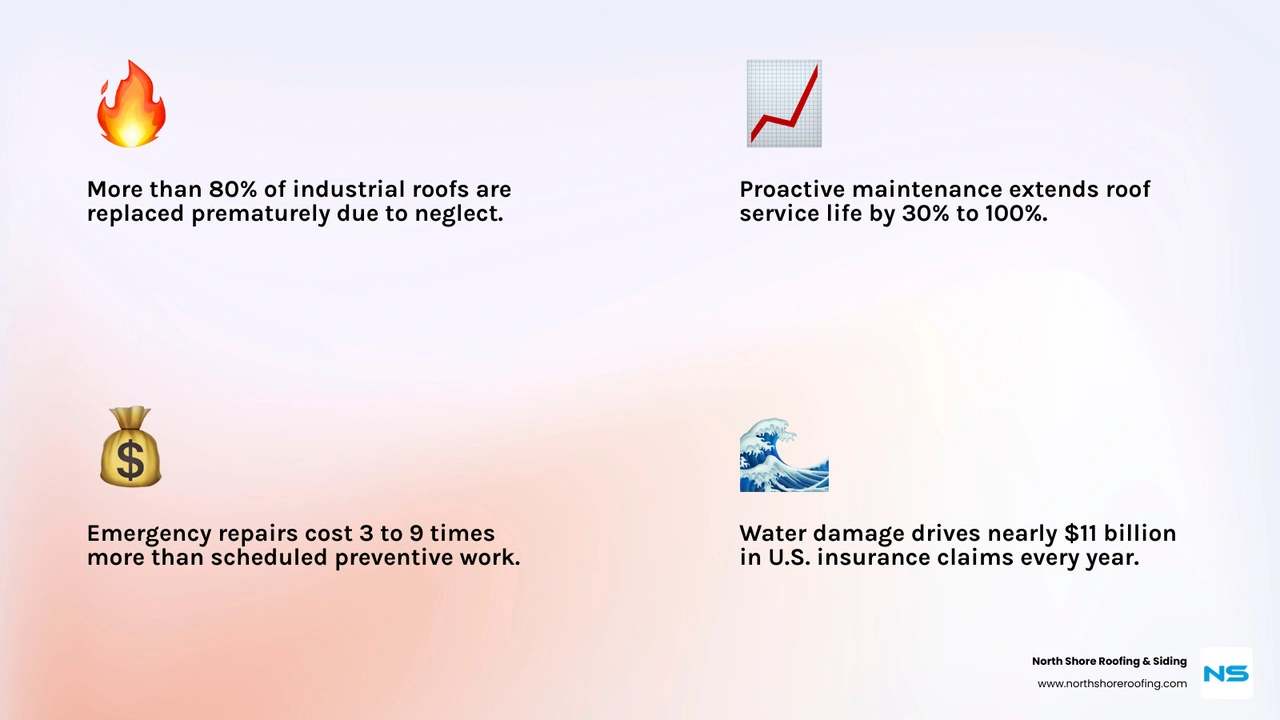
By choosing a proactive approach, you avoid the "emergency tax." Emergency repairs can cost anywhere from three to nine times more than scheduled work. In Long Island, where labor and material costs are significant, those multiples add up quickly. Proactive care ensures that your budget priorities remain on production and growth, not on unplanned $100,000 roof replacements.
New York weather is particularly brutal on flat and low-slope industrial roofs. In Manhasset and Port Washington, we see dramatic temperature swings that trigger freeze-thaw cycles. When water gets into a tiny crack in your roof membrane and freezes, it expands, tearing the material further.
Furthermore, roughly 10% of all building damage is caused by rain, snow, or hail storms. High winds in coastal areas of Queens can cause wind uplift, pulling at flashing and unsecured rooftop equipment. Our Commercial Roofing Services NYC focus on reinforcing these vulnerable points to ensure that a summer thunderstorm or a winter blizzard doesn't result in a week of forced downtime.
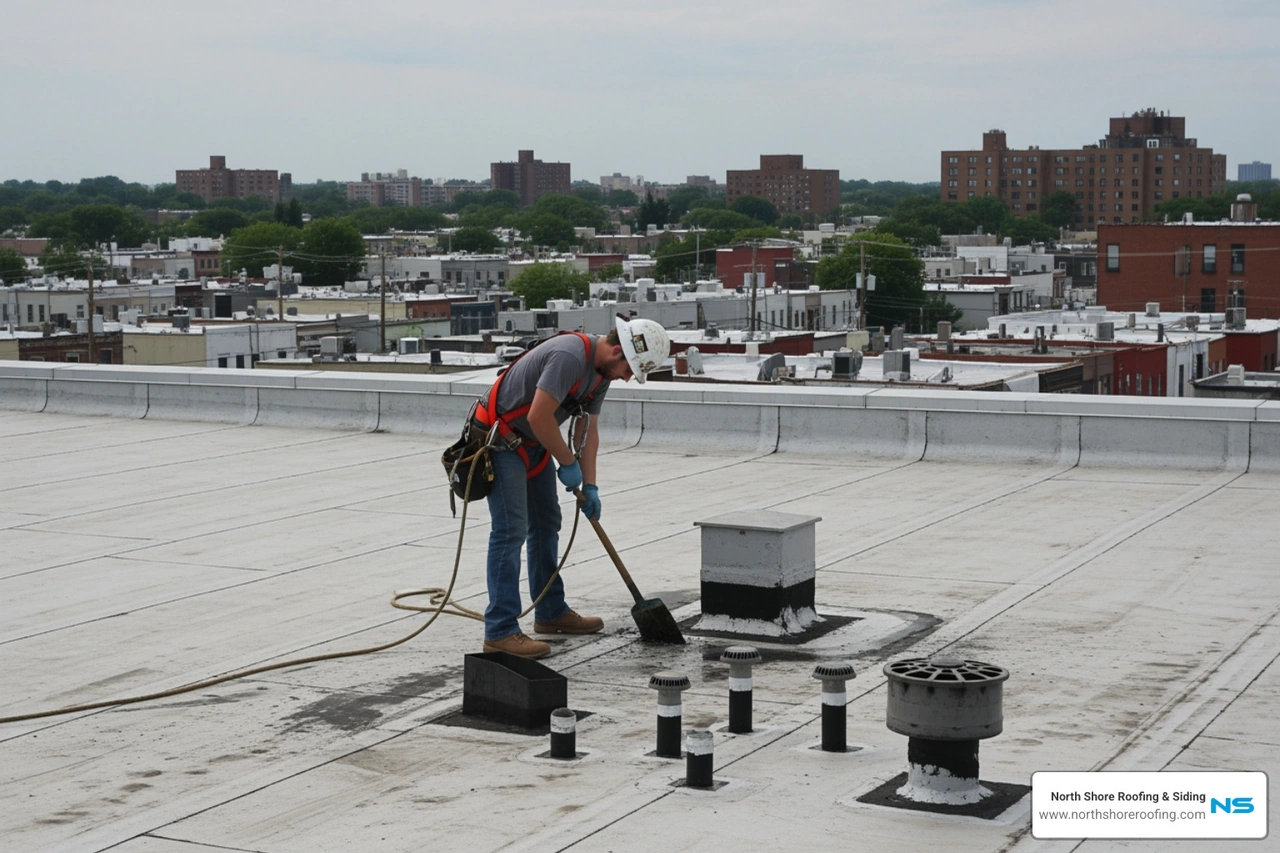
A successful industrial roof maintenance program is built on consistency. We recommend a "two-plus-one" strategy: two professional inspections per year (Spring and Fall) plus one additional check after any major weather event. This ensures that the debris from a Long Island autumn doesn't clog your drains before the first snow in Flushing.
According to the Factory Roof Maintenance Handbook: Comprehensive Guide for Factory Managers, cleaning and drainage management are the most critical "small" tasks that prevent "large" failures. Standing water (ponding) that remains on a roof for more than 48 hours is a death sentence for most membranes, leading to accelerated UV degradation and mold growth.
When our teams visit a site in Queens or Locust Valley, we follow a rigorous 50-item checklist. Here are the high-priority areas you should ensure are covered:
For facilities with specific needs, such as commercial flat roofing installation in NY, the checklist may include checking the heat-welded seams for any signs of separation.
Different materials require different care. In Manhasset, we see a wide variety of industrial systems:
Check out our guide on commercial roof installation in NY for more details on these materials.
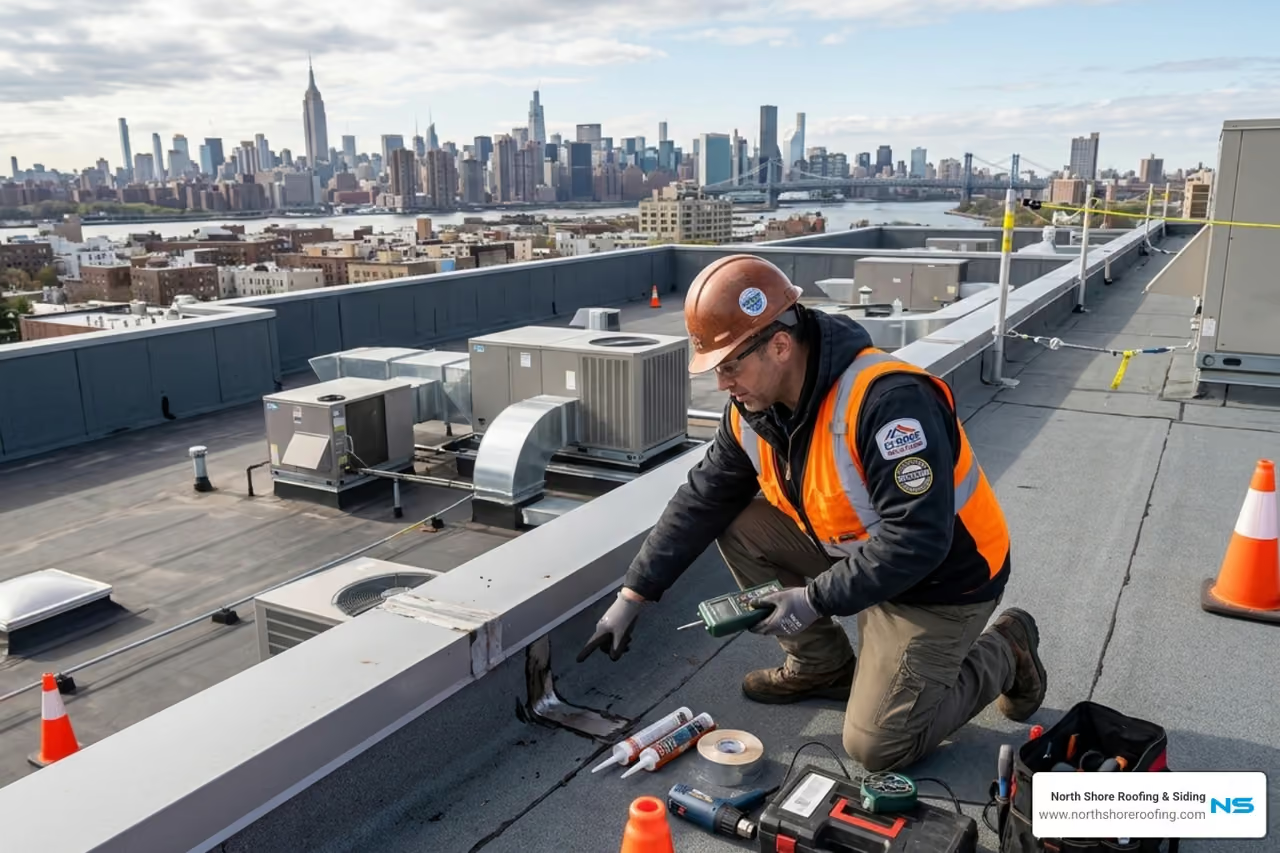
The days of just walking around with a flashlight are over. In Port Washington and Bayside, we use advanced technology to see what the human eye cannot. Modern industrial roof maintenance relies heavily on data.
Industrial Roof Coatings and Maintenance experts highlight that infrared thermography is a game-changer. By using thermal cameras, we can detect "hot spots" where moisture is trapped under the membrane. This allows us to replace a small section of wet insulation before the entire roof is compromised.
We leverage several tools to provide the best service in Long Island and Flushing:
Working with a commercial roof install contractor who understands these tools can save you thousands in diagnostic costs.
Choosing a contractor for your facility in Manhasset, Port Washington, or Bayside is a decision that affects your building's safety for decades. You need a partner who understands the local building codes and the specific challenges of the New York climate.
When vetting a provider for commercial roofing services, look for:
At a minimum, you should schedule inspections twice a year—once in the spring to assess winter damage and once in the fall to prepare for snow. In high-traffic areas like Flushing or Queens, or if you have heavy HVAC equipment that requires frequent servicing, quarterly inspections are even better. Always call for a check-up after any major storm with high winds or hail.
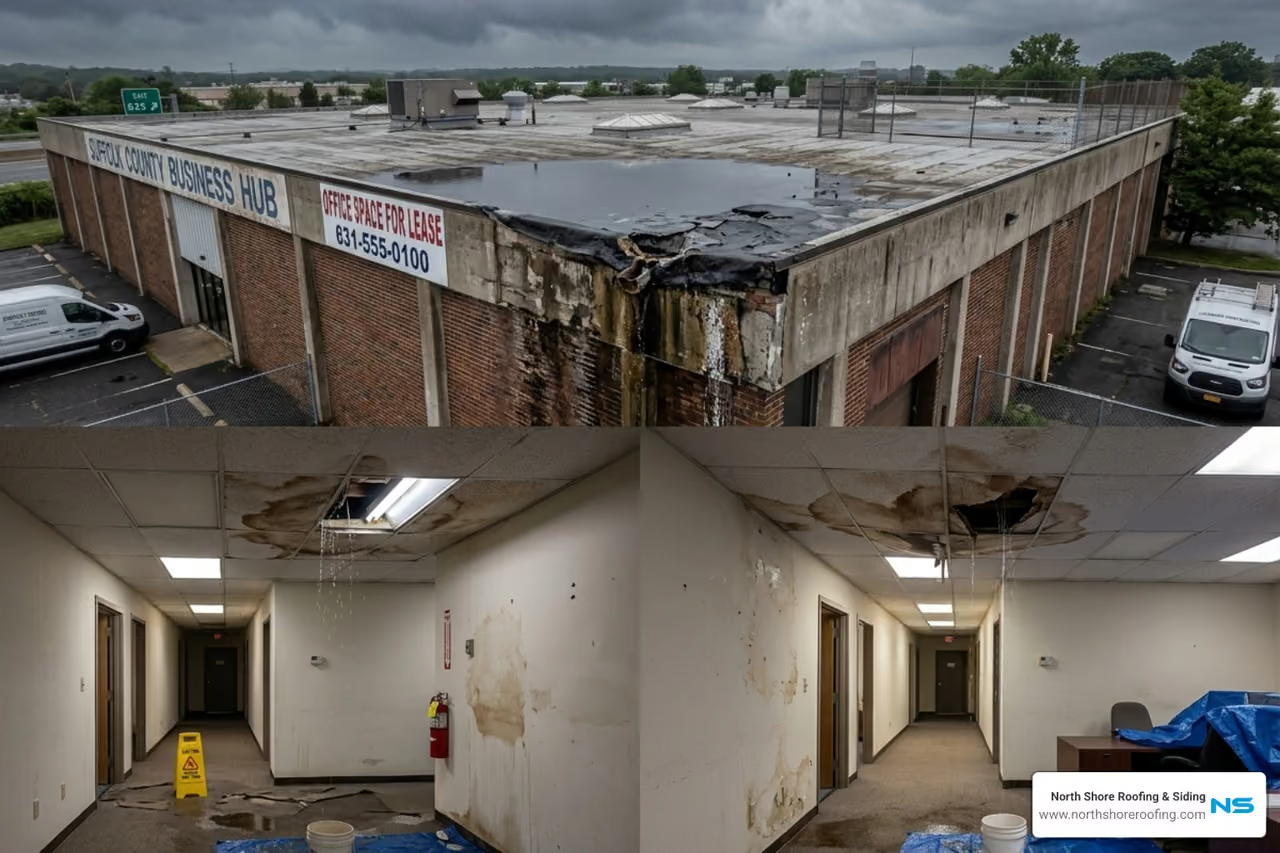
Keep an eye out for these "red flags" in Long Island:
Yes! This is a "hidden" benefit. Almost all major manufacturers (like GAF or Firestone) require documented, regular maintenance by a certified contractor to keep the warranty in effect. If you have a major failure but no maintenance logs to show, the manufacturer may deny your claim. Regular service in Manhasset ensures you stay protected.
At the end of the day, industrial roof maintenance is about asset management. Your roof is a multi-thousand-dollar investment that protects a multi-million-dollar business. By moving from a reactive "wait for the leak" mindset to a proactive, technology-driven maintenance plan, you ensure the longevity of your facility and the safety of everyone inside.
Whether you are managing a warehouse in Queens, a factory in Port Washington, or a retail center in Long Island, we are here to help. Our team at North Shore Roofing & Siding brings decades of local expertise, honest pricing, and a commitment to exceeding your expectations. Don't wait for the next New York storm to find out your roof is failing.
Copyright 2022 North Shore Roofing & Siding | All Rights Reserved | Sitemap | Website by Plumb Development a Digital Marketing Agency