Blog Content

21
Sep
2026

A secure roofing system is your home’s primary defense against severe coastal weather, but true roof performance depends on properly integrated wall cladding and flashing. Qualified Long Island siding contractors must specialize in comprehensive roofing and exterior weatherproofing to ensure roof edges, gables, step flashing, and wall junctions remain completely watertight.
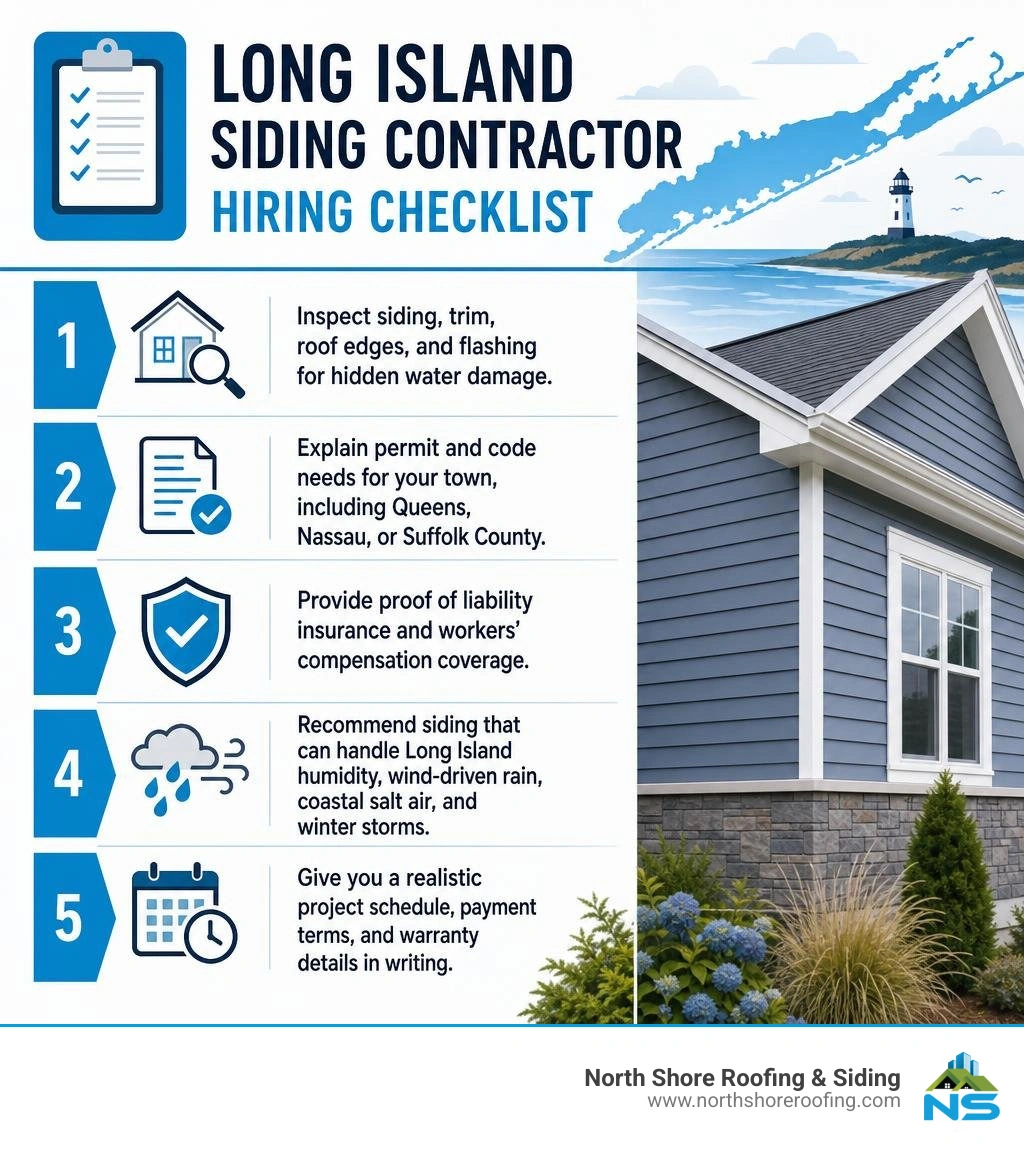
When hiring a professional to protect your roof and wall envelope, ensure the contractor can:
For homeowners in Port Washington, Flushing, Bayside, Locust Valley, Manhasset, Queens, and across Long Island, protecting roof lines and wall assemblies prevents long-term structural decay. Because siding connects directly to roof eaves, gutters, and step flashing, hiring an installer with extensive roofing expertise guarantees superior protection through every season.
I'm Scott Fox, and this guide will help you evaluate local roofing and siding specialists with confidence before you sign a contract.
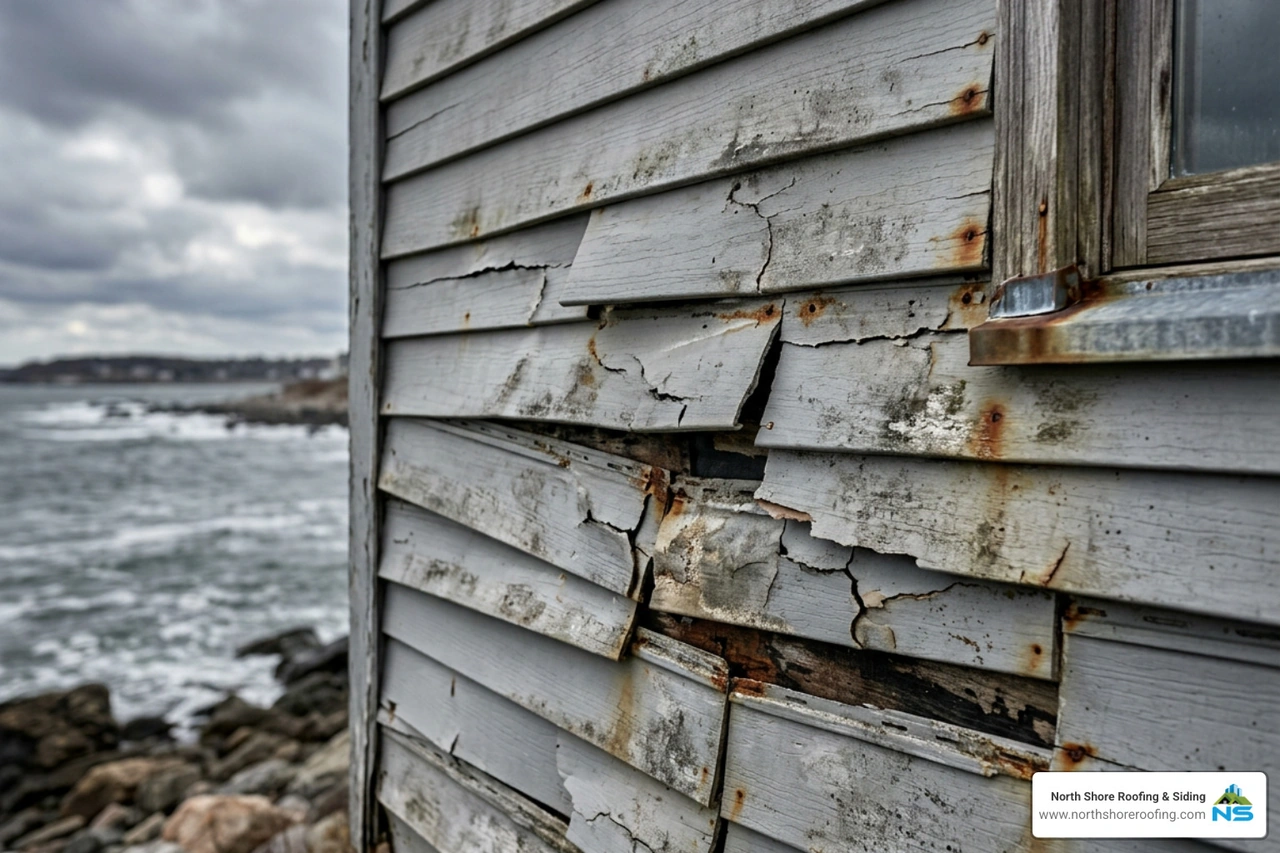
Living near the sound or ocean means our home exteriors take a beating. Salt spray, fierce nor'easters, winter freeze-thaw cycles, and summer humidity test even the sturdiest outer walls. Spotting early warning signs of failure prevents minor exterior flaws from escalating into costly structural repairs that threaten both wall framing and roofing systems.
If you observe any of the following red flags around your home, it is time to consult professional Long Island siding contractors for a complete exterior evaluation:
When homeowners notice these signs, scheduling a timely Long Island Siding Replacement safeguards structural timber before wood rot compromises wall studs, roof rafters, and rim joists. Properties in exposed waterfront neighborhoods like Port Washington and forested hills in Locust Valley face distinct weather pressures that accelerate exterior wear.
Our regional climate presents severe weather challenges for residential exteriors. Intense nor'easters bring driving rains that push water upward under siding laps, while damp sea air accelerates wood decay and metal corrosion.
The coastal climate impacts house cladding in several key ways:
Because siding works in tandem with your roofing, roof eaves, gutters, and flashing systems, hiring a contractor who understands comprehensive building envelope integration is essential.
Choosing top Long Island siding contractors requires evaluating credentialing, regional experience, and roof-to-wall waterproofing expertise. A gorgeous siding material will fail prematurely if installed over rotten wall sheathing or without seamless step flashing along roof intersections.
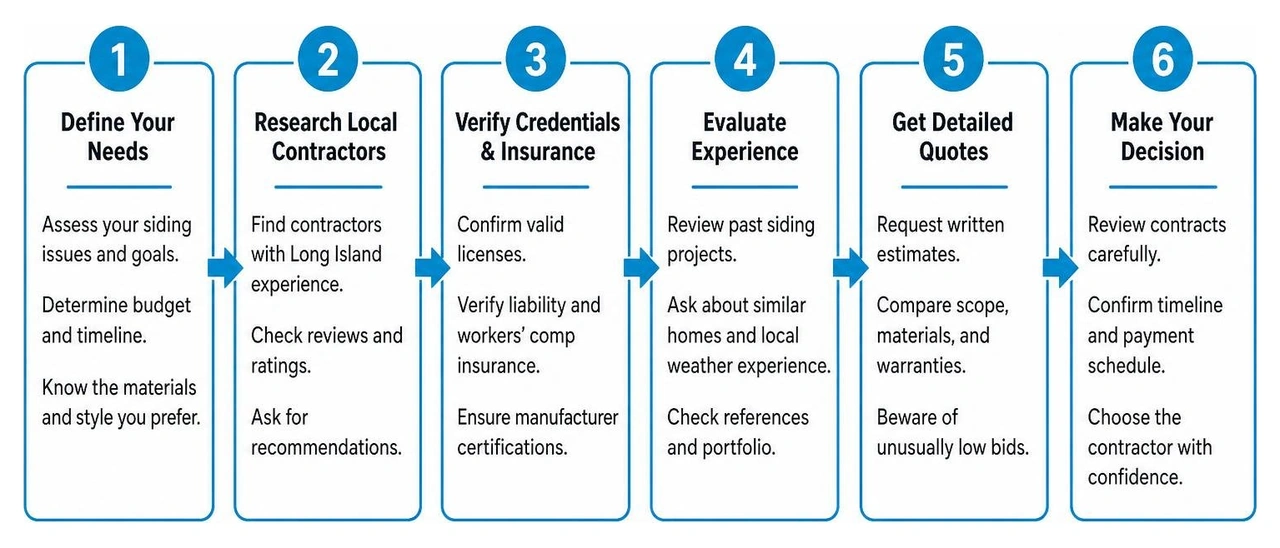
When reviewing local installers, verify their local consumer standing through independent platforms such as THE BEST 10 SIDING IN NASSAU COUNTY, NY - Yelp while ensuring they maintain full active licensing across all municipalities where work occurs.
Never allow an unverified contractor on your roof or scaffolding. Local municipal regulations exist to protect homeowners from fraud, structural hazards, and liability risks.
When vetting contractors in Nassau County, Suffolk County, or Queens, perform these baseline checks:
Before signing any contract, conduct an interview to clarify scope, timeline, and roof protection strategies. Use these questions during your initial consultation:
Be sure to ask for a comprehensive Free Roofing Siding Installation Estimate in writing so every item—from tear-off fees to flashing materials—is clearly detailed before work begins.
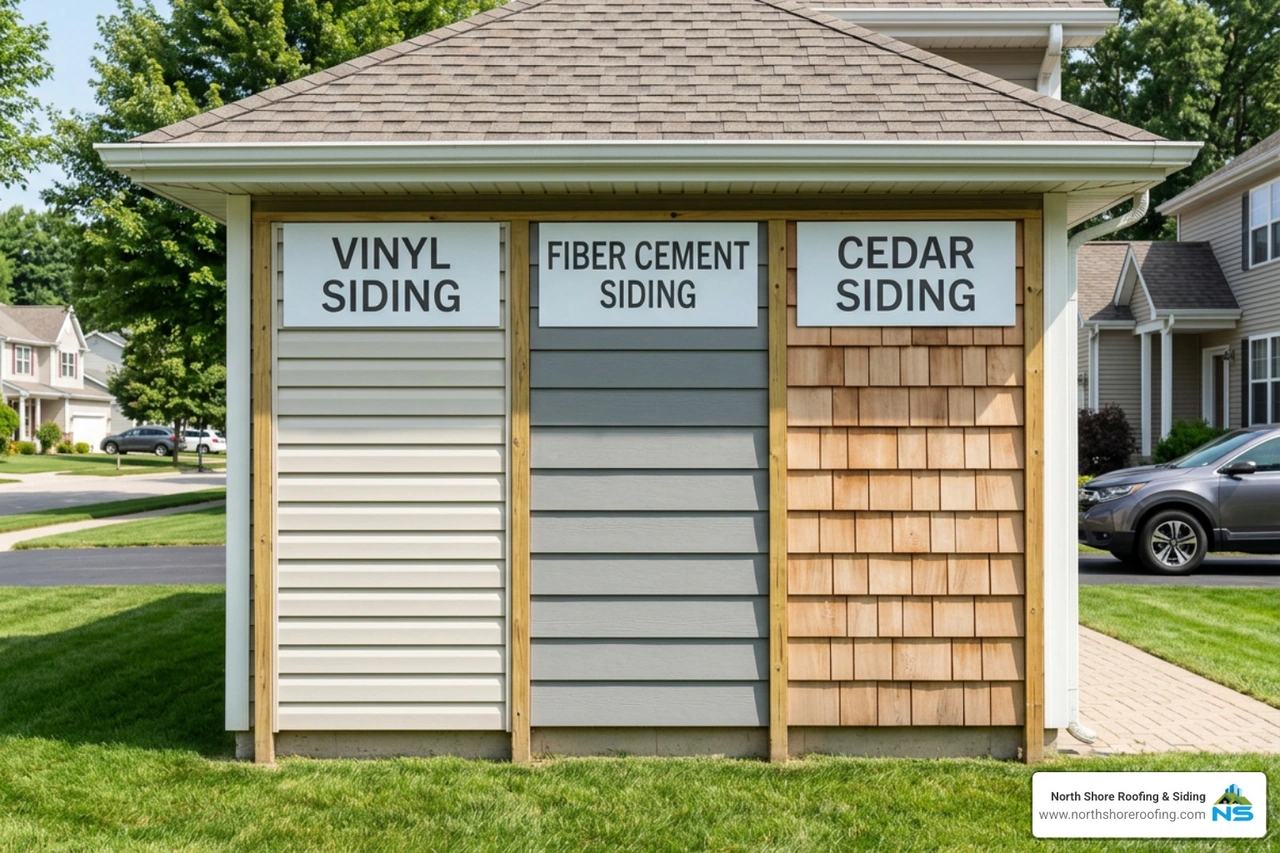
Selecting the ideal cladding material involves balancing initial installation budget, long-term maintenance, coastal durability, and architectural style. Because house siding meets roof lines, gables, and gutter systems, material selection must account for moisture handling at every height.
For budget-conscious homeowners seeking sleek aesthetic upgrades, our expert Vinyl Siding Installation Service NY provides energy-efficient vinyl backed by rigid insulation. Alternatively, homeowners seeking historic, natural character in coastal hamlets like Locust Valley often choose our premium Cedar Siding Installation Service NY for traditional charm that ages gracefully under sea breezes.
Even the highest-grade fiber cement or cedar cladding will fail if water slips behind the surface at roof-to-wall junctions. Roof runoff carries high volumes of water along sloped shingles straight into vertical side walls. Without expertly installed flashing, this water penetrates wall framing, rots roof rafters, and causes toxic mold growth.
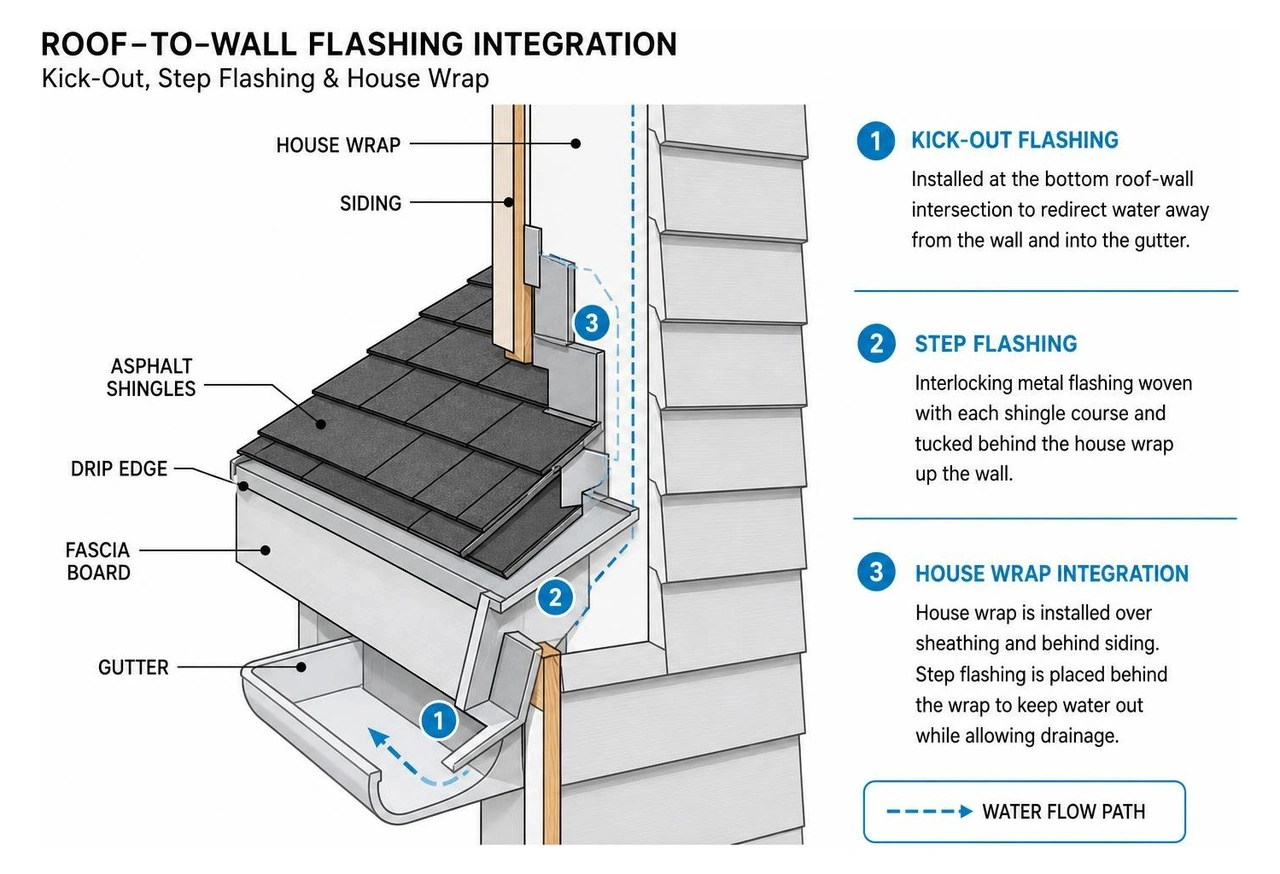
Key flashing components that professional installers must integrate include:
Review our technical deep dives on Hardie Siding Flashing, proper installation for Flashing Bottom of Siding, and detailed guidance on Z Flashing for T1-11 to understand how professional flashings protect your roof lines and foundation.
Understanding the investment required for exterior remodeling helps homeowners budget accurately without surprising change orders. Total project costs depend heavily on material selection, house size, architectural complexity, roof heights, and structural repair requirements.
Primary factors driving overall replacement costs include:
To plan your budget accurately, review our comprehensive House Siding Replacement Cost NY guide along with our detailed breakdown on Siding Panel Replacement Cost Guide for targeted localized pricing in Flushing, Bayside, and surrounding areas.
A typical full-house siding replacement project progresses through distinct stages:
For average single-family homes in neighborhoods like Bayside, Flushing, and Locust Valley, actual construction takes 4 to 8 active working days, barring heavy rain or severe winter storms.
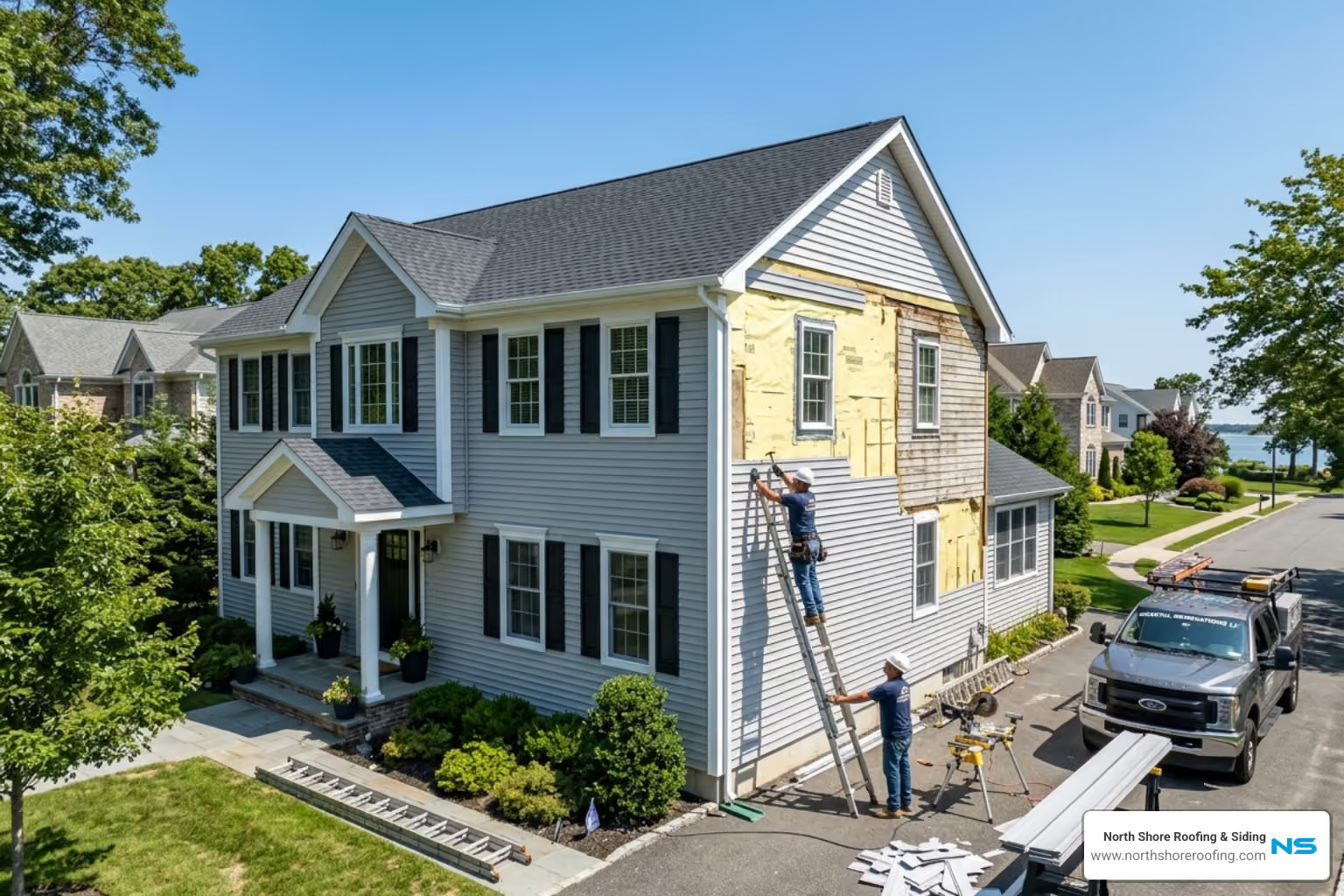
For an average single-family home (2,000 to 3,000 square feet), a professional crew completes full removal and replacement within 5 to 8 working days. Timeline factors include weather stability, house height, gables, custom trim work, and necessary roof flashing repairs. Homes in dense Queens neighborhoods like Flushing or Bayside may require extra site-prep time to manage tight property line access safely.
Yes. Municipalities across Nassau County, Suffolk County, and NYC (including Queens neighborhoods such as Bayside and Flushing) generally require building permits for structural exterior alterations and full siding replacements. Licensed contractors handle all permit filings with town authorities—such as North Hempstead (covering Port Washington and Manhasset) or Oyster Bay (covering Locust Valley)—to ensure work complies with wind resistance, insulation values, and fire resistance codes.
Fiber cement (James Hardie) and high-grade insulated vinyl rank as the top-performing materials against coastal weather conditions. Fiber cement resists salt corrosion, insect intrusion, rot, and high winds up to 130 mph, making it ideal for exposed waterfront homes in Port Washington, Locust Valley, and Manhasset. High-grade insulated vinyl is also impervious to salt spray, making it a reliable, low-maintenance option for homeowners throughout Queens and Long Island.
Upgrading your home’s exterior cladding is one of the most effective ways to protect structural framing, elevate curb appeal, and boost energy efficiency. By carefully evaluating prospective Long Island siding contractors on active licensing, verified insurance, material expertise, and roof-to-wall flashing craftsmanship, you ensure your investment delivers decades of leak-free comfort.
At North Shore Roofing & Siding, we bring decades of hands-on expertise to every residential and commercial project. From integrated roof flashing and gutter protection to custom siding installations, our certified team takes pride in providing honest pricing, premium materials, and exceptional workmanship across Long Island, Queens, Port Washington, Flushing, Bayside, Locust Valley, and Manhasset.
Ready to protect and transform your home's exterior? Explore our complete range of professional Siding Installation Services or visit our page About NYC Roofing Siding Install Firm to request your free, no-obligation consultation today!
Copyright 2022 North Shore Roofing & Siding | All Rights Reserved | Sitemap | Website by Plumb Development a Digital Marketing Agency

