Why Choosing the Right Commercial Flat Roofing Companies Matters
Commercial flat roofing companies serve one of the most critical functions for any property owner: keeping your building watertight, energy-efficient, and protected year-round. Whether you own a warehouse in Queens, a retail strip in Bayside, or an industrial facility on Long Island, the right roofing partner can mean the difference between a roof that lasts 30 years and one that fails in five.
Here is a quick overview to help you find and evaluate a qualified commercial flat roofing contractor:
Licensed, bonded, and insured — verify current coverage before signing anything
Low EMR (Experience Modification Rating) — a rating below 1.0 signals a strong safety record
Manufacturer certifications — look for designations like GAF Master Elite or Duro-Last Elite
NRCA membership — signals adherence to professional industry standards
Labor and materials warranty — not just a manufacturer warranty, but one that covers workmanship too
Local experience — contractors familiar with Long Island's freeze-thaw cycles, wind uplift, and coastal salt air
References and past projects — ask for case studies from similar building types
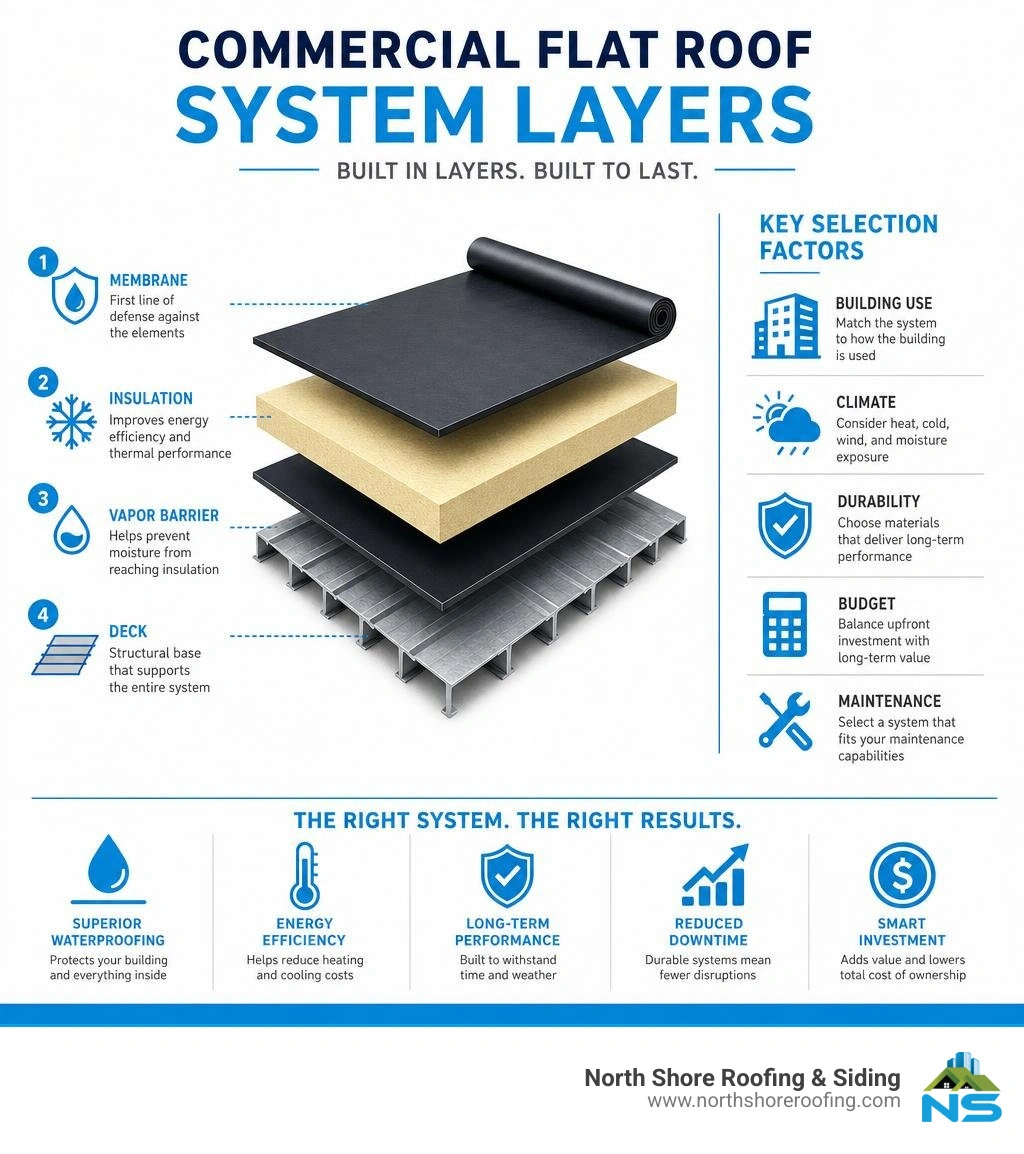
Modern commercial flat roofs are complex systems — not just a single layer of material. TPO, EPDM, PVC, Modified Bitumen, Built-Up Roofing (BUR), and Spray Polyurethane Foam (SPF) all perform differently depending on your climate, building use, and budget. In a region like Long Island or Queens, where winters are harsh and summers are hot and humid, the wrong system — or the wrong installer — can lead to leaks, ponding water, and costly interior damage.
The good news? With the right information, vetting a quality contractor is straightforward.
Selecting the right material is the foundation of a successful flat roofing project. When you consult with professional commercial flat roofing companies, they will typically present a few primary options. Each has its own balance of cost, durability, and performance under the unique weather conditions of the Northeast.
If you are looking to invest in a Commercial Flat Roofing Installation NY, understanding these materials will help you make an informed decision for your property in Long Island, Queens, or Port Washington.
1. TPO (Thermoplastic Polyolefin)
TPO has rapidly become one of the most popular commercial flat roofing materials on the market. It consists of a single-ply reflective membrane made of polypropylene and ethylene-propylene rubber.
Performance: Highly flexible, exceptionally resistant to ultraviolet (UV) radiation, and manufactured using energy-efficient techniques. Its white surface reflects solar heat, significantly reducing your building's cooling costs during hot summers in Queens and Port Washington.
Seam Strength: TPO seams are hot-air welded, creating a physical bond that is up to four times stronger than taped seams. This minimizes the risk of leaks, which is crucial since fewer seams translate to fewer opportunities for water penetration.
2. EPDM (Ethylene Propylene Diene Terpolymer)
Often referred to simply as "rubber roofing," EPDM is a synthetic rubber membrane that has been a staple of the commercial industry for decades.
Durability & Lifespan: EPDM boasts an impressive lifespan, often lasting between 20 to 50 years depending on the quality of the installation and regular maintenance. It remains highly flexible even in extreme cold, allowing it to easily survive the brutal winter freeze-thaw cycles on Long Island.
Layers: Premium EPDM systems consist of multiple layers, including a top surface for reflectivity, polyester reinforcement for tear resistance, a fire-retardant layer, and an elastomeric base. It can be installed fully adhered, mechanically attached, or ballasted.
3. PVC (Polyvinyl Chloride)
PVC is another highly reliable single-ply thermoplastic membrane.
Key Benefits: It is highly resistant to fire, wind, chemicals, and grease. This makes PVC the premier choice for restaurants, food processing plants, and manufacturing facilities in industrial sections of Queens.
Watertight Bonds: Like TPO, PVC seams are heat-welded to create a seamless, watertight barrier that handles ponding water exceptionally well.
4. Modified Bitumen & Built-Up Roofing (BUR)
Modified Bitumen and traditional Built-Up Roofing (BUR) are multi-layer asphalt systems. Modified Bitumen uses polymer-modified asphalt applied in multiple plies, while BUR uses alternating layers of asphalt-saturated felt and hot asphalt (tar) topped with gravel.
Strength: These systems are incredibly tough and highly resistant to foot traffic. If your roof houses heavy HVAC equipment that requires frequent servicing, these multi-layer systems offer excellent puncture resistance. However, they are heavier and more labor-intensive to install than single-ply membranes.
SPF is a liquid-applied system that expands into a dense, seamless foam barrier, providing outstanding thermal insulation. When paired with a protective silicone coating, it creates a fully waterproofed, self-flashing surface.
Seamless Protection: Because SPF expands to fill every crack and gap, it eliminates seams entirely, which is a massive benefit since seams are where most commercial flat roof leaks occur.
Flat Roofing Material Comparison Table
Roofing System
Average Lifespan
Relative Cost
Primary Benefits
Best Suited For
TPO
15–25 Years
Moderate
High UV reflectivity, energy efficient, heat-welded seams
Retail, offices, and schools in Bayside and Flushing
EPDM
20–50 Years
Budget-Friendly
Extreme temperature tolerance, impact resistant, durable
Large warehouses and industrial spaces on Long Island
PVC
20–30 Years
Premium
Chemical, grease, and fire resistant; welded seams
Restaurants, chemical plants, and high-rise facilities
Modified Bitumen
10–20 Years
Moderate
Multi-layer redundancy, highly puncture resistant
Roofs with heavy foot traffic and HVAC equipment
How to Choose the Best Commercial Flat Roofing Companies
A commercial roof is a major capital investment. To protect your bottom line, you must partner with a contractor that brings both technical expertise and a spotless safety record to the job site. The commercial roofing industry is highly specialized; flat roofs require entirely different installation techniques, safety protocols, and equipment than residential sloped roofs.
When vetting local contractors for flat roof repairs and replacements in Long Island or searching for a qualified Commercial Roof Installation Contractor, keep the following criteria in mind to ensure you are hiring the best in the business. This is especially important for properties in Queens, Port Washington, Flushing, Bayside, Manhasset, and Locust Valley, where building use, roof access, drainage, and local weather exposure can vary significantly from one site to the next.
What to Look for in Commercial Flat Roofing Companies
When comparing commercial contractors in Queens, Flushing, and Bayside, look beyond the price tag. A well-qualified roofing partner should be able to document the safety, insurance, manufacturer training, and local experience needed to work on commercial buildings across Long Island, Port Washington, Manhasset, and Locust Valley. Be sure to evaluate these essential credentials:
EMR (Experience Modification Rating): A contractor's EMR measures their safety record and history of workplace injuries. A rating of 1.0 is the industry average. Reputable commercial roofing partners often maintain an EMR well below 1.0, demonstrating an active safety program and a safe work environment. This protects you from liability and helps your project run smoothly without safety-related shutdowns.
Insurance and Bonding Capacity: Never work with a roofer who cannot provide current certificates of insurance. A professional commercial contractor should carry strong general liability insurance along with comprehensive workers' compensation coverage. For commercial properties in Long Island, Queens, Port Washington, Flushing, Bayside, Manhasset, and Locust Valley, verified insurance is a non-negotiable part of responsible project planning.
Manufacturer Certifications: Top-tier manufacturers like GAF and Duro-Last do not let just anyone install their products. Look for contractors carrying manufacturer-approved designations and training credentials. This shows that their team has undergone product-specific education and may allow them to offer stronger manufacturer warranty options.
Professional Affiliations: Membership in organizations like the National Roofing Contractors Association shows that a company is dedicated to staying up-to-date with the latest industry standards, building codes, and technical advancements.
Documented Local Experience: Ask for examples of similar commercial flat roofing work in Queens, Long Island, Flushing, Bayside, Port Washington, Manhasset, and Locust Valley. Local references, project photos, and maintenance history can help confirm that the contractor understands the roof assemblies and weather conditions common to your area.
For commercial buildings in Flushing, Bayside, Port Washington, Manhasset, Locust Valley, and other parts of Long Island and Queens, North Shore Roofing & Siding recommends focusing on contractors who can clearly explain the proposed roof system, drainage plan, warranty coverage, safety procedures, and installation schedule before work begins.
Why Local Commercial Flat Roofing Companies Understand Regional Climates
Hiring a local contractor is not just about supporting the community - it is about structural survival. The Northeast climate is notoriously tough on flat roofs, and conditions can vary between a Queens retail property, a Port Washington waterfront building, a Flushing commercial plaza, a Bayside office, a Manhasset facility, and a Locust Valley property on Long Island.
Freeze-Thaw Cycles: In places like Manhasset and Locust Valley, moisture can seep into tiny roof imperfections during winter days, freeze overnight, and expand. This cycle rapidly tears apart cheap or poorly installed membranes. The same freeze-thaw stress can affect flat roofs in Port Washington, Flushing, Bayside, and other parts of Queens and Long Island when drainage is not properly designed.
Wind Uplift and Salt Air: Coastal winds off the Long Island Sound bring heavy wind uplift pressures and corrosive salt air. Local contractors understand how to properly fasten and ballast membranes to meet strict New York State building codes. This matters for commercial roofs in Port Washington, Manhasset, Locust Valley, Bayside, Flushing, Queens, and throughout Long Island.
Drainage and Ponding Water: Flat roofs are not truly flat - they need the right slope, drains, scuppers, and overflow protection. A contractor familiar with Long Island and Queens properties can evaluate how roof drainage behaves during heavy rain in Flushing, Bayside, Port Washington, Manhasset, and Locust Valley.
Partnering with a team familiar with local conditions ensures your roof is engineered specifically to withstand regional weather patterns. For commercial properties across Long Island and Queens, including Port Washington, Flushing, Bayside, Manhasset, and Locust Valley, that local knowledge can be the difference between a roof that performs for decades and one that develops recurring leaks.
Commercial Roof Maintenance, Restoration, and Replacement
To get the absolute most out of your commercial roof, you must transition from a reactive fix-it-when-it-leaks mindset to a proactive roof asset management plan. Working with a dedicated local commercial roofing professional for routine upkeep is the single best way to prevent catastrophic failure, especially for commercial buildings in Long Island, Queens, Port Washington, Flushing, Bayside, Manhasset, and Locust Valley.
Implementing a structured program like Industrial Roof Maintenance NY can save you hundreds of thousands of dollars over the lifespan of your building. Preventive maintenance is particularly valuable in Queens and Long Island because flat roofs in Port Washington, Flushing, Bayside, Manhasset, and Locust Valley often face heavy rain, snow, freeze-thaw movement, coastal air, and rooftop equipment traffic.
Preventive Maintenance and Inspections
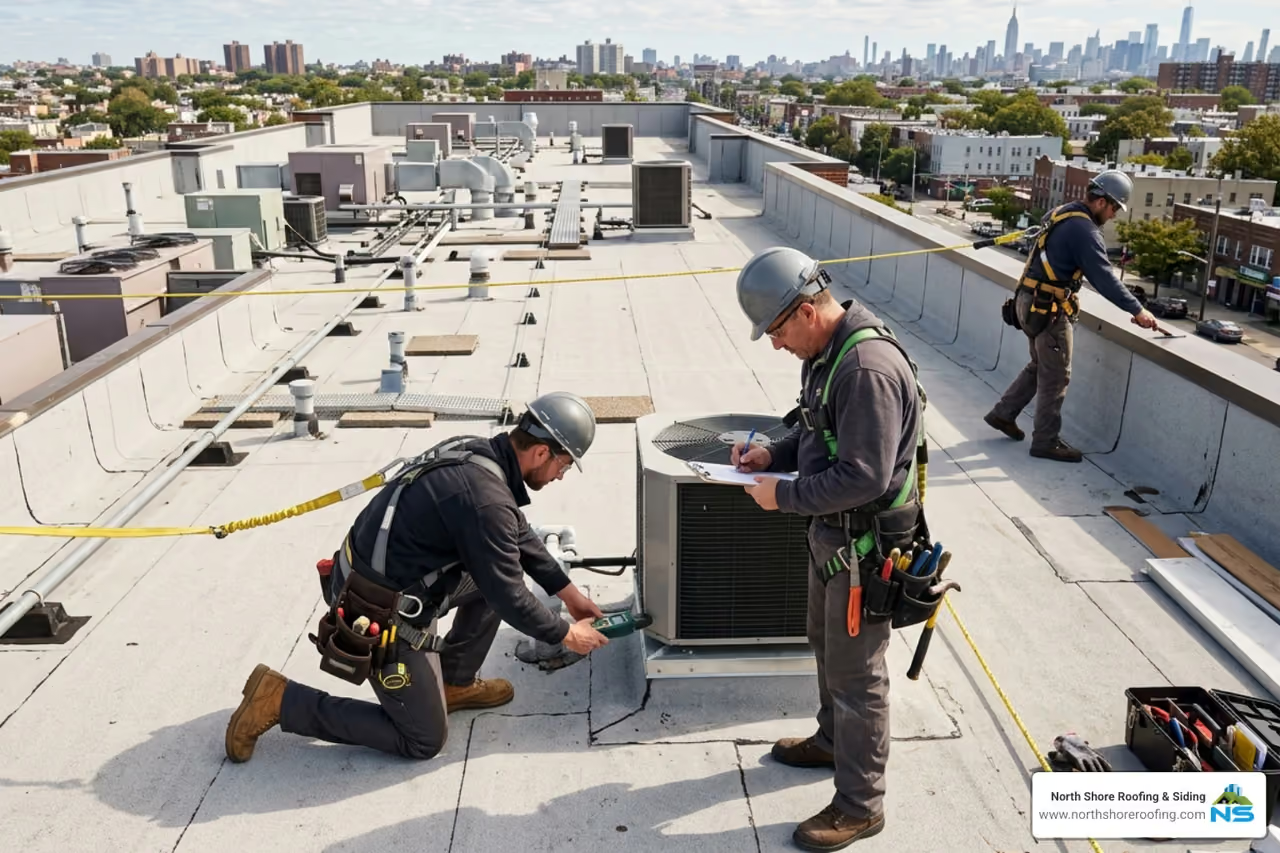
A quality maintenance program should include bi-annual inspections, typically in the spring and fall, along with immediate post-storm assessments. During these inspections, professional roofers will:
Clear Debris: Remove leaves, branches, and trash that can clog drains and cause standing water.
Inspect Seams and Flashing: Check the integrity of membrane seams, expansion joints, and flashing around HVAC units and vents.
Thermal Imaging Scans: Use advanced infrared drone technology to locate hidden moisture trapped beneath the membrane before it rots the structural deck.
Evaluate Drainage Performance: Confirm that drains, scuppers, gutters, and overflow systems are moving water off the roof effectively.
Document Roof Conditions: Provide photos, findings, and recommendations so building owners in Long Island, Queens, Port Washington, Flushing, Bayside, Manhasset, and Locust Valley can make informed budget decisions.
To learn more about how we categorize and manage these services, check out our Tags Commercial Roofing resource page.
Roof Restoration vs. Full Replacement Decisions
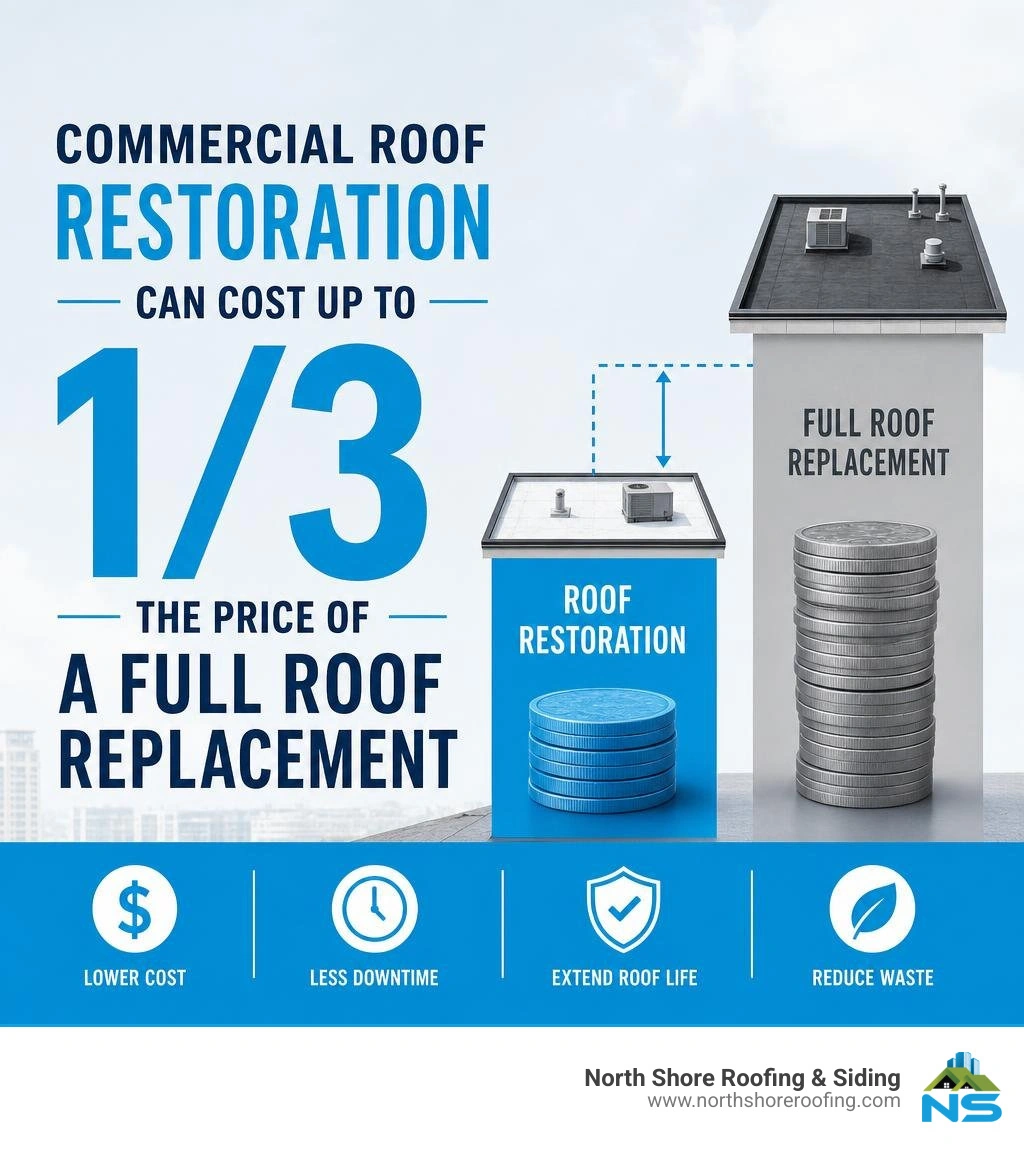
When a flat roof begins showing its age, you don't always have to jump straight to a full tear-off and replacement. Many commercial flat roofing companies specialize in roof restoration, which can extend the life of your roof for 10 to 20 years at a fraction of the cost.
How do you decide between a restoration coating and a complete replacement?
When to Choose Restoration (Silicone/SPF Coatings): If the structural deck is sound, the insulation is dry, and the roof has fewer than 25% compromised areas, a liquid-applied silicone restoration is highly cost-effective. Silicone coatings are uniquely engineered to withstand ponding water and reflect a high percentage of solar energy. This process creates a seamless membrane directly over your existing roof, eliminating waste and minimizing disruption to your business operations. Restoration can be a strong option for qualifying roofs in Long Island, Queens, Port Washington, Flushing, Bayside, Manhasset, and Locust Valley.
When a Full Replacement is Necessary: If your roof has widespread leaks, saturated insulation, or structural sagging, a full tear-off is required. Leaving wet insulation in place leads to mold growth, structural rot, and severely compromised energy efficiency. Commercial buildings in Port Washington, Flushing, Bayside, Manhasset, Locust Valley, Queens, and Long Island should be evaluated carefully before any overlay or coating is approved.
How Professionals Minimize Disruption: Experienced crews can phase work areas, coordinate material deliveries, protect entrances, and schedule noisy tasks around business operations. This is important for active retail, office, warehouse, and industrial properties in Queens, Long Island, Port Washington, Flushing, Bayside, Manhasset, and Locust Valley.
If you are dealing with active issues, starting with a targeted Commercial Roof Leak Repair is critical to stopping damage in its tracks while you evaluate your long-term options. A professional inspection can determine whether your commercial flat roof in Long Island, Queens, Port Washington, Flushing, Bayside, Manhasset, or Locust Valley is a candidate for repair, restoration, or full replacement.
Frequently Asked Questions about Commercial Flat Roofing
How long does a commercial flat roof last in the Northeast climate?
With professional installation and regular maintenance, a modern commercial flat roof in the Northeast typically lasts 15 to 30 years. Single-ply systems like TPO and PVC generally offer a 15-to-25-year lifespan, while highly durable EPDM rubber roofs can easily last 30 to 50 years under pristine conditions. However, harsh winters, coastal salt air, and neglected drainage systems can shorten these lifespans significantly.
What is the difference between manufacturer and labor warranties?
It is vital to understand that a product warranty is not the same as an installation warranty:
Manufacturer Material Warranty: Covers defects in the roofing material itself. If the membrane cracks prematurely due to a manufacturing flaw, the manufacturer will replace the material, but you may still have to pay for the labor to install it.
Workmanship/Labor Warranty: Provided by the roofing contractor, this covers errors made during the installation process.
NDL (No Dollar Limit) Warranty: The gold standard in commercial roofing. This is a manufacturer-backed warranty that covers both labor and materials for a set period (typically 10 to 30 years) with no cap on repair costs, provided the system was installed by a certified contractor.
How do contractors minimize business disruption during installation?
Experienced commercial roofers utilize several strategies to keep your business running smoothly during a project:
Staged Staging: Keeping equipment and materials localized to minimize parking lot disruptions.
Off-Hours Scheduling: Performing noisy or high-odor tasks (like hot-asphalt application or crane operations) early in the morning, late in the evening, or over weekends.
Safety Barriers: Erecting clear pedestrian canopies and safety perimeters to protect employees, tenants, and customers from construction zones.
Conclusion
Your commercial property is a valuable asset, and its roof is the first line of defense against the elements. When searching for the best commercial flat roofing companies near you, prioritizing local expertise, verified safety records, and manufacturer-certified teams is the key to a stress-free project.
At North Shore Roofing & Siding, we bring decades of dedicated local experience to commercial properties across Long Island and Queens. Our fully licensed, bonded, and certified team is committed to providing honest pricing, premium materials, and professional installation that exceeds your expectations. Whether you need a minor leak repaired in Port Washington, a comprehensive maintenance inspection in Manhasset, or a full flat roof replacement in Flushing, we are here to help.
Ready to protect your commercial investment with a roof built to last? Explore our comprehensive Commercial Roofing Services NYC or contact us today to schedule your professional roof evaluation!
Discover top-rated roofing company Long Island & Queens experts in Port Washington, Flushing, Bayside, Locust Valley, Manhasset. GAF certified installs, repairs, free estimates!
Get A Free Long Island & Queens Roofing & Siding Estimate Today
Ready to upgrade your roof, siding, or gutters? Enhance your property with a slate roof that delivers both beauty and long-term value. Contact us for a free, no-obligation estimate. Our roofing team is ready to help you protect your New York property with care, enduring beauty, and confidence. installation, repair, or replacement in Queens, Long Island, Bayside, Manhasset, Port Washington, or Locust Valley and surrounding areas.