Blog Content

24
Sep
2026
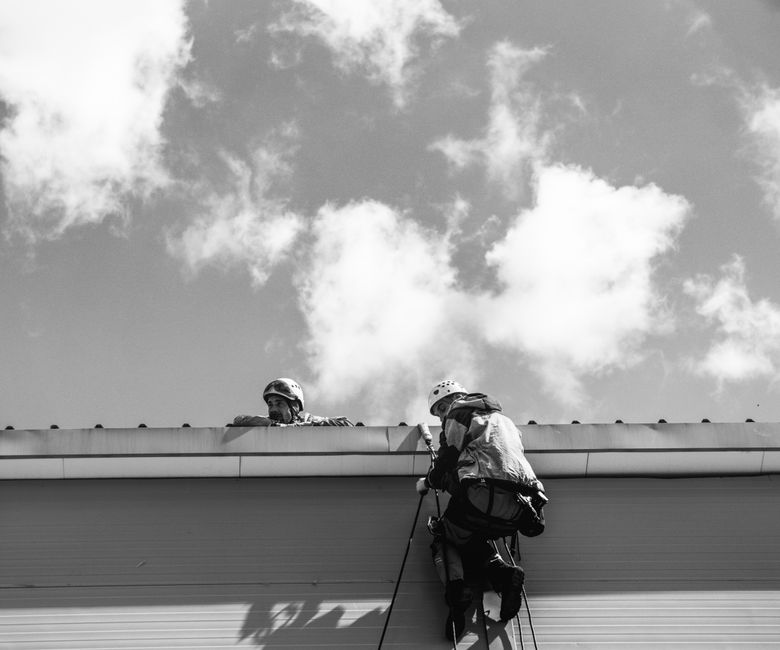
Commercial roof inspection services give you a clear, documented picture of your roof's condition — before a small problem turns into a six-figure emergency.
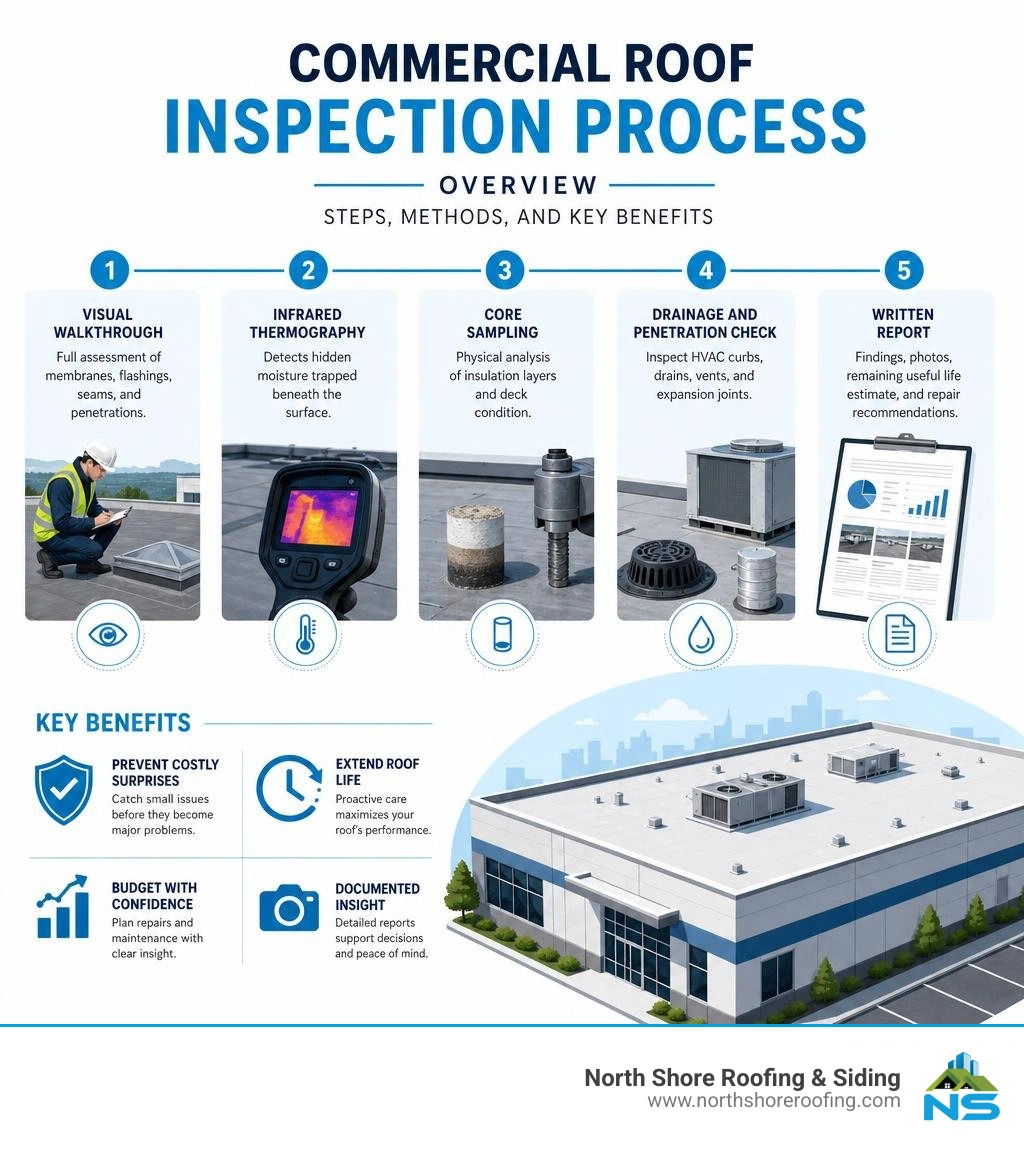
Here's what a professional commercial roof inspection typically covers:
Most commercial roofs in Queens, Long Island, and the surrounding area take a beating year-round — coastal wind, freeze-thaw cycles, heavy snow loads, and spring rainstorms all accelerate wear. The problem is that most damage isn't visible from the ground, and by the time you notice a leak inside, the underlying damage is already extensive.
One real-world example illustrates this well: a 130,000 sq. ft. logistics warehouse with recurring leaks near rooftop HVAC units had been patched repeatedly without success. Thermal imaging and core sampling revealed trapped moisture from previous failed repairs — a targeted fix that ultimately saved over $420,000 compared to a full roof replacement.
That's the difference a professional inspection makes.
I'm Scott Fox, and in this guide I'll walk you through everything you need to know to protect your building — from understanding the types of inspections available to knowing what questions to ask before you hire anyone.
Similar topics to commercial roof inspection services:
A commercial roof inspection is a systematic, technical evaluation of a building’s roofing system. Unlike a quick glance from a ladder, a professional assessment dives deep into the structural health, material degradation, and environmental risks affecting your property. For property owners and asset managers across Long Island and Queens, keeping this shield in top-tier shape is the single most effective way to avoid unexpected capital expenditures.
At its core, a professional inspection is about risk mitigation and smart asset management. Commercial properties—whether a retail strip in Bayside, an industrial warehouse in Flushing, or a corporate office in Manhasset—house expensive inventory, sensitive electronics, and busy operations. A single roof failure can disrupt your business, damage tenant relationships, and lead to massive financial losses.
By utilizing comprehensive commercial roofing services nyc, you transition your facility management from reactive firefighting to proactive preservation. Think of it as a health checkup for your building's most expensive asset. With over 100 different roofing systems currently used in commercial construction, having an expert who understands the nuances of your specific assembly is vital. Regular inspections ensure you catch minor issues before they compromise the deck, violate local building codes, or void your manufacturer's warranty.
Not all inspections are created equal. Depending on where your building is in its lifecycle, you may need a different level of diagnostic depth. Here are the four primary types of commercial roof inspection services we perform across our service areas, from Port Washington to Locust Valley:
In the Northeast, our weather is anything but gentle. Buildings from Flushing to Port Washington face severe freeze-thaw cycles. Water gets into tiny cracks during the winter, freezes, expands, and tears apart seams and flashing. That is why we recommend a strict schedule of bi-annual routine inspections: once in the spring to evaluate winter damage, and once in the fall to clear debris and prep the system for freezing temperatures.
Routine condition assessments focus on the wear and tear of daily exposure. During these walk-throughs, we pay close attention to high-risk zones like expansion joints, pitch pockets, and HVAC curbs. Pairing these regular checks with an ongoing industrial roof maintenance ny plan ensures minor issues—like a small puncture or a clogged drain—are handled immediately, preventing moisture from seeping into the insulation.
Forensic inspections are the "detective work" of the roofing industry. When a building in Manhasset or Bayside experiences recurring leaks that general repairs haven't fixed, we deploy forensic methods. Water rarely travels in a straight line; it takes the path of least resistance. A leak dripping over an office desk in Locust Valley might actually originate from a compromised flashing 50 feet away on the opposite side of the roof.
Due diligence inspections, on the other hand, protect your financial investments. Buying commercial real estate without a dedicated roof audit is a massive gamble. Our condition reports provide buyer-side due diligence within 5 to 10 business days (or 3 to 5 days expedited), giving you the carrier-defensible documentation needed to negotiate price drops or request repairs before closing the deal.
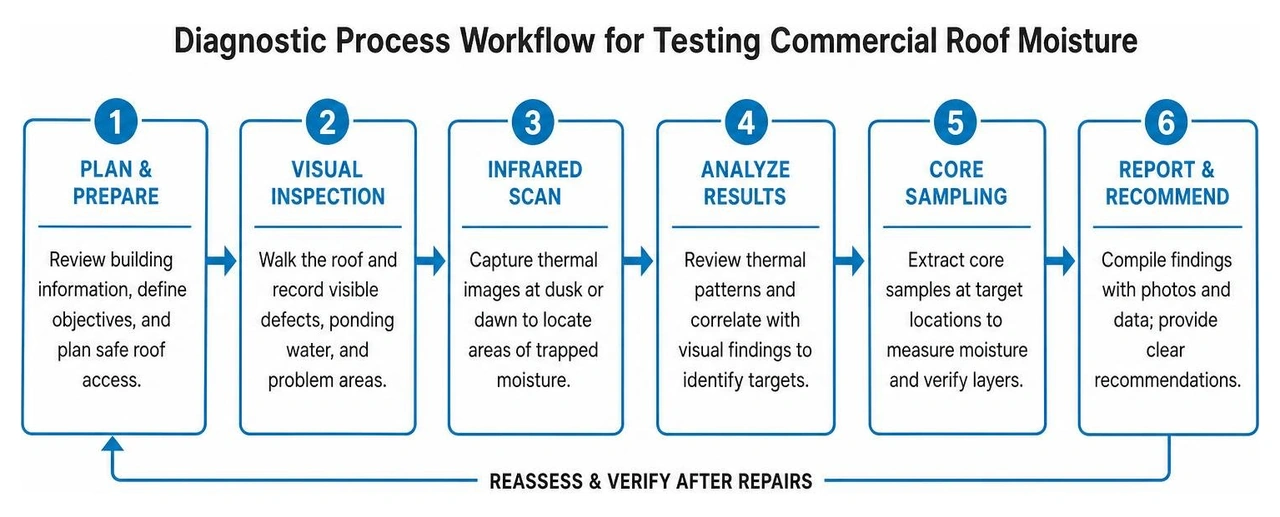
Modern commercial roof inspections rely on a mix of hands-on physical testing and advanced aerial imaging. We don't just walk the roof; we analyze it using state-of-the-art diagnostics.
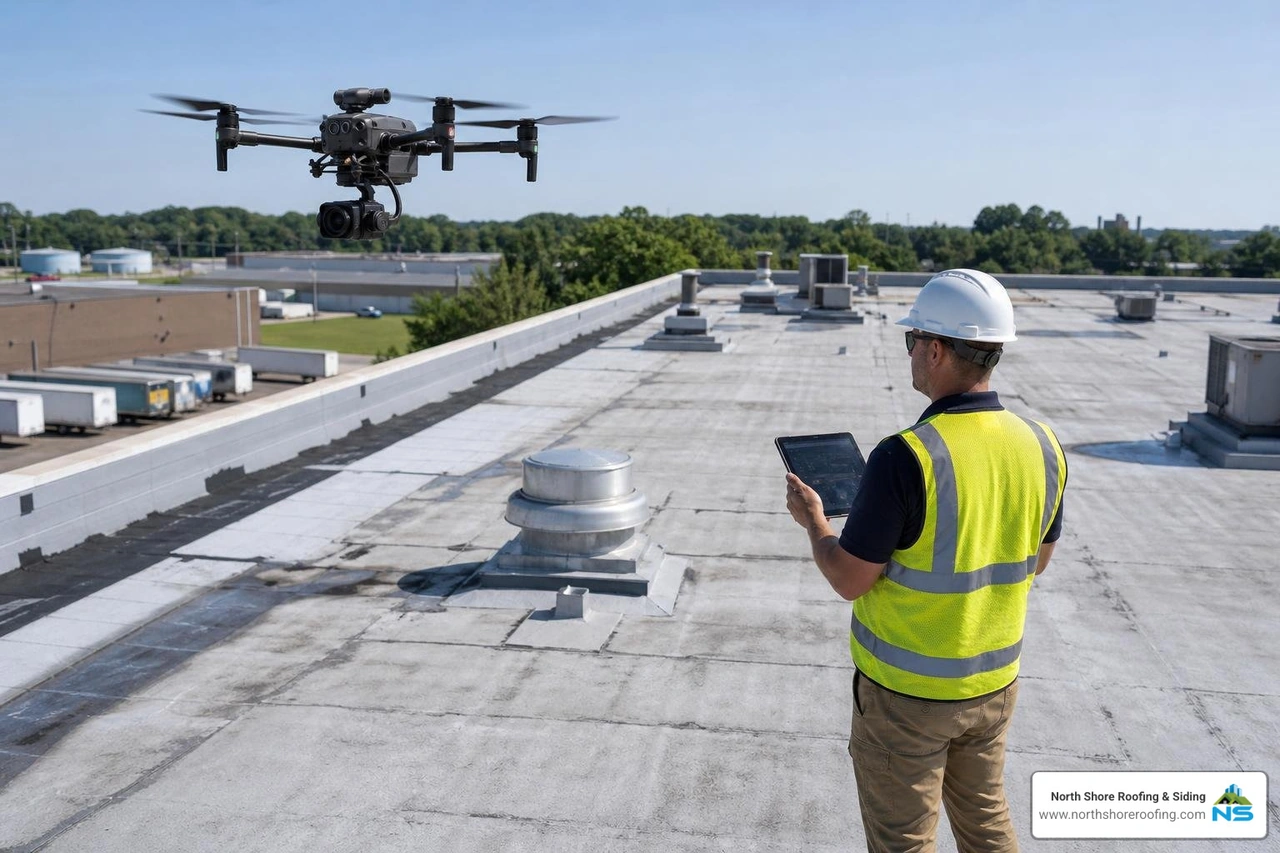
Our process typically starts with a high-resolution visual walkthrough to map obvious physical defects, but the real magic happens beneath the surface. Here are the key technical tools we use:
During our inspections throughout Long Island and Queens, we regularly run into several recurring issues. Understanding these common failures can help you spot trouble early:
If you suspect any of these issues are active on your building, acting quickly with a targeted commercial roof leak repair 2026 can save your deck from rotting. For metal structures, searching for a qualified comm metal roof repair near me will connect you with specialists who can apply protective coatings to stop rust in its tracks.
When it comes to getting your roof inspected, you have a few different paths to choose from. Who you hire depends on your goals, but it is important to understand the natural incentives of each option.
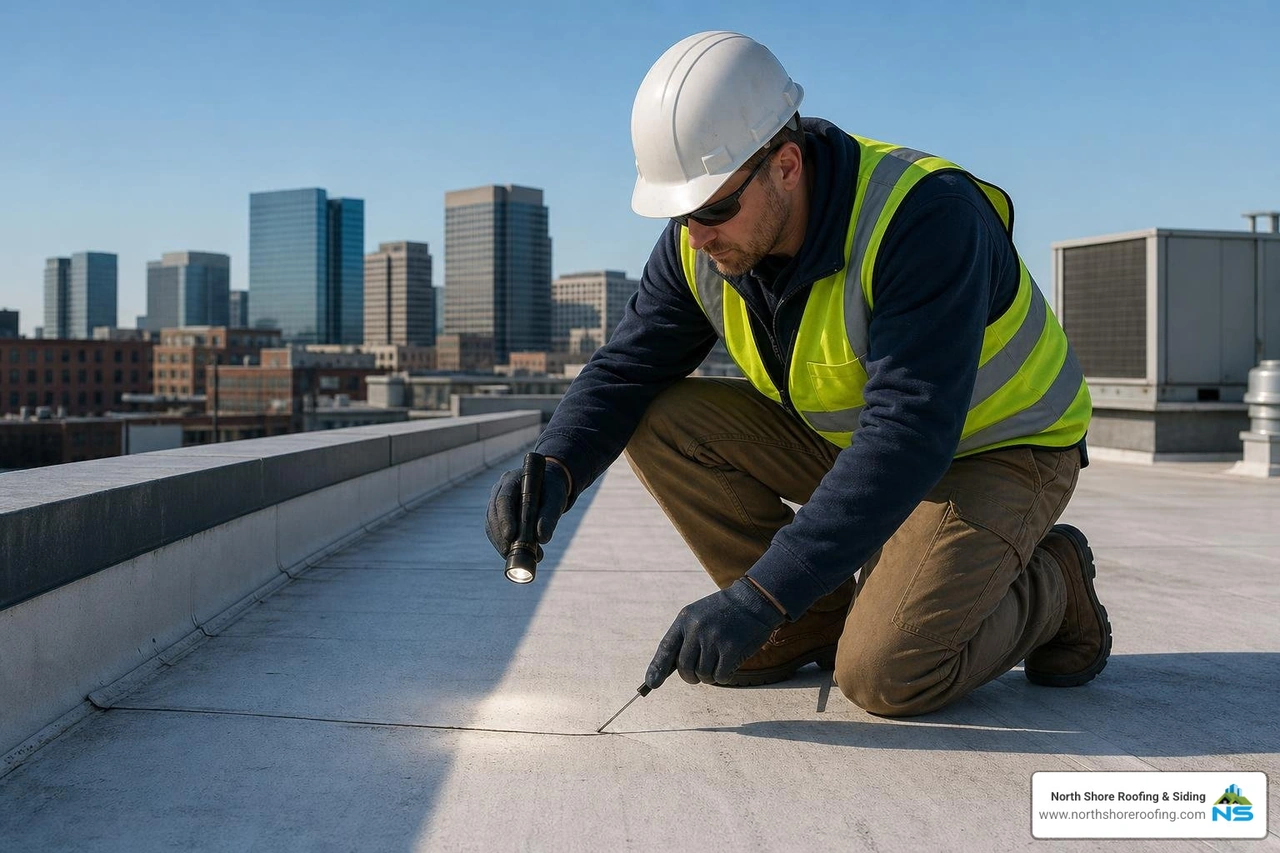
Here is a breakdown of the typical players in the inspection space:
For the best results, look for a certified local team with deep regional experience. A local contractor who understands the specific wind loads of coastal Manhasset or the dense urban environments of Flushing will always provide a more practical, actionable assessment than an out-of-state entity.
Planning a roofing project can raise plenty of questions. Here are the most common queries we receive from commercial property owners in our local communities.
The cost of a commercial roof inspection is highly dependent on the size of the building, the complexity of the roofing system, and whether advanced diagnostics (like infrared scans) are required.
Investing in a professional assessment is a drop in the bucket compared to the cost of a premature roof replacement, which can easily run into hundreds of thousands of dollars.
At a bare minimum, commercial roofs in Long Island and Queens should be inspected twice a year.
Our local climate is incredibly demanding. From the brutal winter freeze-thaw cycles in Locust Valley to the heavy summer humidity in Bayside, your roof is constantly expanding and contracting. A spring walkthrough ensures that winter ice dams haven't cracked your seals, while a fall inspection ensures your drainage systems are clear of debris before the first snow hits. You should also schedule an immediate inspection following any severe weather events, such as high-wind coastal storms or hail.
A professional, board-ready commercial roof inspection report should never rely on guesswork. When you receive your report, it should contain:
Your commercial roof is a major financial asset, and protecting it requires a proactive approach. Don't wait for water to start dripping through your ceiling tiles to think about your roof's health. Whether you operate a retail space in Bayside, an industrial facility in Flushing, a historic property in Locust Valley, or a corporate office in Manhasset, regular inspections are the key to maximizing your roof's lifespan and keeping your capital expenses predictable.
At North Shore Roofing & Siding, we bring local expertise, honest pricing, and a highly trained, certified team to every project we touch across Long Island, Queens, and Port Washington. If you want to protect your building with a detailed, data-backed assessment, we are here to help.
Ready to get a clear picture of your roof's condition? Explore our professional commercial roofing services nyc or contact us today to schedule your commercial roof inspection.

Copyright 2022 North Shore Roofing & Siding | All Rights Reserved | Sitemap | Website by Plumb Development a Digital Marketing Agency

